The Trees by Percival Everett (Influx Press)

BY itself the cherry tree front cover and title Trees might suggest, visually at least, some rural Celtic saga of family strife, but the insides quickly disabuse that notion. We are in Mississippi noir territory, noir in the sense of a multiple murders, noir in that we half know this story from history, noir in the sense of black humour, noir in the sense of a missing cadaver (black), noir in the sense of the seemingly amiable detective duo Ed Morgan and Jim Davis sent to unravel the mystery in the unwelcoming white town of Money. This is is Mississippi, as the police chief points out, spelled out MI and crooked letters-crooked letters – I – crooked letters-crooked letters I-P-P-I. If the satire is broad stroke bravura, the secrets in Mama Z’s backroom are precise.

The only description afforded the girl in Dinah’s Diner is ‘slender’. Her name tag says Dixie, which earns more tips than Gertrude. We are dialogue dependent here, sitcom slapstick, although the names like the coroner Dr Revered Fondle, Granny C, Lulabelle and Little Tallahatchie spell out the south as in a town with a ‘tradition of irony and nescience’. Granny C is the Carolyn Bryant whose testimony led to the lynching of Emmet Till, Bryant and Milam are children of Till’s killers.

Percival Everett, a professor of English in south California, has written more than 30 books, so perhaps, like Alan Garner for Treacle Walker, there is an element of saluting a life’s work in listing this in the Booker long list. It is a very untypical Booker listing. Short sentences. No descriptions. Fast. Twisted. Easy reading. This is chapter 71, in its entirety:

“Ho to Hind: ‘What the hell is going on?”

The social order is inverted. Bigotry and racism perhaps do not brook much depth, spouses are typically overweight and marooned in sofas, but putting the good guys in uniforms only gives them a little more padding. These are cops who have chicken sandwiches for lunch. It is the women who move through these pages and make the novel shake and tremble. They have the pizzazz, the ownership of the moral compass: Medical examiner Helvetica Quip, divorcee from a pyramid selling husband, FBI agent Herbeta Hind…we departed from real-time history some pages ago and moved into a one dimensional black comedy, a strip cartoon-town, clichés that don’t need to be said anymore, the post apocalyptic that never is/was…Everett teases out the humour, almost tickles it in the police procedurals, sly, conspiratorial, clever, fun, like he is telling a story on his front porch, like he is old enough, now, to tell this story which might have been too much for anyone closer to tell safely.

The real time population today of Money is down to less than 100; in the 1950s it was upwards of 400 supported by a cotton mill. Mama Z’s parents, it is briefly noted, were slave master and a slave. This is back of backwoods America. The delta diaspora has washed its guilt away. Here is revenge, of a sort.

Posted in 101greatreads, fiction | Tagged , , , | Leave a comment

The Secret Life of Writers by Guillaume Musso (Weidenfield & Nicolson)

“The wind was slapping at the sails in a dazzling sky.”

THE opening quote is from Umberto Eco: ‘To survive, you must tell stories.” By half way through this page-turner thriller,  you may have counted six or is that seven separate stories? And more are on the way. Before any narrative reaches a brick wall, up comes another one. Another twist. There is hardly any time to get to know anyone before the gears change again.

There is a particular skill to writing the kind of chapters that end on a tease, the melodramatic cliff hanger, the omg what is up next? Musso is a master.

We are on a mythical island of millionaires, Beaumont, into which we have a cast connected by their writing aspirations, the student wannabe author, the reclusive writer, the bookshop owner, the journalist. Musso has sold apparently 33 million copies across 40 countries and is France’s best selling author. Some of the humour is probably lost in translation, but not the accent of blanquette de veau or the bureaucratic proclamations issued by authorities to close off the island, or the egos of all concerned. Raphael, our narrator, is on a mission, but then so is everyone else, and so have others been as the past creeps up.

What sets out as a friendly social interplay, somehow manages to wrap up all the loose ends into one gigantic bag of a finale, well actually more than one. You won’t see it coming, because you are not expected to…Excellent beach reading.

Posted in 101greatreads, fiction | Tagged , , , | Leave a comment

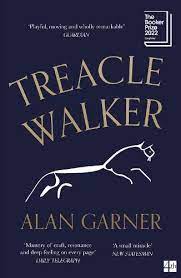
Treacle Walker by Alan Garner (Fourth Estate)

“Ragbone! Ragbone! Any rags! Pots for rags.”

THERE is a fair amount of subtext here, which you might, or might not, need. A little Latin may help. Alan Garner’s first work was published in 1963. He has been admired and influential since then for his children’s myth, and fantasy overlaid with a thick layer of Cheshire folk tales, some of which pop up here. His previous book Boneland published in 2013 had a 13 year old boy with amnesia, and we have not strayed too far by the time we meet Joe.

This is a poem rather than a novel, one you could share happily with a child at bedtime. Joe’s comic book world is coming to life. This is not a world into which anyone else can stray, mind you – no girls, no adults, no dinner, no phones, no pets. We are in the present tense, and that in a sense is the point, or one of many points that readers of other Garner books may conject. Some of the linguistics are great fun, some with antecedents some probably without, applications for next years OED. Amblyonic, is Joe’s condition. Flustication has previous and so apparently does hurlolumberjobs. YIKES!

Part of the achievement here is to write this unbelievable story in a way that is believable. It is beautifully produced in big type with a fine etching on the front and a great title, Treacle Walker, who is Joe’s avatar.

That it is long listed for the Booker prize this year is perhaps in part the literati wanting to honour Garner, but it is very welcome to see such work on the list at all. Introducing writers like Garner to a new audience is what such prizes should be about.

Posted in 101greatreads, Biography, fiction | Tagged , , , | Leave a comment

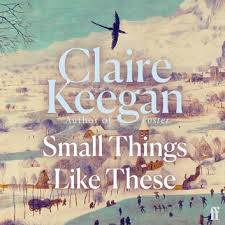
Small Things Like These by Claire Keegan (Faber)

In October there were yellow trees.”

A SLIM slice of rural Ireland, from not so long ago. You might see this as an addendum to the bigger Irish politics covered in Fintan O’Toole’s We Don’t Know Ourselves.

It is short, moving, laden in tension, possibilities, narrative, beautiful description, but also in getting underneath the covers with the girls of Billy Furlong’s small young family, and his own fears. As the local coal and timber merchant Furlong gets about on his deliveries.

Sentences are crisp. Each chapter opener more a poem: “Furlong had come from nothing.”  “Christmas was coming”. “It was a December of crows”. You might want to put the kettle on and make a cup of tea before reading on too far, such are the Dickensian, dramatic vibrations.

At 110 pages, it is a short book to be listed for the Booker Prize, Keegan has focussed on short stories so far rather than novels, but no harm in that if it brings people back to reading, if only for being more accessible. “A story needs to be as long as it needs to be,” she has been quoted as saying. Here there is hardly a word out of place. Her earlier work Foster has been slated for a film as the Quiet Girl. Masterly.

I would offer a bit more detail but… spoiler spoiler spoiler…father, father, father.

Posted in 101greatreads, fiction | Tagged | Leave a comment

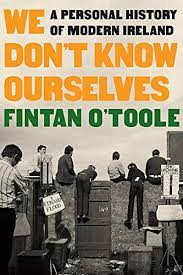
We Don’t Know Ourselves by Fintan O’Toole (Head of Zeus)

“My parents’ wedding photograph always reminds me of a frontier town in an old western.”

FOR anyone with a passing curiosity as to the unfolding events in Ireland over the last 60 years, this will be a rewarding, insightful, enjoyable and intelligent narrative. As the counsel for the defence might say: the facts in this matter are well known. But our witness here was born there, lived, there, worked there and as a reporter knew and covered the antics of many of the protagonists, large and small. He was the man who stayed behind, while many emigrated.

I was reading this at the bus stop in Clerkenwell, London when a nun, from her accent Irish, who was passing noticed and stopped to say: Good on yer.  In parts this is also a testament. O’Toole is yer man.

It might be hard to write a similar chronicle of say Britain, say England, say even Wales, but Ireland has its own shared story, if only on the level of language and to an extent politics. And Ireland has things in capital letters like Sin, like Social, like Crack, like Shame and most obviously the Troubles. O’Toole unpacks each of them like so many stories you might tell in the pub.

One striking element is just how much has changed over the span of time, notably the waning of the powers of the Catholic church and the arrival of what we might call modernity. It is a long story told in eloquent short journalistic snap shots from when he was born right up to the Now. O’Toole is knowingly informed from a life of what used to be called letters, to watching from the journalistic sidelines, of maintaining his neutrality where everything around seems to have become tribal. But it is also a history from someone who has read the Beano, who sits/sat at the apex and who has a ribald sense of humour, even as he uncovers some of the country’s darkest secrets. In that sense he is more akin to Hunter S Thompson (without the drugs) or Thomas Wolfe or a renegade newsreader.

There is a lovely anecdote about the time when the pill was still banned in southern Ireland and a group of women crossed the border to get supplies from the north. On arrival, the chemist informed them they needed a prescription. Undeterred, they bought aspirins instead and brought their protest back with them brandishing the pills, with no one the wiser, their point well made.

O’Toole’s long experience of writing around the local polemics has allowed him to burnish the arguments here to masterly effect.

Posted in Biography | Tagged | 1 Comment

The Cat Who Saved Books by Sosuke Natsukawa (Pan Macmillan)

“First things first. Granpa’s gone.”

THERE is a fair amount of readerly, philosophy here, virtually a fairy story. Schoolboy inherits bookshop from grandfather. Meets talking cat. On a mission. Drops out of school to chagrin of down to earth class president. He is hikikomori, the Japanese term for an insulated, shy loner, here who has developed remarkable knowledge of the geography of the bookshop and the books in it. From where we enter a world of updated Grecian myths through different labyrinths, journeys of discovery, guided by the magic cat who cutely refers to him as Mr Proprietor.

Sosuke Natsukawa is a doctor by day but his debut in Japan Kamisama no Kanute – which translates as God’s medical records – has sold more than a million copies in his home country and gone on to be made into TV.

It is all a bit YA but as a sub theme about reading itself, no bad thing. Charming.

Posted in Biography | Tagged , , | Leave a comment

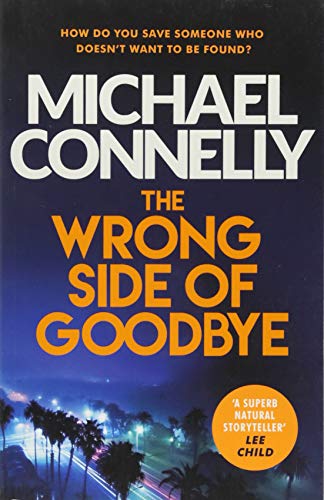
The Wrong Side of Goodbye by Michael Connelly (Orion)

Bosch didn’t mind the wait. The view was spectacular.”

THERE is quite a large canon of Michael Connelly books these days, thirty one in all, he was first published in 1992 and this one came out in 2016.  I picked it up in a hotel room by chance and finished it in two days. It is one of his best, perhaps comparable to Elmore Leonard. The city of LA is both victim and perpetrator here, the characters becoming manifestations of the place itself. Over this backdrop Harry Bosch lays his detailed, methodical procedural detecto manuals. Bosch in this context is the last vigilante, the sheriff in a lawless city, the gun fight at OK coral updated. “Murder knows no bounds, or city limits”.

He is waiting to meet the man, who knows another man, who has an assignment. Meanwhile a rapist is loose. There is a back story about Vietnam. There is a back story about the time Bosch threw someone through a window. You start to fear for anyone who gets more than a few pages of description, they are highly likely to be implicated. It is fast moving, gripping, intelligent, supreme example of the genre, which is, of course, the Connelly genre. Recommended.

Posted in Biography | Tagged , | Leave a comment

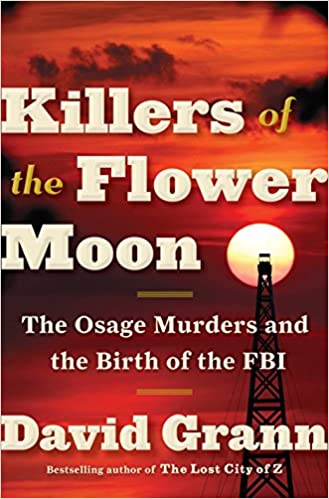
Killers of the Flower Moon by David Grann (Vintage)

“In April, millions of tiny flowers spread over the blackjack hills and vast prairies in the Osage territory of Oklahoma“.

THE opening paragraphs are an exemplar set up for any work of fiction/faction/reportage. The film version is slated for 2023 and will for sure be a blockbuster success. Such is the story. The film for sure will pick out the glorious visuals available of the 1920s frontier bonanza and a score that can jangle with the mendacity and duplicity afoot. The book on which it is based though allows a little more room to tease out elements of the history of migration, of the politics, of the customs of the native tribes and the formation of law making which would evolve into the establishment of the FBI.

The Osage were distinct from other native tribes in that they negotiated to purchase their own reservation lands, and kept for themselves the mineral rights attached. And they allocated the benefits of all these equally to all the members of the tribe, women included. Then it was discovered that these lands sat over some of the biggest oil fields discovered proved to be hugely lucrative. The 66 emblem of the Frank Phillips company gas stations still line the highways of the interstate today. And so the tiny hick capital of Pawhuska became one of the richest cities in the world. Rolls Royce sold cars. Rolex sold watches. It was boom boom time, even morse so than perhaps the 1849 gold Rush.

So far so good, but this is the story of what happens next…when Molly finds her sister Anna goes missing, just after her other sister Minnie has mysteriously wasted away with some strange disease, aged 27. And then the shootings start. This is the interface between white man and Indian, old world and new, frontier and state and at the same time was at the time the stuff of tabloid headlines, sensational reportage, a national fascination, you might even say celebrity culture writ large of an audience of both lawyers, law makers and public.

Gann even seems to surprise himself with the evidence he is unearthing, not really one story but many intertwined, even if they share a single theme, some well known, some not known, some rumour, some true but who knows…Some of this history is still very much in evidence in Pawhuska itself and in the nearby memorable museum set up with the Frank Phillips proceeds at Woolaroc – where some of the desparadoes that feature here hung out. It is all a bit subtler than a Wild West shoot out…a good yarn wrapped up in a bigger shawl…

Posted in Biography | Tagged , , , | Leave a comment

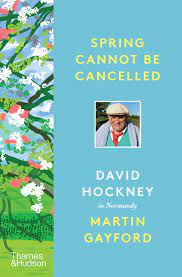
Spring Cannot Be Cancelled by David Hockney with Martin Gayford (Thames and Hudson)

“I have known David Hockney for a quarter of a century now…”

WHEN you look at the fabulous new paintings from David Hockney in a Normandy farmhouse, there is often a tiny detail – a ladder, a bird, a van, a chair – somewhere in there that reminds you that these are not simplistic daubs but the work of the master craftsman. They are static, but perhaps you could view them for as long as a film, maybe longer.

This is not so much a biography as an audience with, the artist transcribed through conversations and emails with the critic Martin Gayford. Contemplative, inspirational, inquiring, even the reference works included from other known artists take second place to the new works. A last great spurt of creative energy from Hockney, now aged 82, determined that he still has something to say, a legacy to be fulfilled from a lifetime literally of scratching on paper.

This is a refreshingly intelligent book, a visual existentialism transferred to the easel, a living in the present, enjoying moments the better for seeing them through Hockney’s eye, an art junkies dream. Van Gogh in Arles. Gaugin in the south seas, Hockney in Normandy with the freedom (and money) to paint plus lunch with a bottle of wine and a slice of pate. A garden re-ordered in his own style like Monet and Giverny.

Hockney is up at six each morning for the dawn light. The works he is doing are his last great statement. That the apparent abstractness is steeped in the work of other artists, secret homages to a lineage of art back to the Middle Ages. That Hockney is not just the draughtsman, but also in awe of the joy of colour. However much some of the paintings may seem to be just fantastical from the imagination, they are all drawn from life.

There are elegant arguments such as why seeing the original canvas can have more value than a photograph, the meditative power of the craft, how opera and writers can be explained in oils, or how what we see is constantly shifting and changing.

There is an argument that art has always sought to capture life in a moment. The decisive moment the photographer Cartier Bresson said. Hockney is busy reminding us that that moment is an illusion, in reality landscapes are always in motion, changing hour to hour as the light changes, nature is not still, life is not a still life.

Posted in Biography | Tagged , , , | Leave a comment

Heritage by Miguel Bonnefoy (Gallic)

“Lazare Lonsonier was reading in the bath when news of the outbreak of the First World War reached Chile.”

A NEW novel from Bonnefoy! A treat. We are in Chile, imagine a large wood table, the aviary next door, tropical leaves shading the room, a whiff of engine oil, a discarded trumpet or two, the smell of freshly baked communion wafers, a magnum of uncle’s wine, Bonnefoy is regaling us with a family history, pulling strands together from the French vineyards being decimated by phylorexa, from conscription in the first world war, fighter planes in the second, a French world history in miniature. The humour is not quite Gallic, not quite quite south Atlantic. Even in translation the descriptions dance lightly:

“His eyebrows were as wild as caper bushes, his hair smooth and very black, and his lips so wide that when he smiled, his mouth stretched as wide as a concertina.”

The witch doctor Aukun apart, we are all arriviste in the new world like the rather lovely umbrella salesman who disembarks to find himself blessed in the rainiest city in the world.

Bonnefoy has that rare gift of being able to roll through new imaginations, his plots going off like firework displays of the unexpected, his family being people you might want to spend more time with. But this is a tale with a dark message, the more abrasive when it arrives for being wrapped in such rich tapestries. He tends his tell his story backwards, so it is effect before cause. Any other writer might have told this saga rather differently.

His hero Ilario is also a writer whose zeal is manifest. “Characters began to throng in to the cathedral of his mind, as if arriving for a party, forming an entire land of fables and battles.” There is a very writerly touch where the paragraph on page 11 repeats itself in page 149, to complete a cycle.

His revenge is in his pen, mightier than the electric wrack. The shock is detonated. You might almost say it is so perfectly formed that when the fable runs into reality, it hurts.

Posted in 101greatreads, fiction | Tagged , , , | Leave a comment