The Pigeon Tunnel by John Le Carre (penguin/Viking)

pigeontunnel

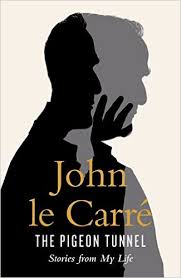
“I sit at my desk in the basement of the little Swiss chalet that I built with the profits from the Spy Who Came In From The Cold in a mountain village ninety minutes by train from Bern, the city to which at the age of sixteen I had fled from my English public school and where I had enrolled at Bern University.”

THERE is a line on page 72 that asks: “maybe I am just one of those who people who are unable“…surely, surely, John that should be singular, is unable, it is not a royal we? Or do you mean we the secret service, we at her majesty’s service, or we the spies or we who lived in the ’60s or is it just an old idiom of the time? The royal we, John the queen? Or the establishment, a loose knit old boy’s network of bumptious undergraduates who speak foreign languages and are uplifted to a secretive world of embassies and ambassadors, lies and deception?

His major role at the Bonn embassy was to chaperone parties of German journalists and politicians on visits to London to see how things are done, or should be done post world war 2. He had carte blanche to just travel about then west Germany like a radar antennae to listen into the local politics. What in this context of the cold war is a spy anyway, something he transfixes on and has brilliantly conjured up in his fiction but as he explains here the real line between lies and truth is thin. John is not a spy in the sense that he has a bagful of secrets to offload, rather he was briefly the bag man and conduit through which such a creature might suggest a getaway plan. Until he became such a successful writer that he could afford a chalet in Switzerland, a house in Hampstead and a mile of Cornish coastline.

Much of this book is less memoir and more trailers for the people he has met and portrayed in his fiction. The best of all, by a street, though is his father Ronnie, “conman, fantasist, occasional jailbird“. Everyone else pales in his shadow. Here is a snatch:

“I am holding the hand of my mother Olive, alias Wiggly. As we are both wearing gloves, there is no fleshly contact between us. And indeed, as far as I recall, there never was any. It was Ronnie who did the hugging, never Olive. She was the mother who had no smell, whereas Ronnie smelled of fine cigars, and pear-drippy hair oil from Taylor of Old Bond Street, Court Hairdressers, and when you put your nose into the the fleecy cloth of one of Mr Berman’s tailored suits you seemed to smell his women there as well.”

Think of Hugh Laurie as Richard Onslow Roper in the Night Manager. Ronnie stands out because he is real where everyone else tends to be cartoons, of interest only for who they were, Richard Burton, Robert Maxwell, Alec Guiness. In Rupert Murdoch’s case, lunch lasted 25 minutes. There is not so much to tell.

For all the clues, the winks, the brown envelopes, the double dealings, the standing on street corners in old raincoats, the retelling of old yarns, it all feels very black and white compared to the colour of his fiction. But the ’50s and ’60s were the era of black and white, dissolved in the darkroom of truth. What colour we have is not high minded and principled but delivered by larger than life rogues like Ronnie, and one suspects Le Carre aka David John Moore Cornwell, himself.


Posted in Biography | Tagged , , | Leave a comment

Homo Deus by Yoav Noah Harari ( (Penguin)

homodeus

“At the dawn of the third millennium, humanity wakes up, stretching its limbs and rubbing its eyes. Remnants of some awful nightmare are still drifting across its mind.”

HOWEVER awful events might have been through history, it is over. It won’t come back. We are safe in the present tense. The future on the other hand is scary. Having looked back over our time on this planet for his last book Sapiens, the historian Harari starts to peer forward. It is not a comfortable prospect. Those science fiction monsters start to seem quite cuddly compared to what Harari sees. Of course they may not happen but, as he argues most cogently, the big things that do happen are not necessarily what you thought they were going to be, good or bad. The inventors of Viagra back in 1991 for example thought they were looking for a cure for angina.

We live at the end of what Harari defines as the Anthropocene era: A time when all life on the planet was subject to the laws of what we call nature, natural disaster, disease, famine etc. In the 21st century we are moving into a new period where we, as mankind, start to exert control over our own destiny and that of the rest of the planet. We are becoming godlike. Or some of us are. We aspire to longer life, happiness. On the face of it, that may sound great but, well there are quite a few buts coming up here, but, but, but, but…Harari writes like a barrister making a case for the prosecution. He points out we don’t exactly have the greatest track record in looking after things. We have previous. Quite a lot of previous. It is not encouraging.

 “People are usually afraid of change because they fear the unknown. But the single constant of history is that everything changes.”

One measure of his thesis is how we treat other creatures on the planet. For the most part we have killed them off or subjected them to the cruelties of factory farming so that we can eat them. If that is what we do to other creatures then the law of chance suggests we might end up doing the same to each other.

Here is an arresting statistic: In 2012 more people committed suicide than were killed in acts of violence but twice as many again died of diabetes. “Sugar is now more dangerous than gunpowder.” This is an agenda setting vision, the intellectual tools to guide us forward, to make us think. In that regard he is akin to Stephen Hawking, a visionary coming at us from the heart of the scientific. That he is obviously such a brilliant mind, is doubly troubling. A question for you: what is the difference between the brain and the mind? Or what is consciousness? Discuss.

It is relevant because for all the pomp of modern science our intelligence remains a mystery. Another riddle is that larger groups of people do not behave or think in the same ways as smaller groups, so intelligence differs. This ability to cooperate has set us out as humans. Harari refers to it as the intersubjective, when a group of people buy into an idea which makes something real happen. Obvious examples are religion or money. The intersubjective is what will forge the shape of our tomorrows.

Harari’s skill as a writer is to communicate such complex ideas. He wraps his arguments up in cute box-sized chunks. They are not hard to follow, one vignette rolls comfortably into the next…he has the gift of making you feel intelligent enough to understand where he is coming from through a long read of nearly 400 pages.  Of course, he is a vegan who lives on a collective farm and won’t be expecting a phone call from Donald Trump or Benjamin Netanyahu one suspects. More is the pity.

For a while you feel he is going to come down as a humanist but then he sides as a scientist. He disowns things he cannot prove – no soul, no freedom of action, even no individuality but dividuality which leads us to his intellectual crescendo.

“The train of progress is again pulling out of the station – and this will probably be the last train ever to leave the station called Homo sapiens…to get a seat you need to understand 21st century technology…biotechnology and computer algorithms.”

An image stays in the mind from Chekhov: If a gun appears in act one of a play, then for sure it will be fired in act three. Harari is putting the gun on the table.

The answer he suggests is…dataism or the flow of data.

Posted in 101greatreads, Biography, Non fiction | Tagged , , , , , | Leave a comment

The noise of time by Julian Barnes (Vintage)

noiseoftime

“All he knew was that this was the worst time.”

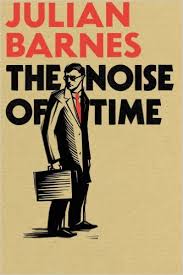
IT is 1936, Stalin is reaching the height of his paranoia. The child prodigy and revolutionary treasure Shostakovich is denounced in Pravda.

Short paragraphs rather than chapters paint tableaux of their own which then fit into the larger narrative, I am tempted to use the cliché, like Russian dolls. This Shostakovich is fragile, the women in his life apparently stronger than him (although there is not much evidence, except from his mother) but this wisp of a man in iconic spectacles overwhelmed by state and family has an unwavering grasp of his own genius. Even in disgrace he does not think of getting another job, he just carries on composing. For 40 years and more it was an unhappy, unwanted marriage to regime and rivals represented here in shorthand just as The Powers.

There is a diamond irony as he tells the story of how Russian cinema audiences clapped to show their disapproval of a live pianist in the background ruining their enjoyment of a film. The image is later repeated in America where he gets a standing ovation for different reasons. But he does not like America, he does not like being called Shosti, he is hurt by his rejection by another Russian in exile in Stravinsky, he wants to curl up in a box with some vodka and sausages.

There are little tricks, repeated phrases, “he swam like a shrimp in shrimp cocktail sauce”, as in a music score, “as one fishermen picks another from afar”. Meticulous, chain smoking, examining his conscience daily, Barnes has a grand canvas of man and state: ‘To be Russian was to be pessimistic; to be Soviet was to be optimistic. That is why the words Soviet Russia were a contradiction”.

Russia, mother Russia, passive-aggressive, secretive, scary. This is/was a world where a friend paid the housemaid to save the composer’s rubbish which now resides in the national Glinka museum.

Strictly this not a biography in the usual sense, but Barnes the novelist has given himself a backstage pass into the genius’s brain, thanks to the meticulous more conventional research of others including biographer Elizabeth Wilson whom he credits as a prime source. Personally I find the revisionist thesis that in some way Shostakovich was writing dissident jokes into his music almost as questionable as the Soviet musicologists attack on him that his music was all just muddle.

There are no shortage of examples from capitalist America of the originators of music being summarily disenfranchised and their work passed down the line for others to profit and take credit from. Think Elvis Presley for a start. The Soviets wanted more. They were vain enough to demand that the maestro composer endorse them. Shostakovich might have feared being disappeared by some anonymous KGB  agent in the middle of the night. No. Stalin wanted to own him, to own the music, to own the glory in the genius for himself and the Communist cause.

The struggle was for the art and all that represents.

Footnote: It is a shame – especially in the context of talking about the value of art – that whoever designed the cover did not get a credit here because it is equally outstanding example in another medium.

Posted in 101greatreads, Biography, fiction | Tagged , , , , | 1 Comment

The bird tribunal by Agnes Ravatn (Orenda)

birdtribunal

“My pulse raced as I traipsed through the silent forest. The occasional screech of a bird, and, other than that, only naked, grey deciduous trees, spindly young saplings and the odd blue-green sprig of juniper in the muted April sunlight.”

IT always strikes me as strange that most of us know the greatest works of fiction in translation rather than in its first hand incarnation. Apparently the vernacular if you like,  the original incarnation, can be discarded without apparently devaluing all its appreciation, a point that obviously does not happen with other arts such as music or painting. Story telling is a fundamental, human expression that breaks out from its own constraints and thrives in other mediums and languages.

There is a privilege to reading books from other countries and languages too, like taking a lift down to another floor to new sets of mores, customs, inferences, unexpectednesses. In that regard every town deserves its own writer.

Here we are in Norway. We have two characters with secrets, known only perhaps to the old shopkeeper who writes all purchases down in her ledger…She has applied to be the gardener to a recluse. She is escaping, he is…it is an unlikely dance.

“He’d see that even I was no stranger to peculiar behavior, he’d realize he wasn’t the only one familiar with that particular art”.

She is imprisoned in the first person, he in the third party. They are drawn together by an old handwritten recipe book. And the wine in the cellar. It is a difficult courtship.  The back cover says it is a psychological thriller but that is not quite right, it is the psychology itself that thrills. The sense of the unlikely is underscored with Norse legends and pagan rituals plus the black fjordic setting. Actually it is all very accomplished indeed leading up to a finale that is, well beautifully Nordic.

Posted in 101greatreads, Biography, fiction | Tagged , , , | 1 Comment

Books of the year 2016

MOST of the titles here for obvious reasons could make a claim to an end of year list. A few stand out as being perhaps more essential than others, not all were released this year but I only recently discovered them. Your Christmas shopping might include requests for any of these in particular:

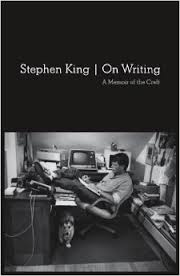
Stephen King’s On Writing is and should be essential reading for anyone who picks up a pen, both personal and instructive and fun.

Obviously the story of the year is dominated by Elena Ferrante’s quartet of Neapolitan novels – My Brilliant Friend, A new Name, Those Who Leave and Lost Child – which will survive the test of time, I suggest. Start at the beginning. They would be good summer beach fodder.  I would not want to pick out a favourite but the third volume runs through more gears than a Bianchi Intrepida.

More narrow in its appeal but no less visceral is Sebastian Barry’s gay western Days Without End, as much a boys book as Ferrante might be said to be for girls but as we are so multi-sexual these days I would not want to misrepresent you.

Towering over academic circles is Charles C Mann’s awesome 1491 which has the rather dull subline New Revelations of the Americas Before Columbus. It has some jaw-dropping explanations, a brilliant vision and written with élan enough to appeal to anyone with a passing interest in all kinds of history. More accessible than his more recent 1495.

Graeme Macrae Burnet’s factional reassembling of his own family’s dark secret His Bloody Project deserves a place too. Why it was deemed too popular to win the Booker is a mystery of its own.

Lastly, and again one that was largely overlooked by mainstream press but will be of fascination to anyone interested in the ’60s and ’70s music, is former Rolling Stone editor Fred Goodman’s access to Allen Klein‘s private papers. A fitting epitaph to an era whose esprit has probably vanished with the election of Donald Trump.


Posted in Xetera | Tagged | Leave a comment

Days without end by Sebastian Barry (Faber)

dayswithoutend

“The method of laying out a corpse in Missouri sure took the proverbial cake.”

ELENA Ferrante took four books to portray her Neapolitan chronicles, so Sebastian Barry follows the fortunes of the McNulty family in different, self standing tomes, just as he did in earlier works with the Dunne family starting with a Long Long Way which was shortlisted for the 2005 Booker prize. The McNulty’s can also be found in the Scriptures and in Whereabouts and a Temporary Gentleman.

Here we go further back in time to 1851, to Missouri, already an Irishman abroad…or here a boy.

Ferrante is of course in translation, where Barry is first hand English (for me). You can climb around these words as if they are a children’s playground. You can dig ditches in the sentences. Move carefully mind, not all is all. Each paragraph has a cleverness, a radiance. The tone has acquired an American lilt.

“Then rain began to fall in an extravagant tantrum. High up in the mountain country though we were, every little river became a huge muscled snake, and the water wanted to find out everything, the meaning of our sad roofs for instance, the meaning of our bunk beds beginning to take the character of little barks, the sure calculation that if it fell day and night no human man was going to get his uniform dry. We was wet to the ribs.”

And it moves along at a fair old pace, a vaudeville show, a buffalo hunt, a massacre, a town shindig, the cold, a flash flood, the encounters with Indians plus time to sketch in his arrival from Ireland. His mother and sister “perished like stray cats” and the old ships started bringing ruined people to Canada. It is deceptively an adventure story that romps along before we have even been introduced to many of the characters. Barry drops little clues to the plot on the wayside as we go west through Virginia and Kentucky. There is even time for a final plot twist on the penultimate page.

At a first glance, you might dismiss all this as a travelogue through America’s travails, but, but read within the arc of Irish history it becomes a different beast, read against other descriptions of battleground scenes from later world wars, read against modern America’s self discovery, against the McNulty family’s own declensions, even in terms of its sexuality, it starts to bristle and beam. Words and language are distilled from the diaries of solders, the idiom of the bayonet, the boredom and Bowie knife, men unfettered by women, commissioned to violence, surviving, or not, in the wilderness of the prairie.

You might want to read this as it were clearing out the belongings of a recently deceased relative in Sligo. In a back drawer you find this tome and start to read in someone else’s old armchair in a room full of cobwebs, dirty windows and memories. I never knew Thomas was that way, a transvestite! The gayness is axiomatic rather than central although the word queer appears quite a few times in different contexts. With a writer like Barry, surely no accident.

Here is another sample of the colour of the writing: “There’s big tall men in the next row of tents that are gunners in charge of mortars. You never seen such wide thick arms on men or wide thick barrels on guns. Look like cannon that have been eating nothing but molasses for a year. Swole up like a giant’s pecker.”

The title Days Without End is somewhat fey and off message. It might have been more obvious to say Thomas McNulty’s American wars. It will make a great western, less John Wayne, more Quentin Tarantino. With an added frisson of a few frills.


Posted in 101greatreads, Biography, fiction | Tagged | Leave a comment

On writing by Stephen King (Pocket)

onwriting

“This is a short book because most books about writing are filled with bullshit.”

BEFORE you are tempted to take out your feather plume and dip it in the black ink, before you type in the password on your computer, or whatever medium you might employ to embark on a cherished memoir, novel, TV play, speech, business report or other serious piece of writing, I urge you to read this masterful primer first. Please.

Here we have the nuts and bolts of good writing, the bonnet of the novel car raised to expose carburettor, battery, leads, gas tank et al. The book is set out in two/three parts opening with a memoir. Then, from page 94 in my edition, is a brilliant appraisal of the skills of the craft, analogous to Elmore Leonard’s Rules of Writing (which he wrote originally as an article for the New Yorker) but more in depth, more practical. King breezes through his very candid construction. He opens with the power of telepathy and moves on to the toolbox of vocabulary, sentences and grammar and thereafter all the commonly posed questions like agents, writer’s groups, peer review, self doubt, editing etc… You will not become a great writer from reading this, he argues, but if you are good, you might get better.

For King, writing is easy. Even the short examples he quotes sing off the page, little hand me downs from an accomplished practitioner. I am not a fan of his genre of horror as in Carrie or Misery, but I do admire his serial novel The Green Mile and Shawshank Redemption. His advice on adverbs is exemplary – i just deleted a ‘greatly’ before admire from the above, as instructed.

His most radical suggestion is that plot is secondary, even an adjunct to, situation. Get the situation right and the characters will form themselves and grow into the story. It is an important distinction. It separates the function of the screenwriter – who has a need for plot lines to follow – from the craft of the originating story teller – whose only loyalty is to his or her reader to his or her story. The creative elements are separated, allocated different job titles. It is a curve you can follow in much popular contemporary fiction from the likes of best sellers like John Grisham, Michael Crichton and King himself. And it is a curve that is helpfully judgmental and definitive. Plot is objective. Situation is subjective. Writer versus critic, different perspectives.

King, of course, is in the first rank of the well known, most rewarded of the airport stationer’s top shelf bestsellers. The lessons he outlines here – including a fascinating suggestion for a DIY project – are as applicable across genres be they literary, corporate or just a desire to communicate. Verbs count.

To dismiss his work as pulp is to misunderstand the job in hand, a point self evident when he discusses how a character might be made to take on motive, to advance an argument.

In the first part he recounts how he began writing for short story magazines – now mostly sadly defunct – for a few dollars and pasting rejection slips on his wall. And the unexpected arrival of his first big pay check when paperback rights were sold. And his struggle with drugs and alcoholism which he points out did not help his writing at all – except in the detail that The Shining would revolve around an alcoholic writer and ex-schoolteacher. As a bonus he also quotes some of his favourite lines like this one from Raymond Chandler: “I lit a cigarette (that) tasted like a plumber’s handkerchief”.

The end has a penetrating human twist drawing a line between fact, fiction and mortality. But from a writing perspective, one comes away with the sure knowledge that King is pretty good at what he does. Sound advice.

There is also a reading list at the end, as good a list as any for the 20th century.


Posted in 101greatreads, Biography, Non fiction | Tagged | Leave a comment

The shogun’s queen by Lesley Downer (Bantam)

shogunqueen

“Japan has been at peace for close on 250 years, ever since Ieyasu Tokugawa unified it in 1603 and took the title of Shogun – Barbarian-quelling Generalissimo.”

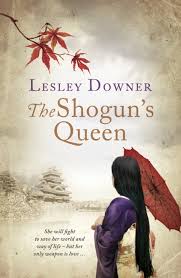
WHAT Hilary Mantel is to the Tudors or Rosemary Beard to the Romans, Lesley Downer is to ancient Japan. History in a kimono. Within the opening pages our 14 year old heroine Okatsu comes within a silk thread of being violated. We are not breathless, but panting, saved by a woman with blackened teeth. We are in a world of palanquins, lanterns, candle wax, tatami, honour and letters. The old order is about to be breached by the arrival of barbarian Americans and Russians. Historically we are at the start of a contact that will start with cholera and eventually end with an atomic bomb. But our heroine is embarked on a different journey through the layers of a secret, all powerful dynasty headed by the omnipotent and rather wonderful Lady Honju-in, mother to the shogun.

In a sense you could see this alien world as akin to Lord of the Rings, just it is Frodo-san. The structure is like a western, we travel in convoy. “Her retinue swelled the already vast procession to bursting point, as if a snake had swallowed a pig.” News travels slowly as they carry on to the capital Edo while the foreigners’ pitch-black funnels and sails gather in the harbour. Okatsu’s name is changed with each elevation of status. Her career is masterminded by a Gandalf style mentor in the swashbuckling Lord Nariakira.  Where it differs is that the story pivots on the role and hidden boudoirs of the women who “paint, write poetry… practise tea ceremony and …wield considerable power.” The men are just plot puppets compared to the likes of the vigilant chaperone Ikushima with her icey smile. If she does not quite pull the strings, she can at least give them a pretty good yank.

Travelogue, tick. Insight into the hidden world of the shogun’s palaces, tick. The good kimono guide, tick, tick. House of Cards style intrigue, tick. This is in fact the prequel to Lesley’s other three books, so a good place to start.

The politics are topically fraught in a Brexit sense as we edge to an impossible impasse. Another idea that rarely gets aired is that an isolated Japan had managed to live at peace for 250 years and evolve its own radiant culture and customs. The arrival of the smelly, hairy giants was the start of globalisation.

The finale would make for great cinema, if you could round up a Mark Rylance  to play the shogun and Glenda Jackson as Lady Honju-in…

Posted in Biography | Leave a comment

The Crossing by Michael Connelly

crossing“They ate at Traxx in Union Station. It was a nice place that was courthouse close and favored at lunchtime by judges and lawyers. The waiter knew Haller and she didn’t bother giving him a menu. He simply ordered the usual.”

COMING off the back of the excellent My Bloody Project which you could stretch a point to say was also a crime detective novel, for comparison we have the uber bestselling Michael Connelly. Here are just the bones of a story, no heart, no lungs, no liver, an X-ray, almost for comparison, a crime in abstract. Reading Connelly is like being on a ski lift taking you up the mountain.

It is also akin to a job interview in that half the pleasure here is being shown around the inner workings (or non workings) of the LAPD. Put on the uniform, wear the badge, see how it fits. Escapism through job roles. Look for the clues. Piece the motives together. Duck the interference from upstairs. (Or let someone else imagine all this for you). Given that you will dip in and out of this text, there are plenty of reminders as to what is going on as you go which is helpful because it is not without its complexities. This is not the only ski lift on this hill.

I reviewed his last book Burning Room here, but we are quite advanced in the Harry Bosch series now which opened in 1992 with Black Echo where Harry, a veteran of two tours of Vietnam and now with five years as a detective is investigating the murder of one of his former comrades. In the Crossing he is partnered up with the defence lawyer Mickey Haller again who has seven books to his name since the best known Lincoln Lawyer in 2005. We have familiarity through volume, which is to say soap opera. Connelly likes to slip in a few real places to colour his fiction so the pair drink vodka and tonics at Musso’s bar where Charlie Chaplin also favoured the martinis. Musso and Frank’s Grill has been trading since 1919 at 6667 Hollywood Boulevard. Traxx mentioned in the opening quote is also a real place.

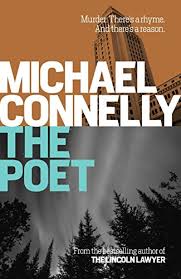
Connelly is also a former crime reporter and so there are bits of the procedural and real crime interspersed here and there. Another character series is Jack McEvoy the reporter on the Rocky Mountain News in the Poet from 1996 but journalism has not proved as rich a setting of inquiry for Connelly.  McEvoy was set up to go out with a splash in the Scarecrow in 2009 as his paper imploded. Bosch though is climbing up the media ladder and now features with a slow drawl on Amazon prime crime.

How far do you need to be detained as regards the plot of the Crossing? Harry is suspended, pending an inquiry. Haller has a bang to right client accused of murder whom he believes innocent and was set up. Harry is reluctant to take the case because he does not work the defence. Except here, he may have to…It is a ball of string…

Posted in Biography | 1 Comment

His bloody project by Graeme Macrae Burnet (Contraband)

macrae

“I am writing this at the behest of my advocate, Mr Andrew Sinclair, who since my incarceration here in Inverness, has treated me with a degree of civility I in no way deserve.”

GOOD writing is like singing, you hit a tone, a note and stick with it. The brogue, the history, the croft all sing as do the swiftly drawn characters and the setting of 1869 Culduie, Rothshire. We don’t get enough of this kind of semi journalistic history which delves into the fiction or faction of our own past and evokes the lives of ordinary people before us in a believable way. The cottages at the centre of this murder are still there and available for rent.

It calls itself a novel but this is also a Macrae writing about a Macrae. We are not bodice-ripping our way around political palaces, but have our hands in the peat bog. The issues are contemporary, as if they never went away and still haunt us. Roddy is a quiet boy in class who lets his sister speak for him but as it turns out he is a bright boy who does not want to show his classmates up…and as Macrae says in the introduction if he wrote this account himself then it was a feat itself, which is a part of the mystery.

The writing is economical, slightly period and elegant without too much flurry or flounce. “It was rather that he was better adapted to unhappiness”. It moves forward with actions and events and a minimum of exposition. We know from early on that we are being played with, drawn into a story of…well perhaps that is the rub. Sane or insane?

Burnet is quietly researching his grandfather’s family history, when he discovers a murderer in the family. “If my judgements in this seem questionable, I can only direct the reader to consult the manuscript which remains in the archive at Inverness,” he confesses. You will want an old armchair, a dram and a Janet MacPherson (for those old enough to remember Dr Finlay) to bring a tray of  shortbread biscuits out to sustain you here.

The organisation is clever. The preface tells of the family quest. This is followed by statements from the scene. And then the main part is in the prison cell. Finally we are in court for the discovery. Throughout Burnet manages to maintain a sense of the present tense as he reassess the guilt or otherwise of his forebear, his involvement providing a gimlet into the heart of the wound and also asking inevitably how we might respond now.

Ideas are played with. What are your plans for the future? Only what is meant for me, I replied. Providence or fatalism hang in the air of the croft politic. Also a sense of the supernatural visually represented by a very different crow to that which features in Max Porters Grief. Eventually both collude. The background scenery is shifted around the great bullying themes of the time, class declensions, pious Presbyterianism, the Highlands, this after all is only a decade or so after the Irish famines, although here it is more bannocks than potatoes. We are also at the infancy of criminal madness…It is listed for the ManBooker Prize later this month.

Posted in 101greatreads, Biography, fiction | Tagged , , , , , , , | 1 Comment