Books of the year 2016

MOST of the titles here for obvious reasons could make a claim to an end of year list. A few stand out as being perhaps more essential than others, not all were released this year but I only recently discovered them. Your Christmas shopping might include requests for any of these in particular:

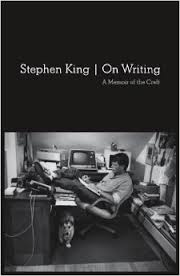
Stephen King’s On Writing is and should be essential reading for anyone who picks up a pen, both personal and instructive and fun.

Obviously the story of the year is dominated by Elena Ferrante’s quartet of Neapolitan novels – My Brilliant Friend, A new Name, Those Who Leave and Lost Child – which will survive the test of time, I suggest. Start at the beginning. They would be good summer beach fodder.  I would not want to pick out a favourite but the third volume runs through more gears than a Bianchi Intrepida.

More narrow in its appeal but no less visceral is Sebastian Barry’s gay western Days Without End, as much a boys book as Ferrante might be said to be for girls but as we are so multi-sexual these days I would not want to misrepresent you.

Towering over academic circles is Charles C Mann’s awesome 1491 which has the rather dull subline New Revelations of the Americas Before Columbus. It has some jaw-dropping explanations, a brilliant vision and written with élan enough to appeal to anyone with a passing interest in all kinds of history. More accessible than his more recent 1495.

Graeme Macrae Burnet’s factional reassembling of his own family’s dark secret His Bloody Project deserves a place too. Why it was deemed too popular to win the Booker is a mystery of its own.

Lastly, and again one that was largely overlooked by mainstream press but will be of fascination to anyone interested in the ’60s and ’70s music, is former Rolling Stone editor Fred Goodman’s access to Allen Klein‘s private papers. A fitting epitaph to an era whose esprit has probably vanished with the election of Donald Trump.


Posted in Xetera | Tagged | Leave a comment

Days without end by Sebastian Barry (Faber)

dayswithoutend

“The method of laying out a corpse in Missouri sure took the proverbial cake.”

ELENA Ferrante took four books to portray her Neapolitan chronicles, so Sebastian Barry follows the fortunes of the McNulty family in different, self standing tomes, just as he did in earlier works with the Dunne family starting with a Long Long Way which was shortlisted for the 2005 Booker prize. The McNulty’s can also be found in the Scriptures and in Whereabouts and a Temporary Gentleman.

Here we go further back in time to 1851, to Missouri, already an Irishman abroad…or here a boy.

Ferrante is of course in translation, where Barry is first hand English (for me). You can climb around these words as if they are a children’s playground. You can dig ditches in the sentences. Move carefully mind, not all is all. Each paragraph has a cleverness, a radiance. The tone has acquired an American lilt.

“Then rain began to fall in an extravagant tantrum. High up in the mountain country though we were, every little river became a huge muscled snake, and the water wanted to find out everything, the meaning of our sad roofs for instance, the meaning of our bunk beds beginning to take the character of little barks, the sure calculation that if it fell day and night no human man was going to get his uniform dry. We was wet to the ribs.”

And it moves along at a fair old pace, a vaudeville show, a buffalo hunt, a massacre, a town shindig, the cold, a flash flood, the encounters with Indians plus time to sketch in his arrival from Ireland. His mother and sister “perished like stray cats” and the old ships started bringing ruined people to Canada. It is deceptively an adventure story that romps along before we have even been introduced to many of the characters. Barry drops little clues to the plot on the wayside as we go west through Virginia and Kentucky. There is even time for a final plot twist on the penultimate page.

At a first glance, you might dismiss all this as a travelogue through America’s travails, but, but read within the arc of Irish history it becomes a different beast, read against other descriptions of battleground scenes from later world wars, read against modern America’s self discovery, against the McNulty family’s own declensions, even in terms of its sexuality, it starts to bristle and beam. Words and language are distilled from the diaries of solders, the idiom of the bayonet, the boredom and Bowie knife, men unfettered by women, commissioned to violence, surviving, or not, in the wilderness of the prairie.

You might want to read this as it were clearing out the belongings of a recently deceased relative in Sligo. In a back drawer you find this tome and start to read in someone else’s old armchair in a room full of cobwebs, dirty windows and memories. I never knew Thomas was that way, a transvestite! The gayness is axiomatic rather than central although the word queer appears quite a few times in different contexts. With a writer like Barry, surely no accident.

Here is another sample of the colour of the writing: “There’s big tall men in the next row of tents that are gunners in charge of mortars. You never seen such wide thick arms on men or wide thick barrels on guns. Look like cannon that have been eating nothing but molasses for a year. Swole up like a giant’s pecker.”

The title Days Without End is somewhat fey and off message. It might have been more obvious to say Thomas McNulty’s American wars. It will make a great western, less John Wayne, more Quentin Tarantino. With an added frisson of a few frills.


Posted in 101greatreads, Biography, fiction | Tagged | Leave a comment

On writing by Stephen King (Pocket)

onwriting

“This is a short book because most books about writing are filled with bullshit.”

BEFORE you are tempted to take out your feather plume and dip it in the black ink, before you type in the password on your computer, or whatever medium you might employ to embark on a cherished memoir, novel, TV play, speech, business report or other serious piece of writing, I urge you to read this masterful primer first. Please.

Here we have the nuts and bolts of good writing, the bonnet of the novel car raised to expose carburettor, battery, leads, gas tank et al. The book is set out in two/three parts opening with a memoir. Then, from page 94 in my edition, is a brilliant appraisal of the skills of the craft, analogous to Elmore Leonard’s Rules of Writing (which he wrote originally as an article for the New Yorker) but more in depth, more practical. King breezes through his very candid construction. He opens with the power of telepathy and moves on to the toolbox of vocabulary, sentences and grammar and thereafter all the commonly posed questions like agents, writer’s groups, peer review, self doubt, editing etc… You will not become a great writer from reading this, he argues, but if you are good, you might get better.

For King, writing is easy. Even the short examples he quotes sing off the page, little hand me downs from an accomplished practitioner. I am not a fan of his genre of horror as in Carrie or Misery, but I do admire his serial novel The Green Mile and Shawshank Redemption. His advice on adverbs is exemplary – i just deleted a ‘greatly’ before admire from the above, as instructed.

His most radical suggestion is that plot is secondary, even an adjunct to, situation. Get the situation right and the characters will form themselves and grow into the story. It is an important distinction. It separates the function of the screenwriter – who has a need for plot lines to follow – from the craft of the originating story teller – whose only loyalty is to his or her reader to his or her story. The creative elements are separated, allocated different job titles. It is a curve you can follow in much popular contemporary fiction from the likes of best sellers like John Grisham, Michael Crichton and King himself. And it is a curve that is helpfully judgmental and definitive. Plot is objective. Situation is subjective. Writer versus critic, different perspectives.

King, of course, is in the first rank of the well known, most rewarded of the airport stationer’s top shelf bestsellers. The lessons he outlines here – including a fascinating suggestion for a DIY project – are as applicable across genres be they literary, corporate or just a desire to communicate. Verbs count.

To dismiss his work as pulp is to misunderstand the job in hand, a point self evident when he discusses how a character might be made to take on motive, to advance an argument.

In the first part he recounts how he began writing for short story magazines – now mostly sadly defunct – for a few dollars and pasting rejection slips on his wall. And the unexpected arrival of his first big pay check when paperback rights were sold. And his struggle with drugs and alcoholism which he points out did not help his writing at all – except in the detail that The Shining would revolve around an alcoholic writer and ex-schoolteacher. As a bonus he also quotes some of his favourite lines like this one from Raymond Chandler: “I lit a cigarette (that) tasted like a plumber’s handkerchief”.

The end has a penetrating human twist drawing a line between fact, fiction and mortality. But from a writing perspective, one comes away with the sure knowledge that King is pretty good at what he does. Sound advice.

There is also a reading list at the end, as good a list as any for the 20th century.


Posted in 101greatreads, Biography, Non fiction | Tagged | Leave a comment

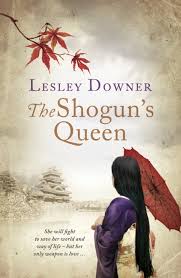
The shogun’s queen by Lesley Downer (Bantam)

shogunqueen

“Japan has been at peace for close on 250 years, ever since Ieyasu Tokugawa unified it in 1603 and took the title of Shogun – Barbarian-quelling Generalissimo.”

WHAT Hilary Mantel is to the Tudors or Rosemary Beard to the Romans, Lesley Downer is to ancient Japan. History in a kimono. Within the opening pages our 14 year old heroine Okatsu comes within a silk thread of being violated. We are not breathless, but panting, saved by a woman with blackened teeth. We are in a world of palanquins, lanterns, candle wax, tatami, honour and letters. The old order is about to be breached by the arrival of barbarian Americans and Russians. Historically we are at the start of a contact that will start with cholera and eventually end with an atomic bomb. But our heroine is embarked on a different journey through the layers of a secret, all powerful dynasty headed by the omnipotent and rather wonderful Lady Honju-in, mother to the shogun.

In a sense you could see this alien world as akin to Lord of the Rings, just it is Frodo-san. The structure is like a western, we travel in convoy. “Her retinue swelled the already vast procession to bursting point, as if a snake had swallowed a pig.” News travels slowly as they carry on to the capital Edo while the foreigners’ pitch-black funnels and sails gather in the harbour. Okatsu’s name is changed with each elevation of status. Her career is masterminded by a Gandalf style mentor in the swashbuckling Lord Nariakira.  Where it differs is that the story pivots on the role and hidden boudoirs of the women who “paint, write poetry… practise tea ceremony and …wield considerable power.” The men are just plot puppets compared to the likes of the vigilant chaperone Ikushima with her icey smile. If she does not quite pull the strings, she can at least give them a pretty good yank.

Travelogue, tick. Insight into the hidden world of the shogun’s palaces, tick. The good kimono guide, tick, tick. House of Cards style intrigue, tick. This is in fact the prequel to Lesley’s other three books, so a good place to start.

The politics are topically fraught in a Brexit sense as we edge to an impossible impasse. Another idea that rarely gets aired is that an isolated Japan had managed to live at peace for 250 years and evolve its own radiant culture and customs. The arrival of the smelly, hairy giants was the start of globalisation.

The finale would make for great cinema, if you could round up a Mark Rylance  to play the shogun and Glenda Jackson as Lady Honju-in…

Posted in Biography | Leave a comment

The Crossing by Michael Connelly

crossing“They ate at Traxx in Union Station. It was a nice place that was courthouse close and favored at lunchtime by judges and lawyers. The waiter knew Haller and she didn’t bother giving him a menu. He simply ordered the usual.”

COMING off the back of the excellent My Bloody Project which you could stretch a point to say was also a crime detective novel, for comparison we have the uber bestselling Michael Connelly. Here are just the bones of a story, no heart, no lungs, no liver, an X-ray, almost for comparison, a crime in abstract. Reading Connelly is like being on a ski lift taking you up the mountain.

It is also akin to a job interview in that half the pleasure here is being shown around the inner workings (or non workings) of the LAPD. Put on the uniform, wear the badge, see how it fits. Escapism through job roles. Look for the clues. Piece the motives together. Duck the interference from upstairs. (Or let someone else imagine all this for you). Given that you will dip in and out of this text, there are plenty of reminders as to what is going on as you go which is helpful because it is not without its complexities. This is not the only ski lift on this hill.

I reviewed his last book Burning Room here, but we are quite advanced in the Harry Bosch series now which opened in 1992 with Black Echo where Harry, a veteran of two tours of Vietnam and now with five years as a detective is investigating the murder of one of his former comrades. In the Crossing he is partnered up with the defence lawyer Mickey Haller again who has seven books to his name since the best known Lincoln Lawyer in 2005. We have familiarity through volume, which is to say soap opera. Connelly likes to slip in a few real places to colour his fiction so the pair drink vodka and tonics at Musso’s bar where Charlie Chaplin also favoured the martinis. Musso and Frank’s Grill has been trading since 1919 at 6667 Hollywood Boulevard. Traxx mentioned in the opening quote is also a real place.

Connelly is also a former crime reporter and so there are bits of the procedural and real crime interspersed here and there. Another character series is Jack McEvoy the reporter on the Rocky Mountain News in the Poet from 1996 but journalism has not proved as rich a setting of inquiry for Connelly.  McEvoy was set up to go out with a splash in the Scarecrow in 2009 as his paper imploded. Bosch though is climbing up the media ladder and now features with a slow drawl on Amazon prime crime.

How far do you need to be detained as regards the plot of the Crossing? Harry is suspended, pending an inquiry. Haller has a bang to right client accused of murder whom he believes innocent and was set up. Harry is reluctant to take the case because he does not work the defence. Except here, he may have to…It is a ball of string…

Posted in Biography | 1 Comment

His bloody project by Graeme Macrae Burnet (Contraband)

macrae

“I am writing this at the behest of my advocate, Mr Andrew Sinclair, who since my incarceration here in Inverness, has treated me with a degree of civility I in no way deserve.”

GOOD writing is like singing, you hit a tone, a note and stick with it. The brogue, the history, the croft all sing as do the swiftly drawn characters and the setting of 1869 Culduie, Rothshire. We don’t get enough of this kind of semi journalistic history which delves into the fiction or faction of our own past and evokes the lives of ordinary people before us in a believable way. The cottages at the centre of this murder are still there and available for rent.

It calls itself a novel but this is also a Macrae writing about a Macrae. We are not bodice-ripping our way around political palaces, but have our hands in the peat bog. The issues are contemporary, as if they never went away and still haunt us. Roddy is a quiet boy in class who lets his sister speak for him but as it turns out he is a bright boy who does not want to show his classmates up…and as Macrae says in the introduction if he wrote this account himself then it was a feat itself, which is a part of the mystery.

The writing is economical, slightly period and elegant without too much flurry or flounce. “It was rather that he was better adapted to unhappiness”. It moves forward with actions and events and a minimum of exposition. We know from early on that we are being played with, drawn into a story of…well perhaps that is the rub. Sane or insane?

Burnet is quietly researching his grandfather’s family history, when he discovers a murderer in the family. “If my judgements in this seem questionable, I can only direct the reader to consult the manuscript which remains in the archive at Inverness,” he confesses. You will want an old armchair, a dram and a Janet MacPherson (for those old enough to remember Dr Finlay) to bring a tray of  shortbread biscuits out to sustain you here.

The organisation is clever. The preface tells of the family quest. This is followed by statements from the scene. And then the main part is in the prison cell. Finally we are in court for the discovery. Throughout Burnet manages to maintain a sense of the present tense as he reassess the guilt or otherwise of his forebear, his involvement providing a gimlet into the heart of the wound and also asking inevitably how we might respond now.

Ideas are played with. What are your plans for the future? Only what is meant for me, I replied. Providence or fatalism hang in the air of the croft politic. Also a sense of the supernatural visually represented by a very different crow to that which features in Max Porters Grief. Eventually both collude. The background scenery is shifted around the great bullying themes of the time, class declensions, pious Presbyterianism, the Highlands, this after all is only a decade or so after the Irish famines, although here it is more bannocks than potatoes. We are also at the infancy of criminal madness…It is listed for the ManBooker Prize later this month.

Posted in 101greatreads, Biography, fiction | Tagged , , , , , , , | 1 Comment

Gilhead by Marilynne Robinson (Virago)

gilhead

“I told you last night that I might be gone sometime, and you said, Where, and I said, To be with the Good Lord, and you said, Why, and I said, Because I am old, and you said, I don’t think you’re old”.

SOME books ought to be read in a certain setting, this one might be an ageing country hotel with a bit of chintz and sherry, on a Sunday, perhaps if you have just been diagnosed with a terminal disease or are thinking of converting to Christianity or are just homesick for middle America.

Gilhead of the title is a town in Iowa. The Ames are its pastors. It is a pious town with pious children and pious families. We open morbidly with a letter from a dying father, a visit to a grave. In a sense this is an elegant discussion about piousness.

By coincidence the French writer Bernanos also gets a name check in this book as in the last review, this time for the Diary of a Country Priest written in 1936, two years before the pamphlet that inspired Lydie Salvayre.

Through the maudlin, gentle reminisce we get the odd gem of an anecdote, the day the tunnel fell in, the night the roof flew off the chicken shack, the stare of the one eyed grandfather, the pastor with a pistol in his belt.

For me this is the American novel. Or the novel America wants, the story America wants to read, a homage to other days, it is what writing, the writer, is for, you might argue where I would not, a custodian of memories.  Cover the American civil war through to the 1950s, explore ideas of religion and preaching through different generations – the father keeps all his old sermons in the attic – drop in a few timely anecdotes,  then this might be the perfect script. It has a fine, upstanding tone as in “there has been so much trouble in the world since then it is hard to think about Kansas”. 

It is all very respectable, worthy like a slow moving river and won a Pulitzer. I am troubled in that the narrator is man where the author is a woman… and it shows. There was no reason to change sex, in fact every reason not to, except I suppose women were not allowed to be pastors back in the day. More is the pity. That is a small detail for the compensations it might have yielded.

Posted in 101greatreads, fiction | Tagged , , , , , | Leave a comment

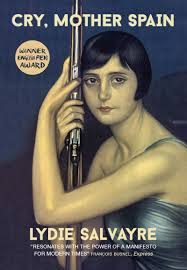
Cry, mother Spain by Lydie Salvayre (Maclehose)

crymotherspain

“In the name of the Father, and of the Son, and of the Holy Spirit. A ceremonial ring on his venerable hand, the Most Reverend Archbishop of Palma pointed at the chests of the ‘guilty poor’, singling them out to the vigilante firing squads.”


NATIONALISM. Fascism. Communism. The Motherland…the epithets seem eerily 20th century now, although timely maybe with events in Europe and elsewhere. Salvayre’s text invokes them in primary colours. Her stage is the now often perhaps forgotten Spanish civil war. The year is 1936. Her inspiration is an overlooked, conflicted contemporary account and her own mother who has dementia but recalls euphoric episodes of her childhood as she is moved around in a wheelchair dying in exile in France. She not so much speaks French as ‘cripples it’. Why don’t you pour us an anisette, ma cherie?

The opening paragraph above illustrates well the purpose of the writing, the venerable hand, the capital letters, the duplicity of the church, not just pointing but at the chests…

We start in the village where already adolescent brother and sister are a part of new political rumblings, oppressed peasants, over-reaching landowner, rumours of far away Mussolini stashing guns for monarchists, young ideals of anarchy…a young general called Franco rising up in the colonies of Morocco and the Canary Islands to topple a weak democracy. The church complicit in sustaining the status quo. The book won the Prix Goncourt and little surprise in that. It is a tour de force, a family saga set against a larger real politic, a sort of coming of age book except perhaps we have not in larger terms as yet arrived…

All our factions and frictions reach a crescendo as they assemble for an almost ghoulish wedding feast, the stiletto of old euro politics twists in the guts of the nation, a newsreel of tragedies, ghosts just half a page of history behind us.

The end is abrupt, too abrupt really, but, like other memories, there may sadly be a reason for that..


Posted in 101greatreads, Biography, fiction | Tagged , , , | Leave a comment

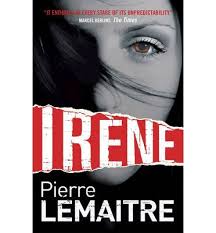
Irene by Pierre Lemaitre (Maclehose)

irene

“Alice, he said, looking at what anyone else would have called a young girl”.

THIS first in a trilogy translated from the French is as brilliant as it is grotesque. Crime writing splits between those trying to do outdo each other exploring the extremes of evil or what one might call trophy crimes and those content to unravel a mystery. Lemaitre manages to do both in what he calls his homage to the genre. I am unconvinced that there is any less dramatic possibility in the old lady who laces the vicar’s tea with arsenic as there is with the maniac with chainsaw. Except, perhaps, threat, which here is inherent.

Lemaitre strays deeply into the territory of what we might call vornography, be advised. But equally he is alert to what he is trying to do, so one of his characters slyly declares that “crime fiction was the limit of his intellectual capabilities“.

We start in conventional crimo style: a victim, we meet our detective Camille who has a defining characteristic, in his case being only 4’11” tall, the structure is diary-like day to day, the setting is Paris,  there is a phone call: ‘it is nothing like I have ever seen before…’

Each of Camille’s team is precisely drawn. The elegant Louis with that “unruly tuft genetically bestowed upon children of the privileged”. The chain smoking, gambler Maleval who “had a charm he abused in every way” and his opposite number poor Armand a “shameful skinflint…indigence incarnate”. Each is a pot boiler in their own right. They confront a series of spectacular murders. I don’t want to spoil the literary element here, just mention that Lemaitre is very well read in the genre. Were it not for the vornography I might have had this in my books of the year. Needlessly gruesome for me, but quick witted and intelligent at the same time.  Yet for all the painstaking detective work afoot, the final unravelling is a bit random, for those of us schooled by Morse and co.

Posted in 101greatreads, fiction | Tagged , , , , | Leave a comment

1491 by Charles C. Mann (Knopf)

1491

“The plane took in weather that was surprisingly cool for central Boliva and flew east, toward the Brazilian border.”

THE symbolism of the plane is that we now take for granted what people less than 100 years ago would never see, the earth from a different perspective. Mann is adept at bringing together  different academic fields from archeology to linguistics to social sciences to biology to aerial photography to tell us another story of where we came from. If you have read Jarred Diamond or Alfred Crosby, you will know the new territory. He is a science writer who takes on his subject with the zeal of a Perry Mason. This is his big scoop.

He has a historian’s turn of phrase. “It seems incumbent on us to take a look” he concludes chapter one…His contention, or rather the book’s explosive contention is that “when Columbus sailed into the Caribbean, the descendants of the world’s Neolithic Revolutions collided, with overwhelming consequences for all”. If you are not aware of all this, then hang on to you hat. “In 1491 the Inka ruled the greatest empire on earth.”

The Americas were not virgin wasteland populated by a few isolated illiterate warring painted tribes. They had already had their own Neolithic revolution centuries before Europe. The civilisations – the two big ones, the Olmecs to the north, Peru to the south –  were as large and organised as those of China or Ghengis Khan. They had technologies as advanced, the difference was they had different ideas as to what to do with them. What happened?

To support this theory you have to follow the reasoning that it was not the military might and the horses of the invading conquistadors that overran the continent. It was something they brought inadvertently with them…hepatitis and smallpox. Within decades these old world diseases had ravaged the empires. New world people had no immunity to zoonic plagues.

The native population was infected and died out within a few years of our arrival leading to the myth that there had been nothing there before. What Mann is at pains to show us now is what exactly was there…It is hard to overstate how exciting, how terrible, how awesome all this was…and not least a sense that thankfully we now live in a society where such sagas can be read safely in bed in the thick pages of  a well produced book and not happen to be there and live it.

The Bering Straits theory – that people walked from Siberia – seems less and less likely as the climactic evidence suggests the bridge between continents would only have been open for a very short period. By this time already, say pre 10,000 BC, in Peru there was extensive fishing off the coast while in the hills they were spinning cotton for nets. Further north around what we now call Mexico there were a series of major earthworks to house a succession of empires which we now call Aztec. Off shoots from here were already in New England by the time the Pilgrim Fathers arrived. We have statues, engravings, we have town outlines in the jungle, we have remains of towns and cities that would put estimates of the population as perhaps greater than Europe pre the pyramids. We have straight lines carved in the ground. We have a great wall of Peru.

Mann blends a history of what we know of these different people, an unravelling of the often bitter, bombastic scientific arguments down the years, much of which is being rewritten in this century by DNA dating, and a travelogue as he visits the sites themselves and some of the protagonists. He has set himself an awesome task.

Sometimes, he argues, that you have to think differently to interpret events. Early settlers often mentioned that the native Indians travelled with flints to set huge fires. Possibly this was a deliberate approach, a different kind of agriculture. The fires would in turn trap the animals for hunting and also in the spring create lush grazing to attract the herds of bison and other animals. Could this have been deliberate? The biggest city in north America was Cahokia outside of modern day St Louis. In 1250 AD it was bigger than London. The Mississippi was obviously crucial.

Until recently it was accepted archeological thinking that people in the Amazon rainforest subsisted on a slash and burn agricultural that could never support more than village life. But as Mann reveals this was a blinkered, imperialistic agenda. To slash and burn you would need metal saws not stone axes, so it is a recent event, post contact. Newer research leads us into different explanations. A high percentage of the trees in the rainforest are in fact fruit bearing. Is it possible they were planted as a secret orchard?

And then we have the terra pata compost which has been found around inhabited sites and ruins. This terra pata is remarkable stuff, based on charcoal and natural degradings, the plants are far more productive than even those fed modern fertilisers. It is found in trenches two feet and more deep alongside ruins. With this kind of soil, you could perhaps have fed sites of 100,00 people or more. One thing about it is sure, it has to be man made, to burn the charcoal…and it predates contact by millenia. Fascinating stuff.

He constructs his arguments carefully, taking respectfully on board both sides…he starts with straight lines, then maize which could not have fertilised itself naturally, the invention of the mathematical zero and then to the numbers. How many people could have lived here. How did they support themselves. What did they eat?

Most worrying perhaps to emerge from this wonderful book is how, time and again, great civilisations and empires managed to disappear so quickly for reasons we can now only guess at…European germs were not the only culprits, just a relatively recent one.


Posted in 101greatreads, Non fiction | Leave a comment