Gilhead by Marilynne Robinson (Virago)

gilhead

“I told you last night that I might be gone sometime, and you said, Where, and I said, To be with the Good Lord, and you said, Why, and I said, Because I am old, and you said, I don’t think you’re old”.

SOME books ought to be read in a certain setting, this one might be an ageing country hotel with a bit of chintz and sherry, on a Sunday, perhaps if you have just been diagnosed with a terminal disease or are thinking of converting to Christianity or are just homesick for middle America.

Gilhead of the title is a town in Iowa. The Ames are its pastors. It is a pious town with pious children and pious families. We open morbidly with a letter from a dying father, a visit to a grave. In a sense this is an elegant discussion about piousness.

By coincidence the French writer Bernanos also gets a name check in this book as in the last review, this time for the Diary of a Country Priest written in 1936, two years before the pamphlet that inspired Lydie Salvayre.

Through the maudlin, gentle reminisce we get the odd gem of an anecdote, the day the tunnel fell in, the night the roof flew off the chicken shack, the stare of the one eyed grandfather, the pastor with a pistol in his belt.

For me this is the American novel. Or the novel America wants, the story America wants to read, a homage to other days, it is what writing, the writer, is for, you might argue where I would not, a custodian of memories.  Cover the American civil war through to the 1950s, explore ideas of religion and preaching through different generations – the father keeps all his old sermons in the attic – drop in a few timely anecdotes,  then this might be the perfect script. It has a fine, upstanding tone as in “there has been so much trouble in the world since then it is hard to think about Kansas”. 

It is all very respectable, worthy like a slow moving river and won a Pulitzer. I am troubled in that the narrator is man where the author is a woman… and it shows. There was no reason to change sex, in fact every reason not to, except I suppose women were not allowed to be pastors back in the day. More is the pity. That is a small detail for the compensations it might have yielded.

Posted in 101greatreads, fiction | Tagged , , , , , | Leave a comment

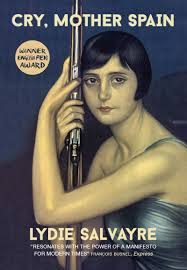
Cry, mother Spain by Lydie Salvayre (Maclehose)

crymotherspain

“In the name of the Father, and of the Son, and of the Holy Spirit. A ceremonial ring on his venerable hand, the Most Reverend Archbishop of Palma pointed at the chests of the ‘guilty poor’, singling them out to the vigilante firing squads.”


NATIONALISM. Fascism. Communism. The Motherland…the epithets seem eerily 20th century now, although timely maybe with events in Europe and elsewhere. Salvayre’s text invokes them in primary colours. Her stage is the now often perhaps forgotten Spanish civil war. The year is 1936. Her inspiration is an overlooked, conflicted contemporary account and her own mother who has dementia but recalls euphoric episodes of her childhood as she is moved around in a wheelchair dying in exile in France. She not so much speaks French as ‘cripples it’. Why don’t you pour us an anisette, ma cherie?

The opening paragraph above illustrates well the purpose of the writing, the venerable hand, the capital letters, the duplicity of the church, not just pointing but at the chests…

We start in the village where already adolescent brother and sister are a part of new political rumblings, oppressed peasants, over-reaching landowner, rumours of far away Mussolini stashing guns for monarchists, young ideals of anarchy…a young general called Franco rising up in the colonies of Morocco and the Canary Islands to topple a weak democracy. The church complicit in sustaining the status quo. The book won the Prix Goncourt and little surprise in that. It is a tour de force, a family saga set against a larger real politic, a sort of coming of age book except perhaps we have not in larger terms as yet arrived…

All our factions and frictions reach a crescendo as they assemble for an almost ghoulish wedding feast, the stiletto of old euro politics twists in the guts of the nation, a newsreel of tragedies, ghosts just half a page of history behind us.

The end is abrupt, too abrupt really, but, like other memories, there may sadly be a reason for that..


Posted in 101greatreads, Biography, fiction | Tagged , , , | Leave a comment

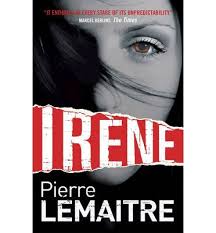
Irene by Pierre Lemaitre (Maclehose)

irene

“Alice, he said, looking at what anyone else would have called a young girl”.

THIS first in a trilogy translated from the French is as brilliant as it is grotesque. Crime writing splits between those trying to do outdo each other exploring the extremes of evil or what one might call trophy crimes and those content to unravel a mystery. Lemaitre manages to do both in what he calls his homage to the genre. I am unconvinced that there is any less dramatic possibility in the old lady who laces the vicar’s tea with arsenic as there is with the maniac with chainsaw. Except, perhaps, threat, which here is inherent.

Lemaitre strays deeply into the territory of what we might call vornography, be advised. But equally he is alert to what he is trying to do, so one of his characters slyly declares that “crime fiction was the limit of his intellectual capabilities“.

We start in conventional crimo style: a victim, we meet our detective Camille who has a defining characteristic, in his case being only 4’11” tall, the structure is diary-like day to day, the setting is Paris,  there is a phone call: ‘it is nothing like I have ever seen before…’

Each of Camille’s team is precisely drawn. The elegant Louis with that “unruly tuft genetically bestowed upon children of the privileged”. The chain smoking, gambler Maleval who “had a charm he abused in every way” and his opposite number poor Armand a “shameful skinflint…indigence incarnate”. Each is a pot boiler in their own right. They confront a series of spectacular murders. I don’t want to spoil the literary element here, just mention that Lemaitre is very well read in the genre. Were it not for the vornography I might have had this in my books of the year. Needlessly gruesome for me, but quick witted and intelligent at the same time.  Yet for all the painstaking detective work afoot, the final unravelling is a bit random, for those of us schooled by Morse and co.

Posted in 101greatreads, fiction | Tagged , , , , | Leave a comment

1491 by Charles C. Mann (Knopf)

1491

“The plane took in weather that was surprisingly cool for central Boliva and flew east, toward the Brazilian border.”

THE symbolism of the plane is that we now take for granted what people less than 100 years ago would never see, the earth from a different perspective. Mann is adept at bringing together  different academic fields from archeology to linguistics to social sciences to biology to aerial photography to tell us another story of where we came from. If you have read Jarred Diamond or Alfred Crosby, you will know the new territory. He is a science writer who takes on his subject with the zeal of a Perry Mason. This is his big scoop.

He has a historian’s turn of phrase. “It seems incumbent on us to take a look” he concludes chapter one…His contention, or rather the book’s explosive contention is that “when Columbus sailed into the Caribbean, the descendants of the world’s Neolithic Revolutions collided, with overwhelming consequences for all”. If you are not aware of all this, then hang on to you hat. “In 1491 the Inka ruled the greatest empire on earth.”

The Americas were not virgin wasteland populated by a few isolated illiterate warring painted tribes. They had already had their own Neolithic revolution centuries before Europe. The civilisations – the two big ones, the Olmecs to the north, Peru to the south –  were as large and organised as those of China or Ghengis Khan. They had technologies as advanced, the difference was they had different ideas as to what to do with them. What happened?

To support this theory you have to follow the reasoning that it was not the military might and the horses of the invading conquistadors that overran the continent. It was something they brought inadvertently with them…hepatitis and smallpox. Within decades these old world diseases had ravaged the empires. New world people had no immunity to zoonic plagues.

The native population was infected and died out within a few years of our arrival leading to the myth that there had been nothing there before. What Mann is at pains to show us now is what exactly was there…It is hard to overstate how exciting, how terrible, how awesome all this was…and not least a sense that thankfully we now live in a society where such sagas can be read safely in bed in the thick pages of  a well produced book and not happen to be there and live it.

The Bering Straits theory – that people walked from Siberia – seems less and less likely as the climactic evidence suggests the bridge between continents would only have been open for a very short period. By this time already, say pre 10,000 BC, in Peru there was extensive fishing off the coast while in the hills they were spinning cotton for nets. Further north around what we now call Mexico there were a series of major earthworks to house a succession of empires which we now call Aztec. Off shoots from here were already in New England by the time the Pilgrim Fathers arrived. We have statues, engravings, we have town outlines in the jungle, we have remains of towns and cities that would put estimates of the population as perhaps greater than Europe pre the pyramids. We have straight lines carved in the ground. We have a great wall of Peru.

Mann blends a history of what we know of these different people, an unravelling of the often bitter, bombastic scientific arguments down the years, much of which is being rewritten in this century by DNA dating, and a travelogue as he visits the sites themselves and some of the protagonists. He has set himself an awesome task.

Sometimes, he argues, that you have to think differently to interpret events. Early settlers often mentioned that the native Indians travelled with flints to set huge fires. Possibly this was a deliberate approach, a different kind of agriculture. The fires would in turn trap the animals for hunting and also in the spring create lush grazing to attract the herds of bison and other animals. Could this have been deliberate? The biggest city in north America was Cahokia outside of modern day St Louis. In 1250 AD it was bigger than London. The Mississippi was obviously crucial.

Until recently it was accepted archeological thinking that people in the Amazon rainforest subsisted on a slash and burn agricultural that could never support more than village life. But as Mann reveals this was a blinkered, imperialistic agenda. To slash and burn you would need metal saws not stone axes, so it is a recent event, post contact. Newer research leads us into different explanations. A high percentage of the trees in the rainforest are in fact fruit bearing. Is it possible they were planted as a secret orchard?

And then we have the terra pata compost which has been found around inhabited sites and ruins. This terra pata is remarkable stuff, based on charcoal and natural degradings, the plants are far more productive than even those fed modern fertilisers. It is found in trenches two feet and more deep alongside ruins. With this kind of soil, you could perhaps have fed sites of 100,00 people or more. One thing about it is sure, it has to be man made, to burn the charcoal…and it predates contact by millenia. Fascinating stuff.

He constructs his arguments carefully, taking respectfully on board both sides…he starts with straight lines, then maize which could not have fertilised itself naturally, the invention of the mathematical zero and then to the numbers. How many people could have lived here. How did they support themselves. What did they eat?

Most worrying perhaps to emerge from this wonderful book is how, time and again, great civilisations and empires managed to disappear so quickly for reasons we can now only guess at…European germs were not the only culprits, just a relatively recent one.


Posted in 101greatreads, Non fiction | Leave a comment

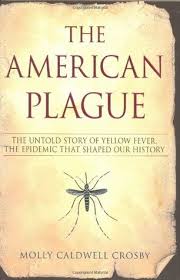
The American plague by Molly Caldwell Crosby (Berkley)

americanplague

“The rain came in west Africa. A massive wind blew in from the Atlantic coast bringing the deluge of water known as the south-west monsoon.”

IT is fitting that there is quote early on here from Edgar Allan Poe. Before science gave us its ghastly, rational explanations, plagues must have seemed like acts of god, revenge for heathen activities, out of the heavens awfulness. Here Crosby tackles one of the big ones, yellow fever, so called because post death the corpse literally turns to nicotine yellow. “Unlike any other disease (it) carried a mysterious horror to it. Its attack was acute and quick, its duration painful.” It struck so suddenly that sometimes someone would say: I think I have the fever, I will just go and lie down. And they would be dead in the morning. Crosby who lives in Memphis focuses on that town’s epidemic of 1878 which proved especially virile. “In July the city boasted a population of 47,000, by September 19,000 remained and 17,000 had yellow fever.”

She has a cinematic eye for the details, the mosquitos in the hold of the ship in Africa, the slack evasive quarantine in New Orleans, the two nuns arriving at a stricken house “a yellow card on the door swinging from a nail”, letters from a husband who stayed behind, the telegram that reads: “Father and mother are lying dead in the house, brother is dying, send me some help, no money, Sallie U”.

We also have the medical detective story. Quarantine – from the Italian for 40 which was how many days ships were held at anchor before being allowed into port –  was the only defense. The idea that a third party might be involved – mosquitos thriving off the filth of a pre-sewer urbanity – would take decades to be understood and the story would move on to another stricken island and entry point for this deadly immigrant, Cuba. It would make good horror cinema this, a mix of Deadwood meets killer zombies (one side symptom saw people going mad and running the streets screaming), the faction is relayed with the compelling, frightening prose of a Michael Crichton thriller staged with meticulous details of late Victorian scenery culled from newspapers of the time.

On the way Crosby drops a few by-the-bys as to the emergence of modern medicine, how children were preferred guinea pigs as blank slates (Edward Jenner who found a vaccine for smallpox destroyed the life of his own son by testing on him), doctors might self experiment (William Hasted self-tested the anaesthetic puissance of cocaine) and here new immigrants were covertly signed up into medical programmes. Soldiers though often volunteered, aware perhaps that their chance of dying of disease was much higher than in some bloody battle and their survival much more likely under controlled hospital conditions.

To disprove the idea that yellow fever might be a germ or transmitted by humans,  soldiers were quarantined in barracks with the dirty sheets and detritus from the yellow fever ward and emerged weeks later unscathed. In parallel, the doctors self infected themselves with bites from the female striped house mosquito…one died and another was irreversibly affected for the rest of his life. As with all great fiction, it is the villain that is the real star in the story, but one she warns that has probably not gone away and lingers on in African and south American jungles, incubated by monkeys…and biding its time.

Posted in 101greatreads, Biography, Non fiction | Tagged , , , , , | 1 Comment

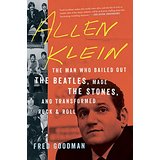
Allen Klein by Fred Goodman (Mariner)

allen klein

“It may have been the dramatic grounds; he may have been impressed that George C Scott and Colleen Dewhurst were renting it. Whatever the reason, Allen Klein wanted the house.”

THE house was where the deals were done. In the unlikely event that you might be unawares, the sub-deck exclaims that Klein was the “man who bailed out the Beatles, made the Stones and transformed rock & roll”. Fred Goodman should know. He is a former editor of Rolling Stone. Here he had access to Klein’s business papers, which, as a prodigious litigator, were extensive.

For all the tomes written about rock & roll, this one gets down and dirty in the nitty gritty legalese.

The opening is pretty Jewish. Immigrant butcher’s son born into the depression makes good. Very good. Brilliant, pathologically obsessive, rude, terrified to be alone, a detail obsessive. Not a particularly nice boy, certainly not someone you would want turning up on your doorstep in the middle of the night but, as his mother (deceased) might have said, no worse than the other record A&R men he dealt with. In a sense this is a business book but also a witness to just how many Jewish people were the midwives at the birth of R&R. Klein is often portrayed as the bogey man of R&R management but like Andrew Loog Oldham perhaps he was actually a part of the whole process, the most incendiary of all, integral not a peripheral suit, just his notes were $. This rather picks up where Oldham’s odd autobiography Stoned peters out.

The juicy bits start to flow as we meet the stellar cast of Sam Cooke, Mickie Most, Oldham, Brian Epstein, Jagger, Lennon etc..it is like a R&R travelator.

Klein, Goodman outlines, argued that the artistic talent counted for more than anything else. So he rewrote the contracts. This particular skill he had learned from auditing record company books to find unpaid royalties. At first this was not even for the artists themselves (who were not paid anything of note anyway) but their publishers and managers. In the the UK he began working with the likes of the Animals, Herman’s Hermits and Donavon (who had to take a £7million tax hit to marry his girlfriend, btw).

Klein had a pretty compelling opening line: “I can make you a million dollars”. He was an accountant, but also a compulsive salesman par excellence. As R&R started to tear up the rule book, Alan was on hand to script the new republic. Not everybody liked that. Not everyone liked that Allen wanted to know where the royalties were.

We are leading up here to the nuclear confrontations of Klein and Lennon on one side and McCartney and the Eastmans on the other. By this point the Beatles were already broken, almost bankrupt. Soft deals done by their original manager Brian Epstein meant the record companies were making tens of millions a week. The tax man was coming in for his 90 per cent of the boys’ take plus the band was haemorrhaging what they did have in the altruistic, hippy cash cow of their own Apple corporation where the staff were literally helping themselves to the money out of the newly installed cash points outside the office.

Klein and Lennon hit it off instantly. Lennon needed him.  Klein equally had a messianic zeal to secure his life’s ambition of managing the big one, the Beatles.  He done his homework.  He knew every one of Lennon’s songs. He was a fan. They would become mates, also with Yoko. Lennon related to Klein as a street wise practitioner. They were equals.

The problem would be Paul’s girlfriend. Linda Eastman’s family were lawyers. They also fancied a piece of the action. And with a bit of digging Klein uncovered a touchy point that Lee Eastman was actually Leo Epstein, like himself a Russian Jew who started as an entertainment lawyer but had diversified into fine art.

Paul was especially embittered by how the Beatles song catalogue had been purloined down the line and ended up with another famous Jew in TV tycoon Lew Grade bypassing the boys altogether thanks to Dick James, aka Leon Isaac Vapnick. The band was between a rock and a hard place.

This is just one acrimonious anecdote from the early testosterone driven meeting with John Eastman aimed at a rapprochement. Eastman comes out of the bathroom in Klein’s house waving a box of suppositories for everyone to see. “Why Alan, I thought you were the perfect arsehole”.

Of all the histories of R&R, this one touches on the saddest truth of the Beatles. The boys may have sung about peace and love but backstage the corporates had them by the cahoonas. No one really expected the whole R&R thing to last more than a few years so when it began to morph into viral money the whole circus became surreal. Klein eventually would find himself tailed by the IRS for five years looking for evidence of misdemeanour.

In this reading Klein facilitated the first big stadium shows of the Rolling Stones and was central in George Harrison creating the first charity rock event for Bangladesh, indeed for most of Harrison’s post Beatles catalogue and even ended up owning both My Sweet Lord and He’s So Fine from which it was allegedly plagiarised. That is Allen did, not George. George just wrote one of them. Allen wrote the contract.

Klein knew where the money was.  He spread contracted revenues across 20 years to minimise the tax impact on his clients, the interest on the interest however was not accounted for. That went to fund the financial Disneyland of suites at the Dorchester, the red eye flights across the Atlantic, the Rolls Royces and later the lawyers and lawyers. No one ever paid when Allen was around.

There is an argument that he ripped the bands off. But they just wanted to be stars. That is what they signed up to do. They didn’t, no one did, except perhaps Klein, know just how much money that might make. Klein had the financial imagination.

The English born pugilistic promoter Don Arden also gets a namecheck here which rather validates how it was at the sharp end or in his case the end of a shotgun His story can be found in Mr Big (Robson). He is Sharon Osbourne’s father.

Reading again the aspirations of those times, often so beautifully articulated in song and spirit, it seems we have moved a very, very long way away from such ideals. The forensic evidence, sadly, is here. “Fucking suits,” as Lennon said.

Posted in 101greatreads, Biography, Non fiction | Tagged , , , , , , , , , | Leave a comment

The story of the lost child by Elena Ferrante (Europa)

stopry of the lost child

“From October 1976 until 1979, when I returned to Naples to live, I avoided resuming a steady relationship with Lila. But it wasn’t easy.”

OF COURSE,  it was not easy. Lila “remained the same restless creature with an irresistible force of attraction”. By the time that Lena reveals that the two of them are opposites: “I fair, she dark, I calm, she anxious, I likable, she malicious”, we know them well enough to suspect that our narrator is not as insightful or as objective as she thinks. She has become increasingly and in parts overwhelmingly emotional. She is in equal parts happy and unhappy as if on a playground seesaw that flips her up in the air as it hits the ground. Calm is not a word that springs to mind. Passionate, perhaps.

The bigger themes by now in this the fourth and last tome of the series come tumbling out of the cupboard, the role of women, of gender, of corruption, of motherhood and daughters. The student ideals of the ’60s and ’70s are bundled up in  the turbulent lives of their friends and the killer irony of Lela’s new career. Old tenements and modern mores rub shoulders. The children of the first books are maturing into elegant, dramatic portraits, Ferrante moves them around to get them to make her points for her and mark the passage of time.

If you have got this far, then you only need to be advised that she keeps her nerve as a writer and even drills down into the depths and allows herself a confessional aside: “it is more and more difficult to keep the thread of the story taut”….but her characters do that for her.

The axis though is always the girls relationship…“I’m a scribble on a scribble, completely unsuitable for one of your books; forget it Lenu, one doesn’t tell the story of an erasure”. In that Lila is wrong.

As with the first book, this is really two books wrapped as one, the first part entitled simply Maturity, a torrent of everyday events, the second more personal and reflective, a slow climb to an achingly intense crescendo, and yes a stiletto twist. The latter opens with this heroic passage:

“I left Naples definitively in 1995, when everyone said that the city was reviving. But I no longer believed in its resurrections. Over the years I had seen the advent of the new railway station, the dull tower of the skyscraper on Via Novara, the soaring structures of Scampia, the proliferation of tall, shining buildings above the gray stone of Arenaccia, of Via Taddeo da Sessa, of  Piazza Nazionale. Those buildings, conceived in France or Japan and rising between Ponticelli and Poggioreale, with the usual breakdowns and delays, had immediately, at high speed, lost all their lustre and become dens for the desperate. So what resurrection? It was only cosmetic, a powder of modernity applied randomly, and boastfully, to the corrupt face of the city.”

A masterpiece.

Posted in 101greatreads, Biography, fiction | Tagged , , , | Leave a comment

The vegetarian by Han Kang (Portobello)

vegetarian“Before my wife turned vegetarian, I had always thought of her as completely unremarkable in every way.”

HAD this abrasive exercise in misogynic chauvinism, puppet women, mad dreams, bizarre pornography been written by a man I wager it might have found its way into the rubbish bin. Kang though is female. We are invited to think her odd kaleidoscope reflects the hidden soul of Korea, but for me it is driven by the same western, or outsider, voyeurism that was responsible for comfort stations. It is not literature, it is smut, school boy smut, the 20th century fantasy of the submissive Asian woman slaking male lusts. Technically it is fluently written/translated but the three parts have little/nothing to do with each other linked only by an inarticulate victimhood which reaches an anonymous if grisly conclusion. The vegetarian of the title is somewhat academic.

The fact that it won the Man Book International is inexplicably depressing, the more so when the short list also included the last of the Elena Ferrante Neapolitan novels which surely will count as one of the punctuation points of modern writing. This can only go down as a snigger.


Posted in 101greatreads, fiction | Tagged , , | Leave a comment

Grief is the thing with feathers by Max Porter (Faber)

grief

“There is a feather on my pillow.”

THERE are only three characters here, the crow, the dad and twin boys sharing the grief after their mother dies. Each has their perspective. The dad: ‘wondering what to do. Shuffling around‘. The boys literal: ‘Where are the fire engines? Where is the noise and clamour of an event like this?’. And sage pagan old crow: ‘Oi, look, trust me. Did I or did I not faithfully deliver St Vincent to Lisbon?’

Crow was the volume of Ted Hughes black poems he wrote between 1966 and 1969 after the death of his wife Sylvia Plath and which he regarded as his masterpiece. Notionally here dad is working on Hughes again. Where Ted’s crow was a symbol, an etching, here he has come to life, he is animated:

“Head down, bottle top, potter /Head down, mop-a-lot, hopper/He could learn a lot from me/That is why I am here.”

The crow is in the drama. The crow is the grief. He almost has a cockney lilt to his banter. Dad is coping, the twin boys are romping, the bird is the manifestation, the reality.

It is poetry as prose, contained within a novel-like context but the crow has wings and can take us to other dark parts of the netherworld, as in his bad dreams.

Rather nicely, Porter, who has been a Granta editor as well as a bookseller himself, offered the work to Hughes’ publishers Faber. Luckily Hannah Griffiths at Faber got it straight away and they have produced an edition worth the keeping.

Here is a sample of the quality of the writing:

“On the left we have the dad. This image occupies the functional position of the here-goes, the ask, what I like to call the George Dyer-on-the-shitter, the left flank, the hoist, the education spot, the empty church, the torture step, the pain panel, the muscular”.

It repays re-reading a few times. And more.


Posted in 101greatreads, fiction | Tagged , , , , , | Leave a comment

Mothering Sunday by Graham Swift (Scribner)

morthering sunday

“Once upon a time, before the boys were killed and when there were more houses than cars, before the male servants disappeared and they made do, at Upleigh and at Beechwood, with just a cook and a maid, the Sheringhams had owned not just four horses in their own stable, but what might be termed a ‘real horse’, a racehorse, a thoroughbred.”

I HAD not intended to review this until Jon Snow chose it as his Good Read for BBC Radio 4, so perhaps there is room for an alternative view. Balance, as the BBC is always saying. I admire the tight precision of Graham Swift’s writing, and the format here with a cover of a striking detail from Modigliani’s Reclining Nude all augur well, 129 pages with lots of white space beckon as an easy read. The Guardian and the Independent both rated this as Swift’s best book yet, a polite cliché when reviewers do not really know what to say but feel obliged to flatter. I don’t agree (and I would not mind reading back through his other dozen books to make my case. I have fond memories of Last Orders, for example).

The first part is shimmeringly brilliant as the opening 62 word sentence illustrates well enough. The hinge being that Mother’s Day is the loneliest day of all for an orphan. It is calm, in tune with its 1920s era, erotic, beautiful even. But then we have a plot cliché like Swift has got fed up with his characters and mentally said oh sod it, I want to write about something else instead. A schism appears. Part two is another book, which if it were a true story would be amazing, but it is not, as far as I am aware, so it peters out as so much well, nonsense. Events and characters of part one have no bearing on part two. For me this is a cardinal sin for the story teller, editors and publishers who acquiesce and why writers like Ferrante and Rowling and even crime writers who stick to their vision succeed.

A disappointment as large as the opening is a pleasure.

On the same show Trevor McDonald upped the stakes with the challenging 1,232 pages albeit important Master of the Senate: The Years of Lyndon Johnson (Volume 3) by Robert A Caro which highlights the strange historical conundrum of Johnson being both architect and overlord of the Vietnam war and the Texan who stood up for civil rights legislation which indirectly led to Barak Obama’s presidency.

The third book was one I would have included here, but it was published in 1996, Bill Bryson’s hilarious Notes From  Small Island. 


Posted in Biography, fiction | Tagged , , , , , , , | Leave a comment