Leviathan by Philip Hoare (Fourth Estate)

leviathan

“Perhaps it is because I was nearly born underwater”

A wonderful book of journalistic discovery about whales. I read it too long ago to review it properly but it stays in my mind as one of the reasons to start this blog. If you like Moby Dick…if you want to know about isinglass…if you want to know about a boy from Southampton and his quest for knowledge…great read.

Posted in 101greatreads, Non fiction | Tagged , , , | 1 Comment

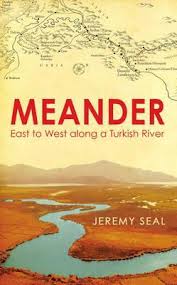
Meander by Jeremy Seal (Chatto & Windus)

meander

“I would have gone down the Meander years ago if I’d known it existed.”

Apart from the maps, which are almost as deliberately confusing as perhaps the suspicious Turkish military might have intended for foreigners, this is a brilliantly informative re-telling of a history that has been hidden beneath centuries of western prejudice and self interest.

The Meander is a river in Turkey which winds around and around and from which we take the word itself. Jeremy Seal sets out to navigate it in a small canoe but this is no travel book really rather a journey back beyond Biblical times that restates the importance of this part of the world as being at the heart of Mediterranean ambitions and politics, the axis of east and west, infidel and christianity, old and new right up, even to an extent to today…

His descriptions are precise and evocative. “It had not crossed my mind that laying my hands on a trowel might present a problem in a place like Dinar. How but with trowels had the chillies, peppers and aubergines that run amok in the scruffy little town’s kitchen gardens been planted? What of the geraniums that bloomed in rusty cooking oil tines at the foot of whitewashed walls?”

And they lay questions into the present and past importance of Turkey as a nation and how it was shaped in the modern context. The living history comes from the people he encounters as he tries to chart a course down the river, which is mostly but not always still flowing. Across this he interlays the older magnificence of empire and lays down a different context to that taught at least in my school which was just a one sided jingoistic narrow crusader view. This is the heathen version. the question is who were the heathen?

Posted in 101greatreads, Non fiction | Tagged , , , | Leave a comment

Goldfinch by Donna Tartt (Little, Brown)

goldfinch


I should post a reservation about BIG books in general. Both the Booker listed Kills and the winning Luminaries are substantial door-holders, so is Donna Tartt’s Goldfinch, fewer pages but denser type, smaller margins. Such expansiveness demands more time, more intimacy, more attention and not necessarily in the first two examples at least to advantage. I resent the literary monopoly taken on my time. One expects  a bigger payback.

That said Tartt makes the opening 150 pages or so an elegant captivating train ride into a New York trauma.

She has a number of qualities in her writing, noticeably a camera like roving attention to details, a reverse pornography if you like where she carefully dresses each of the people we meet and their surroundings. She also seems to demonstrably like her characters as if she is as curious as we are to know about them.  “Over his clothes, a rich paisley robe with satin lapels almost fell to his ankles”.

She moves her plot scenery around seamlessly, idly shuffling the cards of her tale, a coquette perhaps. The dialogue is sharp almost too much so in the case of Theo’s pal Andy rowing with his father. The characters, carved as lovingly as by any sculptress, around our guilt-inclined boy hero…So far so good…

Tartt is from Grenada, Mississippi. She has that calm southern sense of a drawl. She takes her time, perhaps not the shrill, alcohol driven drive of a Tennessee Williams but blessed like Irish writers often are with a cadence, a lilt, a poetry even. We could be sitting on the porch while she unfolds all this…

The comparison is with Martin Amis. Both are unusually gifted with words, writers in search of a story worth the telling. Tartt perhaps has the edge in her portraitures. I want to be on the guest list of one of  Mrs Barbour’s socialite parties. And she is the better story-teller. Amis perhaps is the sharper lyricist.

But then we hit this fundamental, almost elementary flaw. She is a woman writing as a man/boy. In the opening pages, it is almost an irrelevance. Theo could be either girl or boy but then we lurch into the teenage relationship with the wonderful Boris and we are moved outside any comfort zone of the sexes. This is a 50 something year old woman describing an adolescent relationship between two boys. And she does not get it or does not get inside the virile male humour that binds them. They are firecrackers going off in different directions.

Writing across the sexes is tricky, often fatal. Sometimes it can work where it is obvious what is happening, say the Time Traveller’s Wife or Gone Girl where you know his angst is really her turning the stilletto in his emotional ribs. Here Tartt is losing control. Her characters have gone rogue. She describes their antics like an aunt, but she is using the first person and cannot cross the natural divide.

Part three opens with a quote from Francois de la Rochefoucauld: “We are so accustomed to disguise ourselves to others that in the end, we become disguised to ourselves” which is unfortunate because at this stage we, and we are on page 370, as readers are uncertain as to who is really who, our narrator has no core, our world is shifting randomly, coincidentally trying to get back to something we sensed 200 pages earlier…More the pity because there are two subplots here which might have been books on their own, the superb Boris and the dog road movie.

Tartt now slams her foot on the literary brakes and is trying to get things back in order for which she resorts to some fairly incredible coincidences like she has has been taking the same drugs as her boy heroes…

Apart from the sex issue there is an issue of age. This text is not really believable as that of a young teenage boy. It is more of a twenty-something student angst rant. What keeps us – or me – going is not his concerns childish or otherwise but the fascinating cast of people around him described with the finesse of a Royal Copenhagen vase.

“Fair haired, brick red in the face, with startling robin’s-egg eyes, he was paunchy from drinking…”

Even the house assumes personality:

“But as much as I missed the nervous tingle of her presence, I was soothed by the house…old portraits and poorly lit hallways, loudly ticking clocks. It was as if I’d signed on as a cabin boy on the Marie Celeste…I moved about through stagnant silences, the pools of shadow and deep sun, the old floors creaked underfoot like the deck of a ship…Hobie’s presence below stairs was an anchor, a friendly weight: I was comforted to hear the tap of his mallet floating up…”

Even as the plot wears thin like a cigarette that has burnt down and all that is left now is the smoke and the mawkish meanderings of the teenage narrator become more nonsensical, Theo’s lens on the world around him does not miss a speck of dust, a fading of the curtains or the goodly humour of his consorts. We are with him in a travelogue, a timeologue even as he himself becomes more and more opaque as if he is being consumed by the telling…swept up by the people around him.

“Mrs DeFrees, a dealer in nineteenth century water colours who for all her stiff clothes and strong perfumes was a hugger and cuddler, with old lady-ish habits of liking to hold your arm or pat your hand as she talked…”

We are witnessing a literary mutiny where the hero and central character is being subsumed. This might not matter except it is written in the first person and we cannot escape him and his feeble transience.

Ultimately the analogy is with one of Hobie’s lovingly restored pieces of old furniture. Is it original? Does it matter? Where is the perception? Like the furniture pieces, the novel is a lash up of six or seven stories, none of which are satisfying taken to their conclusion. Everything is built around our vacuous victim self obsessed narrator who in a very teenage way is just not appreciating the fascinating cast assembled around his life or even us as readers. Finally he outrageously says: “No one is going to read this…” Oh, yes they are Theo, we just did. That is 700 pages out of my life.

So instead we take refuge in DT herself as Author, a self conscious schizophrenia. Theo is her day job. This is her office of characters. She hovers her cursor over the plot screen as she pleases. And she is bitchy enough that the other young female characters are as thin as paper, anorexic pawns that do not threaten her command of your attention, or if you want to believe this, which I don’t, more victims of post stress disorders.

The closest we get to human contact or emotions is when Theo reveals he was so nervous that he just “threw himself on top of this girl”. Now let us pause a moment here, Donna. Theo 16, Julie 27. Bedroom. Explain? Explore? Cause? Effect? Nah.

Eventually I am wanting a sequel, not necessarily written by Tartt herself, where all these captivating characters can be gathered up and resolved, the story lines rounded off and given a final context, a life that is not full of arbitrary coincidences or just needlessly slamming a few people together as if something important is being said. “Ten years later…”

Tartt finally cops out with the grandiose statement that the book is about the : “polychrome edge between truth and untruth”. Nah it isn’t.

There is a point about halfway where a delicious plot beckons but she double-backs and re-creates almost the same thing again like she wants a double barrelled shooting. The first set up is very old fashioned Graham Greene, the second very Martin Amis like sleazy. But it is a sawn off shot gun and the narrative pellets scatter.

One feels the wheels of publishing behind this book. Donna, you are big talent, you must write a big book. Come back in 10 years with an opus. Make it so big no one can argue with you.

And a few years later, a couple of hundred pages in, there is a second conversation which says: Oh, and give me a movie in there. But I am half way through? Got to have a movie in there. And as with the the Booker winning Luminaries if ever this makes the big screen some Hollywood screenwriter will have to start this story half way through.

Posted in fiction, Outtakes | Tagged , , , | Leave a comment

Ghost Light by Joseph O’Connor (Secker)

ghost light

“In the top floor room of the dilapidated townhouse across the Terrace, a light has been on all night.”

O’CONNOR becomes the first writer in this blog to have two books listed in the 101 lists. No apologies there. As the title implies this is a haunting book.

It is a love story that slowly, slowly reveals itself and its beginnings with the first traumatic performance of J.M Synge’s Playboy of the Western World in Dublin 1907.

He writes in the second person ie “You are 65 now” which gives it a brotherly-sisterly intimacy. An aching, non judgemental sadness. O’Connor says in the acknowledgements that he grew up a mile away from the house where Synge died but the historical skeleton on which it hangs is only shuffled in later.

It is a star biography of a star without star cliches, of a time – up to 1952 – and era and a politic and mores which invites you to know more which if you are not Dublin Irish you might not…

Posted in 101greatreads, fiction | Tagged , | Leave a comment

Star of the Sea by Joseph O’Connor (Secker)

star of the seaIT is a while since I read Joseph O’Connor’s masterly narration of the Irish migration post famine distilled into the tale of a single boat’s crossing. It was as I recall the first book to be introduced on Richard and Judy’s TV book club. And the first of an epic trilogy.

Tony Eagleton in the Guardian talked of the Dickensian space and the richness of the prose overlaid on to the harrowing poverty of the subject matter, the different voices of different classes interwoven in a brooding, touching saga. Pre the road story came the boat story.

Eagleton says: ” There are several novellas tucked inside this well-upholstered text, along with cameos of the East End, snapshots of Victorian Belfast and vignettes of the Irish land-owning aristocracy.”

NB: There is a newer updated entry on re-reading posted here https://wordpress.com/block-editor/post/101greatreads.com/3064

Posted in 101greatreads, fiction | Tagged , , | Leave a comment

Jim Crace and the new religionists

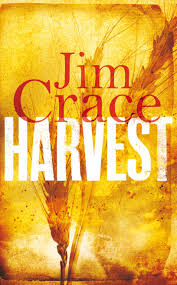
HarvestJIM Crace has a knack of creating brooding invisible forces that help create a framework beyond the obvious. In his Booker listed Harvest the prime protagonists hardly speak for themselves at all but just infect the narrative with a sense of guilt, evil, puissance.

Victims both, one obviously in the stocks and on the cross, the other as a free spirit who gives the central village a sense of morality, the she-devil who even packs our narrator’s suitcase for him, wordlessly, actions presumed.

quarantineAnd in Quarantine – an odd title for a biblical setting in that the word is according to Oxford dictionary derived from the 17th century italian quarantina meaning 40 days – we have the prospect of a great deal more evil doing.

The first paragraph sets up the nuances:

“Miri’s husband was shouting in his sleep, not words that she could recognise but simple, blurting, fanfares of distress. When, at last, she lit a lamp to discover what was tormenting him, she saw his tongue was black – scorched and sooty. Miri smelled the devil’s eggy dinner roasting on his breath, she heard the snapping of the devil’s kindling in his cough. She put her hand on to his chest; it was soft, damp and hot, like fresh bread. Her husband, Musa, was  being baked alive. Good news.”

Not being religious I cannot speak for the inferences of writing about a man named Jesus from Galilee in the text although for once the son of god takes, however much one is tempted to want it differently, second place to some of the of other characters stranded on the scree into which one might read many new parables.

Posted in fiction, Outtakes | Tagged | Leave a comment

Stoner by John Williams (Vintage)

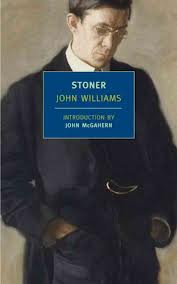
stonerSO, 49 years on the mid west university of pre world war 11 wins the Waterstone Book of the Year. Well crafted, of a period, but grey and dull and as fusty as a check academic jacket, as is all too predicted in its opening sentences…”Stoner’s colleagues,  who held him in no particular esteem when he was alive, speak of him rarely now…” As my old history master might have said (as he often did when he was politely pointing out you might be stating the obvious) ‘Aaaarrhh’.

Stoner is dysfunctional, in a horrendously  dysfunctional marriage, surrounded by dysfunctional, one might almost say lunatically clever colleagues. It is no surprise, he looks elsewhere and his brief moment of salvation creeps up on him  unaware.

The sticker on my copy says this is ‘the greatest novel I never read (Sunday Times)’. Tosh. It is hard work. The narrative technique is repetitive to the point you sort of know Williams taught literature and creative writing for 30 years. Here is lesson four. The story is feeble.

It has no place in this blog because it is last century anyway, but it is shame to throw away a prestigious prize on something so old hat. It insults people writing today.

If the genre appeals, then a fresher modern version might be found in Lowland by Jhumpa Lahiri,  a Booker short lister, sharper, – Lahiri is especially good when she writes about women where Williams seems almost more dysfunctional on the subject than his own hero if that were possible – and altogether more interesting in context. The diaspora is not just a few miles down the dirt track back to daddy’s farm, but transcontinental from Calcutta to Rhode Island, the descriptions of a family catharsis more delicately drawn, the causes more valiant even, the responses it demands of the reader more complex…

Posted in fiction, Outtakes | Tagged , , , | Leave a comment

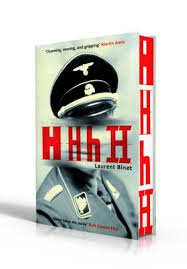
Hhhh by Laurent Binet (Harvill Secker)

hhh

“Gabcik – that’s his name – really did exist. Lying alone on a little iron bed, did he hear, from outside, beyond the shutters of a darkened apartment, the unmistakeable creaking of the Prague tramways. I want to believe so.”

IS this fiction or historical fact, a point not lost on the author who is equally vexed by the problems of relating an historical narrative. What is truth down the years?

This is Prague 1942, drawn so brilliantly it almost breathes, it is a resistance story and also without judgment a portrait of one of the great, systematic killers of the 20th century, a key hole glimpse into the higher echelons of the Nazi party in its brutal pomp.

A word too for sam Taylor’s skillful translation from the French which does not let the original down.


Posted in 101greatreads, fiction, Non fiction | Tagged , | 1 Comment

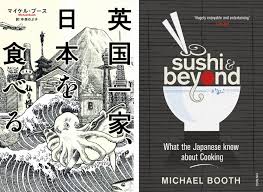
Sushi and beyond by Michael Booth (Vintage)

sushi

“Ha! You so fat you not so see your dankon for years! You pants too small. You are so fat, sun go down when you bend over!”

A true story, a travelogue where Michael Booth takes his wife and two young children Asger and Emil to Japan not so much for a holiday but a full blown gastronomic investigation of all things edible. Instructional, informative, written with an engaging light touch which the children help with especially with the visit to the Sumo school but also some of his insights into Japanese mores are revealing.

Miso soup should be eaten at the end of the meal.  Sushi should be eaten with the fingers not chopsticks. Wasabi should be already mixed with the dipping sauce not served to the side.

And he manages to slip in some useful cooking instructions – nigiri sauce (for dipping for sushi) = 40 ml dashi, 20 ml mirin, 20 ml sake, 200ml soy, “briefly heated”.

It is a skilful blending of food, travel and culture that avoids the usual this-is-what-i-had-for-my-dinner cliches. And he has some wonderful subject matter. Most of all perhaps there is a Disney-like literary quality or dramatic frisson on the lines of what happened when we took the kids to Japan the fun fair that parents will respond, if not all aspire, to…

In fact Disney should make a film out of it…

Posted in 101greatreads, Non fiction | Tagged , , | Leave a comment

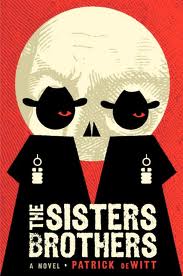
The Sisters Brothers by Patrick Dewitt (Granta)

sistersbrothers

“I was sitting outside the Commodore’s mansion, waiting for my brother Charlie to come out with news of the job.”

IT is hard for a western to get literary recognition, although if it works for west coast gumshoes then perhaps there is another undiscovered genre to inspire Hollywood. This is a second Booker nomination from a Canadian, plus another mention for Granta and another short lister that was overlooked but may stand the test of time better than its rivals.

It is a brutal, comic horse trail of a book, cocked like the pistols that feature through it, a well told yarn of brotherhood, gunslinging, hunt and pursuit that drives the narrative.

The writing has a period accent to it that rings true. As do the occasional stark acts of cruelty. A great ballad of a book that depicts a time and era on the borders. From the first sentence we know exactly where we are…as the brothers ride, their relationship balances on a Bowie knife-edge.

Posted in 101greatreads, fiction | Tagged | 1 Comment