Reportage

There is a very good piece by Nick Davies on the phone hacking debacle here

http://www.theguardian.com/uk-news/2014/jun/25/-sp-phone-hacking-trial-rebekah-brooks-rupert-murdoch

Nice girl, Rebekah

Posted in Non fiction | Leave a comment

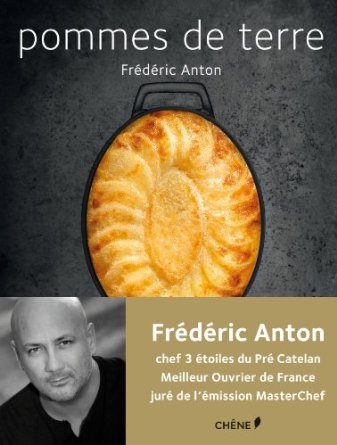
Pommes de terre by Frederic Anton (La Chene)

pommesdeterre

“J’aime la pomme de terre. La frite croustillante a l’exterieur, fondante a l’interieur, juste salee. Les pommes rissolees, avec leur parfum de beurre.”

This is still in French but mostly it is recipes which are easy enough to follow with half a GCSE. And stunning photographs of what you could be aiming at.

It is a wonderful coming together of different skills. Frederic Anton is a Meilleur Ouvrier de France and head chef at Paris’s three star Michelin Le Pre Catelan. The instructions are concise and to the point. The photographs are by Richard Haughton who lists among his other clients David Bowie, Robert Plant and Cadbury’s etc. The production is from La Chene, a beautiful silver edged tome on thick, shiny paper printed by Toppan Leefung in China. Hats off to everyone.

If you wanted to know what a recipe book could be apart from a rambling ego trip this is a good first stop.

The theme is universal, the potato. So we have the potato as high art baked in salt, mashed with seaweed and as you might expect as frites, boulangeres, as gnocchi, as tortilla each one a supreme gastronomic creation in the hands of the master and his kitchen.

The soups like this Potage Sante are stunning:potatosoup

Someone may write a potato novel in the future that tops this work for literature but for the moment we have a marvellous, practical homage that is the slide rule.

One word of caution. You may need to order up a cart-load of extra butter to cook most of these recipes, it might better have been called Butter With…the ratio is often 10 to one….butter

Posted in 101greatreads, Non fiction | Leave a comment

A Girl is a Half-formed Thing by Eimear McBride (Galley Beggar)

girl

“She and me. Like to lurk here in the day. Those gossips we have are the very best and we read and read. Quote quotes back forth. That’s good for sharing books of this and that. Word perfect. We snick snack at each other. Correct each other’s grammar. Chew gum and talk and think of sex. I do not say but hint a little. That’s a powerful thing I know.”

Usually the opening quote here is the first sentence of the book – if you cannot get that right, there is not much hope for later really –  but I have broken the rule, as  Eimear McBride likes to do herself;  and the passage above for me better illustrates the true qualities of her writing.

This is a hard read..the ramblings of depraved teenage angst and rebellion. Like Donna Tartt’s Goldfinch, which it pipped for the the Baileys prize (previously the Orange),  the story is thickly wrapped in many narrative clothes as sub themes – catholicism, domestic violence, incest etc. The fuck word is used a lot, but this is no titillating shades of grey, but shades of a repressed ugly Ireland. The starkness of tone and imagery is in some contrast to the publicity photos of the very jolly, now Norwich-based, McBride.

I struggled at first to draw a relevant comparison for a first book. The novel I want to refer to is Irene Nemirovsky’s The Misunderstanding for its concision, subtlety, structure and focus where here we have a diabolical diatribe, a conversation dressed in prose without punctuation,  or even that many verbs. I cannot say they are nice sentences because they are not sentences, just utterings, spat out as if at the kitchen table by someone who has got her back turned against you in a teenage acne sulk.

This book is not a movie.

Some reviews I have read just don’t get it, which is as much the book’s fault. It would certainly help to have a better than  everyday knowledge of catholic teaching and not be too squeamish about blasphemy etc. Then the point comes at you like an uppercut in  the middle of a prize fight which you did not see coming.

This is a poem about an Ireland of a certain time in a certain place (Mayo or Galway) probably around 1975 or maybe older (god forbid). She is talking to her older brother who is suffering from cancer and various attempts to cure it. It is brain cancer so he forgets things. He is her St Patrick if you like. She his Mary Magdalen.  This is her confession to him, pointedly not to a priest.

There is a touching love in the narration and a candour where she feels she can share good, bad, sordid, even her lust for violent sex, because he is her brother.

This is not something to pick up from the first lines of : “For you. You’ll soon. You’ll give her name. In the stitches of her skin she’ll wear your say. Mammy me? Yes you. Bounce the bed, I’d say. I’d say that’s what you did.” Nonsense? Gibberish? Showing off? What? Excuse me?

The opening lines of any book should be a compass, never mind where it might be pointing. It should have a north and south. You have to find what you need to love this book in different places.

As she says in the top quote above “I do not say but hint a little. That’s a powerful thing I know.”

Thirteen per cent of all nurses in the NHS at this time were Irish while others came over to drive the buses and clear out the asbestos in Midlands factories. This is in part the why.

Some of the writing becomes addictive, little ponds of beautiful, electric wit, poetry really rather than prose, a verbal gale with hailstorms of imagery and great puddles of reflections.  Slip around at random a few pages and you get: “Them clomping into the kitchen. Their daughters exasperate the cold. They clunk the range and stir the turf and turn the electric kettle on”.

And when we get to the harrowing crescendo – because it is a crescendo and it is horror-story harrowing – the words become forced into even further apopleptic contortions: “Ver the always. here. mY nose my mOuth I.” and then: “He stopS up gETs. Stands uP. Look.”

There is a vivid description of a dying. But where part of the story is about a death, it is also an assassination attempt, a would-be murder  to kill off a dark guilt-laden suffocating era; a last strangled scream of unhappiness and rage, the scream of an Irish samurai as she raises her sword.

Some people, McBride herself, have talked, obviously, inevitably, boringly of James Joyce being an influence, but  you might say equally another Gaelic poet Dylan Thomas in Under Milkwood  shares the same intimacy of tone, the same cracklingly lush language, the same play on sentences, the same sense of doom, the same microscopic focus on date and place. Unfortunately McBride rather outdoes him in terms of the dirt, the vomit, the fuck, the morbidity.

For those who enjoy wallowing in nationalistic self pity this is epic…read that as Ireland is a Half-formed Thing…

Posted in 101greatreads, fiction | Leave a comment

Icefields by Thomas Wharton (Washington Square Press)

icefields

“At a quarter past three in the afternoon on August 17, 1898, Doctor Edward Byrne slipped on the ice of Arcturus glacier in the Canadian Rockies and slid into a crevasse”

Wharton’s take on the founding of the Jasper community in Alberta, Canada is set less than 100 years ago, almost in living or at least family memory. Those first settlers were random craggy arrivals, railroad men, geologists and soon followed by toffish academic tourists.

The town Jasper was only named after the fur trading post in 1913 and we speculate here from the French J’espere or the Canadian Despair. Before that it was called Fitzhugh after a vice president of the railway that opened up what is now a national park.

The moving glacier is the star, theme, setting, clock and stage on which our characters slip and slide into view and struggle for purchase.

Wharton’s writing is as blunt and verbless as if hewn from the same Rockie granite, lots of small boulder passages that roll into a scree. Opening sentences are like scene setting chapter heads:  “Her name was Sara”. “When he woke, he was thirsty” and carry us on without distraction in a pioneering no nonsense fashion.

There is also a strange, now, sense of a time when people did not see or speak to each other for half a year or more, where the telegram was king, or was when the telegraph posts came.

This from the poet Hal : “In her swift passage through a new world she moves like a bullet. A small violence. Her writing a record of damage”.

Wharton’s writing captures an era and an idea using prose that dresses the narrative carefully in the clothes of its own time. Masterly done.


Posted in 101greatreads, fiction | 1 Comment

Murder bag by Tony Parsons (Century)

murder bag

Lee Child – see below – also writes the endorsement on Tony Parson’s departure into the crimo genre. “Tense and human”, he says. Welcome to the field of nastiness and violence, Tony.

Parsons can write. I have followed his work on and off since he was a teenage recruit to the New Musical Express. Where does he fit in?

By human, Child has him down right, although it is fantastical perhaps that the metropolitan police murder division would actually want to employ a young single father of a five year old with dodgy child care and a manic penchant for dogs. Excuse me crimos I have to go, in this case,  to make a dress for my daughter’s school play.

Even less logical when another Pc  collapses on his first sight of a dead body and gets drummed down the ranks to the canteen,  our hero is flipped upstairs. Do they do psychometric tests on candidates for the Met, probably not, not even for novels?

The prologue starts with a pretty obscene mandatory crime – everyone in this genre seems to want to outdo each other in outrageous viciousness (although we must have scraped that barrel clean by now) and ultimately becomes irrelevant. Whatever happened to jolly, happy go lucky nice guy villains who just wanted to make a few bob on the side and retire to the Costa Brava?

But then Parsons is quickly into his stride, accomplished in character builder, flipping the narrative along briskly, drawing out his characters and setting (central London). Max Wolfe has an unnatural if fashionable need for espressos on the beat. Is he espresso light? Yes, but he is also a slick operator apparently to be promoted so quickly although I am fearing as each chapter starts for his child care arrangements. What if he has to stay late? Then what, chief super? And will he mingle with the mafia over his machiattos? Unfortunately not.

This could be made for TV except we do not really believe that  brodcasters will let anyone cross into overly sadistic impossible violence of the kind we might be dealing with here – there is a line between the media, a book can still go where the camera won’t, the fear is in the mind not on the screen (discuss for you phd or magic party rehearsal)

It is also tv in that however accomplished Parsons is as a tehnician, I am not sure he has not been spending more time on the sofa watching the box than knowing the real ins and outs of so called London underworld or public school mores. Had he written about roadies killing groupies, or BBC presenters raping young boys, I could have a bit more faith maybe….

Does plot matter in these things? Do we care? Or is just a myth building action of page turning ostensibly because we are supposed to want to know Agatha Christie style who dunnit, or Sherlock Holmes how done it, or Scandi style what effect it may have on our hero/ine, never mind the victim. Which peg are we hanging our emotions on? Here I am with Mrs Molloy – the babysitter. That dog is going to do something twee. Or get shot.

Parsons was famously a single male parent and ought to know better. I am on page 65 and I think I have it all, but it is a nice read, not too complicated a plot, interrupted with starbursts (or black holes for me) of violence. I am not sure if all that is predictable because it is London and because it is TV inspired and I am London and TV referenced…

There is a sense of confidence, but also a lack of self awareness or what we used to call cool. The anomalies are not humorous. It is a clever idea to have the moll, the doll, the girlfriend played out by a five year old but it is better if you enjoy the joke while you are going about it.

And there is almost a beautiful twist that might have broken the genre when a victim’s wife might have fancied him which could have led us into a completely different moral perspective.

Parsons is sensitive to other people and dimensions. This is not the crimo-male masturbatary I and I and I and bang and I bang. It is written in the first person but this person is interested in other people and draws everyone around him into the narrative so the ridiculousness of the plotting – he disobeys orders and is made a hero, he gets beaten up and his boss threatens to kick him out of a job – becomes secondary and inconsequential, as it often is in tv soap.

There is this explanation on violence that says women being more fearful (in general than men) want to read about what might really be frightening http://www.theguardian.com/commentisfree/2014/may/21/women-violent-crime-fiction-explore-threats

I am not frightened here (or in other crimo books) just occasionally disgusted by the debauchery.

I am thinking how Tony might have sat down in the pub with his mates and configured the crimo procedures and then they let him go home to link everything up, only some of the characters do not proceed in an orderly direction and others are well just downright dishonest. There are a lot of non sequiturs here – read that as plain old nonsense, the kind which any old editor might spot. There are more perhaps than a dozen points where the plots do not add up. That is another Cluedo.

I would also take issue with the token London here, not real. Real people do not walk their dogs in Regents Park in my experience (deep). No one would go to Hampstead Heath on the off chance of bumping into a dog walking detective on a weekend.

I am inclined to aim the criticism more at Century as publishers for setting up this whole three book deal and then being too editorially lazy to worry about whatever tut they were given. It is a suicide note.


Posted in fiction, Outtakes | Tagged , , | Leave a comment

Killing Floor by Lee Childs (Bantam)

killing floor

“I was arrrested in Eno’s diner. At twelve o’clock. I was eating eggs and drinking coffee” 

I read somewhere someone saying they would automatically buy a new Lee Childs book as soon as it came out. That was their reading choice.  And that is a point. It is escapism just like romance novels.

Reading is getting Dressed. You BeCome the hero. You See the World. Through His eyes. It is a Trip. An Ego Trip. A Computer Game. The He, the I, is a rogue brother who lives another, tougher, alternative life. Anything can Happen. Other People are tokens. Other People Get Shot. Or Should be. I am Jack Reacher, ex army policeman “of sorts”.

The story moves lens-like. He sits at the table. Baker sits at the table. He gets the tape recorder out. He fiddles with wires. It is slo mo. Real Time. Get it? You get it. He tells you most things four or five times over.

There is no decription, no adjectives, it is a desert, flat and fast. The plot is brutal.

This is not, one should probably say, Raymond Chandler who had other people, who had a point of view, who had descriptions, who had crackling dialogue, who had a sense of humour. Reacher is a robot by comparison. He reminds me of Judge Dredd but without the visuals obviously.

So we are writing almost in abstract here. Is this an abstract form? The Daily Mail quote on the jacket says: “stunningly dynamic”.

“We got us a situation here, Mr Reacher…”

Reacher struggles with his inner demons and what he has been taught as an upside down morality of the solder in the dark underworld of American shadowlands. “Attacking me was like pushing open a forbidden door. What waited on the other side was his problem”.

Georgia has demons of its own reaching out to him. “It was the most immaculate town I had ever seen. Amazing.” He goes into a barbershop and notes the framed newspaper front pages on the walls – Roosevelt dies, VJ Day, JFK assassinated, Martin Luther King murdered.

It is an all male world except for the unlikely fantasy of the detective with the immaculately ironed blouse who seemingly takes an unlikely, unbelievable – well all of this is pretty unbelievable anyway – shine to him where everyone else seems to be more psychotic than even he is. He fantasises about the two of them running off to a beach in Jamaica. Good fantasy, perhaps.

This was the first of what is now a series of 16 books first published in 1997. Child is in fact Lee Grant, brought up in Handsworth Birmingham, worked for Granada TV where he was a part of some of its best output including Brideshead Revisited, Cracker, Prime Suspect and Jewel in the Crown all of which were a good education before he was made redundant when the creative departments were restructured into nothing.

Reacher was made redundant when killing dropped out of fashion. He kills people he might logically have wounded and interrogated. He is at war. He is fighting for us. It reminds me of War Picture Library (how many writers cut their teeth there?).

I could make a case that the 16 books form a statement and the more artful and adept tomes will come later – though a blog I checked does not find any agreement on what might be the best example. You could make a reasonable case that Reacher is the forerunner of Scandi crime. For the moment I am inclined to sit on the fence on the grounds I would not want to be sitting next to anyone who confessed to reading Reacher stories over dinner (probably ex-army). But I am perhaps being overlay pacifist. Confronted by the events here I would certainly be dead anyway and not lived to tell the tale. Is that the very hunge of the compulsion to carry on? Relief? Characters like Reacher are better imagined than confronted but the realism of the setting keeps the plot near the jugular. It is a western in a modern universe but westerns somehow, in Hollywood versions at least, usually managed some morality.

Here we are supposed to believe such characters exist and are out there and living by an upsidedown code of arms – both crimos and detectos – which is not a reality I am persuaded by. It is just fanaticsm, a pornography of violence. Two days ago he reflects at one point of his police compadre, she would have arrested me (for killing two people) today she is proud of me. My problem is I am not. Book him Dano…except Dano here is also corrupt, Hawaii is corrupt and as the 51st state by implication…but Reacher has his dumb broad and tame blackman, so he does not really care…not a nice guy really.


Posted in Biography, Outtakes | 1 Comment

Hare with Amber Eyes by Edmund de Waal (Vintage)

hare amber eyes

Edmund de Waal pronounces in his prologue that this story could almost tell it itself. Yes and no, Edmund.

To anyone whose family were part of the same exodus from Odessa to Vienna to Paris as Russia, as then was, impaled itself on revolutions there is vicarious interest in the minor details he unearths about the fabulously wealthy Ephrussi brothers.

This wealth emanates from cornering the grain markets in the port city and routing the profits into huge infrastructure projects to build rail, roads, public buildings. Banking in short, although how far these foppish boys were actually involved in the moneymaking is unclear or skipped over here. There is more about spending it than making it.

One of the brothers, Charles, who de Waal admits to having some difficulty with at the start, channels this wealth into his passion for art then collecting which leads him to all things Japanese with all manner of new artifacts arriving for the first time in Paris circa 1870. New houses were being decorated in layers of things Japanese – porcelain, jade, silks, bowls. It was the era of le Japonisme.

Charles has a mistress, Louise, an unlikely figure cast as a respectable mother of five, whom he meets illicitly at galleries where the couple collude in buying art to collect. A sort of vicarious sexuality. And then Charles discovers and buys this obscure sub genre, the netsuke, miniature individually carved figurine caricatures that could be passed around society salons as conversation pieces “witty, ribald, sly” and very tactile, sometimes overtly pornographic,  most of which pre-date Perry’s discovery of Japan itself. netsuke1 netsuke2

The hare of the title is one such more polite item. Rats were another popular theme, their long tails lending themselves to wrapping around the body. And rat catchers 🙂 I told you that in 111 words. De Waal takes 66 pages.

But it is this collection that De Waal himself inherits and sets himself a potentially fascinating but mostly unrequited task of discovering their histories. This is like the primary school essay Day In the life of a Sixpence piece (or today a dollar or a euro or a bus pass).

Unfortunately, if a family can be said to be egoistic, the focus is on their own Ephrussi story rather than the far more intriguing netsuke possibilities of who these comic, sexualized bits of art might have been commissioned by hundreds of years previously? Or why? Were these just an early manifestation of pornography or did they have a symbolism or significance or even a use?

There is a third sub strata here which also might have produced fine fodder for a more accomplished author which is the Ephruzzi’s desire, lust even, as perhaps of a great many immigrants, to be accepted in a foreign country, to be part of the establishment and in gauche and rather surreal ways what that actually means to the ambitions of different members of the family with the financial means, unlike most other immigrants,  to achieve almost anything they might want.

He might also have made much more of the essential jewishness of the story…and the parallel prejudices of the French seeing Japanese men on their streets for the first time…

Ultimately de Waal’s art is as a potter who has taken four months off, which turn into two years, to become the family biographer. In that he is probably too close to write what might have been written…

Although he professes himself not to be interested in money (they are all a bit lucky like that in this book) there is nevertheless a fairly obvious desire to aggrandise his otherwise obscure inheritance. Ultimately none of the three or four themes really wrap up satisfactorily in any literary sense and each tends to get in the way of the other, so no one wins out…apart from the netsuke of course who get some cheap, bit grubby PR at the expense of what should have been the bigger issues.

Posted in Biography, Non fiction, Outtakes | Tagged , , , | 1 Comment

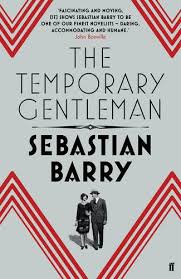
The Secret Scripture by Sebastian Barry (Faber)

secretscriptures

“The world begins anew with every birth, my father used to say. He forgot to say, with every death it ends. Or did not think he needed to. Because for a goodly part of his life he worked in a graveyard.”

This is not a story – as we might be sucked into thinking – about the madwoman and her keeper but in part already a parable of the violence of young men that seems even more relevant now with Syria, Taliban, Africa et al as in all the troubles of Ireland itself.

Irish writers seem to inherit a literary gene passed  down through generations of story tellers that allows them to play with fiction. Barry you sense immediately is up there with the elite and this title walked off with the Costa book of the year 2008. He tells a story like he is shuffling a pack of cards…like you might be in a small snug on the west coast surrounded by neighbours, the fug of a fire and a pint of black…

The use of words is electric: “His long whitening beard was sharp as an iron axe. It was very hedgelike, saintlike.” And from description to snagging, nagging notions on the human spirit: “Of course I was young, very young but, as I remember it, no one is ever quite so old as a fifteen year old girl.”

Barry is cunning , holding back information or at least reflecting a single perspective. We are very strictly in the Present Tense here. We have no more foresight than the characters themselves. We are blinkered by the reality of now, not distracted by the import of history and other events.

The effect is reinforced by a double narration, both trying with their very different ambitions to tell the same story, the story of the “savage fairy tale” that was Ireland in the 1930s, bound by a mutual shyness and empathy. As the tellings intertwine they become as taut in their own ways because they also share different impediments to plain speaking. Both have history.

We span a life, we span a century but we are also ushered around each narrative tributary in the sure knowledge that joy and tragedy are coming to the beachside dancehall just as surely as the back hill folks come down for a waltz. His actors are modern in that their emotions seem timeless, events just arbitrary or in fact an excuse for a lavish visual conceit. The imagery is landscape large, a point reinforced when Roseanne talks of French painters and does not want to give their names in case she misspells their names.

“Happy. Just straightforward ordinary girls we were. We liked to bring as much despair as we could to the lads. Who watched on the sidelines of our happiness like sharks, devouring our attributes with their eyes.”

I am deliberately not giving much away here. What makes this storytelling so clever is how each vignette manages to suprise and delight on its own, told in rich, rich prose of the kind the Irish seem to have a monopoly but this is again doubled up as an Irish story, as told by an Irish writer , about Ireland.

His heroine may have gone to watch newsreels but she is still the waitress at the Caffe Cairo, 1929. The dark forces are still those of Irish foloklore. She describes De Valera by the slick of his hair. There is mention of the 77 and one is half expected to know all this backdrop history. The unsureness also lends edge. Do you need to know, should you know, does it make any diference? What after all is truth or sanity, the more so when it is stretched across from the start of modern – or at least post bedlam – psychiatry to present day.

In great writing often the substance is the human condition itself and  to explain that away in narrow confines with labels like patriotism, catholicism, love etc is to diminish it.

Posted in 101greatreads, fiction | Tagged , , , | Leave a comment

Life: Keith Richards (Phoenix)

life keith2

Chapter One; In which I am pulled over by police officers in Arkansas during our 1975 tour and a stand off ensues…

It is not the salacious tittle tattle or the schoolboy sniggering (or the size of one M. Jagger’s penis) that sets this title apart,  but perhaps it is that the Rolling Stone’s music is still an (the) anthem in London illustrates the depth of adventure and brio that spawned the world’s self styled greatest rock and roll band. Even the opening lines are self deprecating for the amazing story that follows, however much we think we might have known, even those who lived it in parallel with the band vicariously through every single release, every mega concert, every girlfriend. It is a wonderful true story of our time.

There is, out of many, an anecdote where Keith Richards girlfriend Patti gets pregnant. His response he declares was to change the dungeon into a nursery.

One of the best parts is the opening saga of life growing up in Deptford, south London before all the drugs and dramas…but also elegant exposition on how the music changed the 20th century (“we were just unpaid PR for Chicago blues”)….

A word also for the brilliant job done by co writer ex- Sunday Times reporter James Fox – who has just signed to do similar for artist Damien Hirst – who brings context and organisation and as Richards jokes: “it is impossible sometimes not to be a parody of oneself”.

The book like the music though is not parody. Nor is this just showbiz schmaltz…

Posted in 101greatreads, Biography, Non fiction | Tagged , | Leave a comment

Mistress by James Patterson (Arrow)

mistress

I was curious to read something that was really popular, a best seller to compare with other books here. Does popularity equal literature? Does it matter? Are readers the ultimate accolade?

So I turned to the “world’s bestselling thriller writer” the incredibly prolific James Patterson here working with one David Ellis. Patterson’s credits run to three pages of listed books from the 21 Alex Cross novels to the 13 Women’s Murder Club series etc…He trots them out pretty quickly, airport foyer fodder darling, “secrets, lies and deadly conspiracy”. Oohhh. Fasten your safety belts…

His web site tells me he has sold 275 million books and he holds the New York Times record for the most number of hardback books in print…

Let’s  see, it goes like this:

1. Hero on secret mission in girl’s flat

2. He leaves, girl dies

3. Hero stopped by policeman for traffic offence

4. Hero was in love with girl

5. Police suspect foul play

6. Hero is very very rich

7. Hero flies own Cesna to the wake

8. We learn she was having an affair with someone else and told her friends lies about what she really did

8. On the way back, his plane runs out of fuel mid-air

9. He crash lands – the petrol tank has been tampered with

10. Whoever killed her, tried to kill him. They are out to get him too…

We are on page 50, chapter 12, big type. The blurb tells me the “the pages turn themselves”. There is certainly not much to slow you up. It is all present tense, first person stuff. It is all going off…not many adjectives, or sub clauses.

Between all this we gather that hero Ben is dysfunctional and obsessed with the kind of trivia you could use in a pub quiz. “Truman was our 33rd president but 32nd to hold the office” and flashes of movies he has seen so you feel up to date, both cute devices in themselves.

But the most jaw dropping facts, more than the shawl of skulduggery that is about to enfold him, is how rich this Ben is. “I walk over to my plane, a Cesna 172N Skyhawk, 1979 model. I bought it two years ago tapping into the trust fund…”. Oh gee, wow Ben, you are a lucky guy then…

So do we care at all? Are we engaged? It is early days but the feeling is disposable distraction, an action movie without the squeal of the wheels or the smell of the jet fuel…I am finding myself more interested in Patterson himself than Ben.

Patterson was an adman who retired and took up full time writing in only 1996 although he had been churning out the Thomas Berryman series 20 years earlier. Wiki says his current score is 95 novels and he has had 19 consecutive number ones in the New York Times. Stephen King said he was a “terrible writer” which is not fair or of it was, is not really the case now, to which he responded, “he’s taken shots at me for years. It’s fine. My approach is to do the opposite with him – heap praise.” He has been a vocal supporter of books and bookshops and denies he received an advance of $150m for his last batch of books. He lives, as they say, with his wife Susan in Palm Beach.

Patterson has also championed the idea of working in writing teams. Here with David Ellis, trained lawyer and winner of the  Edgar Allen Poe award for best first novel…and has his own serial ‘edge-of-the-seat’ crimo series with defence attorney Jason Kolarich.

11. Then hero Ben goes to his secret country retreat, in case he is being followed..

12. And he is being followed –  bang! bang!

13. He jumps in the lake and the best thing ever is surfacing again after holding his breath under the dock

14 He gets away by stealing a neighbour’s truck

15. But he is being followed…

16. Bang! Bang! again…

One acid test of great writing might be that it transfers seamlessly into other medium and interestingly as yet no Patterson oeuvre has migrated into block busting film mode. As yet, one supposes that Hollywood’s script departments are not unaware of him. But so far here the world is mindless. Things happens. And then something else happens. The world falls in. The girl falls out of the car. Events are unconnected and random. It is a chase of sorts but asks perhaps why we ready anyway? Just to not have to think? To let the words and characters just live out some time for us, writing as therapy, as Mills and Boon fantasy, as shoot ’em up westerns?

In that context other writers are more relevant here – David Peace for example. Or Stephen King whose Green Mile is a contender both in book and film although written in 1996.

Posted in fiction, Outtakes | Tagged , , | Leave a comment