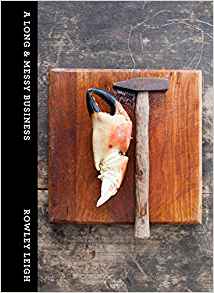
A long and messy business by Rowley Leigh (Unbound)

roleyleigh

“I have been doing this sort of thing for quite a while now.”

I am not sure anyone should write a cookery book until they reach a certain age. It is quite possible to open a food business with a dozen or so recipes, but that does not constitute a book of knowledge. It is down vocabulary and experience. And as a lot, probably most, are ghost written these days, there is no voice.

Rowley Leigh has plenty of voice to go along with his experience. He recalls unloading the first lorry load of produce delivered from the Paris markets at Rungis back in 1979. He has been at the helm of two of west London’s most fashionable restaurants Kensington Place and then Le Café Anglais, so he has built a fine repertoire of trusted post Elizabeth David style classics which he shared in the Financial Times for many years which form the back bone of this collection of monthly highlights.

There is a modesty and honesty to his writing and to his recipes. “Good cooks love a snowy head of cauliflower for the thing of beauty it is…”

And he slips in some technical and historical notes that might appear on a TV quiz like QI. “Classically crème Dubarry would be thickened with a béchamel sauce and a potage Dubarry with potatoes. I prefer to use rice…” Plus there is a little backgrounder on the salacious Comtesse Dubarry herself.

You feel the effort that has gone into the cooking and his frustration when the Times columnist Bernard Levin “spurned the scallops and foie gras, ignored the turbot and the pheasant and contemptuously murmured that he would just have an omelette.”

But then Leigh trained with the Roux brothers who used to audition young chefs by asking them to prepare an omelette, so his technique is worth listening to…”Heat the pan with the merest film of cooking oil with the suspicion of a heat haze. Add the butter and quickly…”

His Bolognese – a ragu in fact – is worth the price of the book as are many other recipes which offer a year’s worth of pleasure as much in the reading and cooking as the eating. There are little instructive tricks like marinating all the ingredients for a fish soup overnight in white wine before the cooking and then thinning the mayonnaise for the rouille with a little of the soup itself.

You might presume that such a work would have been snapped up by a mainstream UK publisher with a healthy advance – after all, to anyone in the know – many of whom are listed in the back as supporters – this is probably going to sit alongside Simon Hopkinson and Lindsey Bareham’s Roast Chicken and Other Stories, which was nominated as the Waitrose food book of the decade. No such antecedents, as it comes from the crowd sourcing Internet start-up Unbound.

The evocative still life photograpy by Andy Sewell is equally awe-struck by the thing of beauty that it is.

Posted in 101greatreads, Non fiction | Tagged , , , , , | Leave a comment

Lincoln in the bardo by George Sanders (Bloomsbury)

“On our wedding day I was forty-six, she was eighteen.”

The Bardo of the title is a Buddhist idea of a transitional state between life and death, a purgatory. I mention it because no one else bothers.

There is a line in Penelope Lively’s Moon Tiger, also listed for the Booker of Bookers, written 40 years earlier, which sort of captures the essence of George Sanders task in this inflated tome:

“I shall use many voices, in this history…”

She goes on to explain a few pages later:

“In my head Jasper is fragmented: there are many Jaspers, disordered without chronology. As there are many Gordons. Many Claudias.”

I wonder if Sanders read those lines as inspiration? In essence these are the voices at the birth of a nation – 160 voices all told, I am told, sacrilegious, bawdy, defamatory, vernacular. Fine “fragmented” voices they are too crackling along like Dickens moving along without the worry of a plot or narrative or description or much of what we usually associate with the elements of story telling.

We have two books lashed on top of each other. Book one is the cleverly conceived saga of the president angsting over his son dying of typhoid while sending 10s or should that be 100s of thousands to their deaths in the civil war, told in snatches from newspapers, memoires, journals, some real, some imagined. Here there is a smart contrast between the descriptions of the society ball and later characters. There are even four pages of quotes as to what Lincoln himself looked like.

The second book is a dreamed up purgatory – the bardo of the title – where dead people or nearly dead people turn up for a chat under the auspices of the the dubious Vollman, Bevins and the reverend Everley Thomas.

The redeeming part of the first book is to catch the idiom of the time and sounds of the era, of a key moment in revolutionary history, we are there with them, but that is undone by the bogus hokus pokus of the underworld chitter chatter of the second book which laces through it.

There are any number – so many as to be clichés really – of literary references to grab on to – the Greek chorus of the dead, the second coming, Dante’s Inferno revised, Hamlet’s gravediggers etc. The undertones are perhaps supposed to suggest freshness and frankness but re-occurring visions of rape and latent homosexuality don’t read that way to me. It is macabre, telling dirty stories about the dead and when it is clever it is often sly, so when we are told that Abe has some difficulty making love to his new wife on their wedding night, it is because, we later appreciate, how moved and important their son might become to them. Subtelties like that are few and far between.

In fact this is not so much a novel as a prose poem that might seek to inhabit the same territory as T.S. Elliott, Ted Hughes or even more recently Max Porter’s Crow or Aimeer McBride. It is not an easy read across 340 pages, although to make things easier the publisher Bloomsbury has inserted plenty of white space so you might be reading verse. Lively’s book by contrast in my edition is 204 pages but is probably longer but she does not use much punctuation. Full stops and capital letters are about it. She also uses words like “shards” correctly where Sanders bends it to another purpose.

Bloombsury gives us a little pompous aside at the back of the book about how the type is in fact Fournier designed originally by one Pierre-Simon Fournier who lived from 1712 to 1768, so a century before the action here. I am all for publishers explaining the types they use and why but this just reads like so much aggrandizement.

It is not so much as what to make of the book – which is sort of interesting, clever, a diversion if you like this kind of thing, fragments of good writing, snatches really, odd spots of clarity, but plotless, guileless, devoid of a narrative engine, un-edited, overblown and corpulent – rather what to make it of it winning the Booker prize let alone being nominated for the Booker of Bookers. Elliott, Hughes, even Dylan Thomas brought people to the book, to reading, to enjoyment of reading, to the revelations of literature, to great visions of human consciousness and understanding, to visions of intelligence. This will put people off reading altogether. It aspires to be the Great American Novel but it is the Great American Un-Novel. This Booker emperor has, for me, no clothes on.

Posted in fiction | Tagged , , , | Leave a comment

Salt Creek by Lucy Treloar (Gallic)

“Mama often talked of this house when I was a child, and of its squirrels with particular fondness.”

WE are in the grand manner of the novel as literary artifice, a swell of sentences, characters in the rough, an anchored sense of place, a moving perspective, the kind of parameters for which the format is uniquely designed and at its finest. It is a family history spanning 1834 to 1864 in south Australia. Mr Finch has managed to lose a fortune or two but his resolve to bring empire to the outback and to his children and suffering wife is undimmed.

Jane Austen gets a passing mention, as does Charles Darwin which seems appropriate as contemporaries of the narrator Hester who tells her story through a hubbub of brothers and sisters. The older boys Hugh and Stanton are rumbustious helpers on the farm, Hester has to fill in with the chores when mama is not well which is often and looking after baby Mary. Her willful sister Addie is never there when wanted, Fred is bookish and Albert always curious making the most of the outback. And we have Tull the clever adopted Aborgine boy who looks on at these strange people and their odd projects with skin so white like dead people. And Hester herself whose subject is maths. It pains her to watch papa going over the books when he is not (good at maths). He loves his God, his pipe and his principles, all of which test the family. As will his business escapades.

Sentences are long and rambling, Victorian frilly but the focus is sharp from the opening image of a squirrel trying to crack open a nut, the allusions are tightly controlled – the grasshopper trapped in cupped hands, whittling a piece of wood into a sharp end, a playful shot from a sling, all very pointed,  blades twisted in a wound.

Every few pages Treloar drops in an old word we don’t often use these days like rumination, demureness, almanac, strictures, emcumbrances, plush, a mizzle etc to remind us of when and where we are. “Stanton was eating with the greatest efficiency”. Her vocabulary is sterling.

The ideas are timely, a revision of empire, of immigrants, of race, a story that brings a texture to an era that persuaded men like Mr Finch to sail a young family across the world and then out of the city of Adelaide in a dray to a half built wooden shanty house. “The journey…was like moving knowingly, dutifully, towards death” . The suffering and mishaps are offset at least in part by Hester’s youth and regard for all around her. Plus the knowledge from the outset that she is destined to survive, even prosper.

You feel the sweat of ambitions. Different ideas. Same sweat. Hester’s evolving relationships with those around her have their own charms as each of them grow up and their emotions are charted by way of an intimate, as yet untold constellation, a universal family. The finale is as heart-felt as it is heartbreaking, the loose ends are deftly tied up like Hester’s own sewing.

Lucy Treloar is Malaysian by birth and brings a neutrality perhaps to vexed contemporary clichés and real sense of the hardships and pleasures enjoyed on one of the frontiers of civilization. My imprint says the original was published by Picador in Australia in 2015 but here it was picked up by Gallic in 2017, another coup for them. I am told they were tipped off by a blogger :).


Posted in 101greatreads, Biography, fiction | Tagged , , , , | Leave a comment

Nagasaki by Eric Faye (Gallic)

nagasaki

“Imagine a man in his fifties disappointed to have reached middle age so quickly…”

SCANT as a haiku, we open with all the usual everyday details of life scrubbed out by the obsession. S reads a magazine to which he subscribes but has no title, he has work colleagues but only later do we discover he is, symbolically, the weatherman and only after that his name, Shimura. We know from the out that it is a true story or one that appeared in the newspapers in Japan in 2008, the middle aged, bachelor salaryman living alone in a neighbourhood so safe he leaves his front door unlocked. He is so shy he avoids going drinking with his colleagues. Strange things start to happen…

“At times like this the brain investigates, reconstructs, corroborates, deduces, unpicks, juxtaposes, supposes, calculates, suspects.”

He is being stalked? The story will take a decisive fork which allows for an explosive, political finale asking questions about the inheritance of modern Japan. “She knew better than to leave memories knocking about in a hall of mirrors where they would go mad, like a seagull trapped inside a room”.

Short, tight and thought-provoking.

Faye has been widely recognized in France – this is another translation from the excellent Emily Boyce at Gallic Books – and won the Academie Francaise Big Prize for a novel in 2010.


Posted in 101greatreads, fiction | Tagged , , , , | Leave a comment

Black Sugar by Miguel Bonnefoy (Gallic)

blacksugar“The dawn light revealed a ship marooned in the canopy of a vast forest”.
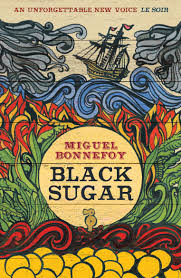
I IMAGINE a publisher might throw a party for Miguel Bonnefoy’s lesser characters who only get a walk on part in the novels, somewhere Miss Venezuela can meet up with the pirate Captain Henry Morgan for a quiet daiquiri perhaps. Bonnefoy discards his creations like an old skin once they have served their dramatic purpose because he alone is the story teller. His voice is louder than theirs. Their existences are controlled, reined in by a minimum of dialogue, not allowed to stray too far into their own worlds. Bonnefoy talks like an old school Celtic storyteller, like he is telling a joke really through all the 215 pages or perhaps more relevant like a ship wrecked beachcomber sitting on a log on a shore with all the time in the world to whittle out his yarn.

There are heady descriptions. These are remedies for dropsy – “pomegranate-bark infusions, vinegared pine broths and preparations of goat’s milk mixed with ten ounces of cider”.

His text is the emergence of Venezuela the nation herself – for which the very simple opening line – see above –  provides one image –  starting with its discovery. The first arriving pirates are barbecuing a sloth and singing sea shanties. ”They served it with a few mangoes picked straight from the tree and a pair of fairly fleshy parrots caught in their migration south, marinated in lemon juice for two hours and cooked in banana leaves”.

His heroine here is Serena Otero, an only child of elderly parents so her home was “filled with outdated objects and old furniture and inhabited by a couple drained of all strength”.

The colours are vivid. The Otero family house has “ruby-red roof tiles”, the front door knocker is “shaped like like an open hand in welcome” and inside is ”bathed in warm light the colour of leather or aged oak.”

There is a joy in the telling. The central iconic story is the quest for pirate Henry Morgan’s buried treasure and the different people who come looking for it in the remote rain forest 300 years after his death. And there are other treasures too, newer ones – the sugar of the title, the cane, the rum, the oil – but Serena is not interested. Her wealth is the forest around her.

She is captivated by the small ads on the radio and grows into a lavish, rich symbol of a post colonial world.

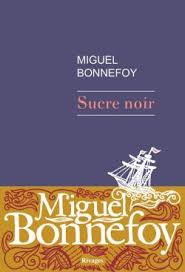
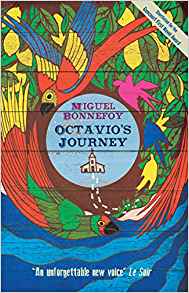
Where Bonnefoy’s first Book Octavio’s Journey has sub themes of self expression and literature, here these are replaced with ideas about value, wealth and greed, told in a similar fable style, an allegory even. There are a couple of ambivalent reviews on Amazon about Octavio’s Journey, which are best avoided. Both books are wonderful, hugely enjoyable masterpieces, each sentence a delight, cogs in a bigger wheel of an original vision. Here is the French cover:sucre noire

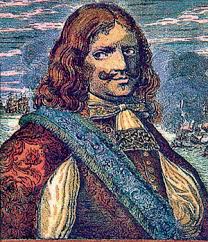
By way of an aside: Morgan himself is an interesting starting point in that he is often credited as the inspiration for many fictional pirate figures, a real life governor of Jamaica who sacked Panama, and sued his shipmate and biographer Exquemelin for alleging treason and torture. Wikipedia assures me he was the inspiration for Rafael Sabatini’s 1922 novel Captain Blood and John Steinbeck’s first novel Cup of Gold written in1929, and even  Ian Fleming’s 1954 novel Live and Let Die. Portraits tend to show him as quite the rogue captainmorganHe is also the inspiration for the rum. Historians have tended to change their minds about him. Early biographies used Exquemelin’s salacious references to discredit him but over time he has come to be seen more as a modern, popular privateer.
Posted in 101greatreads, fiction | Tagged , , , , , | Leave a comment

Octavio’s Journey by Miguel Bonnefoy (Gallic)

octavio2

“At the port of La Guaira on 20 August 1908, a ship from Trinidad dropped anchor off the Venezuelan coast, unaware that it was offloading a plague which would trouble the country for half a century.”


I abandoned two Booker prize winning novels in the last week which I had fully expected to make this listing – both after more than 100 pages albeit I am a bit clueless as to what was being said in either at all, just so much middle aged white man verbosity. By comparison I devoured this beautiful little book set in Venezuela, translated from the French in house at Gallic Press by Emily Boyce. In less than 96 pages, each chapter marks a step, each character is defined, each situation becomes apparent, each action hides a certain drama. The story is spun. There is an explosive, thunderclap of a plot change on page 47 that made me put the book down completely and draw breath. To even let a few details of the plot leach out would be to spoil the enjoyment. Not unlike Laura Esquivel’s 1993 Like Water for Hot Chocolate, it is a joyous, fresh thrill of a read from south America, a totemic modest little work of genius that warms the soul and has reset my reading compass. We open with a plague and a church and a cure. A man with a gun shoots a warning shot that downs a whole harvest of lemons, which counts as a miracle. But it progresses into a book about words, literature and reading and their value through a man who barely speaks and a woman who cannot stop herself from talking named after the country herself. Even the thief Guerra declares: “The way I go about burgling a house is like a writer sitting down to compose a poem”. Later the man imagines Literature herself as having “loose hair, torn clothing and a heroic air, wear a machete in her belt or a shotgun over her shoulder”.

What this little tome has that neither Booker winner had was the novelist’s great opportunity – story, and believable, interesting people, in a setting that breathes, almost like a fable. And it has something to say for itself. Here is a paragraph:

“Anna Maria Reyes Sanchez had seventeen children, the youngest of whom, Eva Rose, had shone from her earliest years. Eva Rosa helped to farm the fish, wove bags from goat hair, trimmed the cows’ hooves with maternal care and was up sowing the corn before sunrise. She had a face like a china doll, pale little metallic-grey eyes, and delicate skin as yet untouched by age. She always wore a tortoiseshell comb in her hair and wrapped her centimos in a hankie laden in her bra, so as to keep her fortune close to her heart.” A perfect portrait in 96 carefully chosen words. I thought I had guessed the ending with four pages to go but was very wide of the mark.

Bonnefoy himself is still in his thirties. He was born in France and raised in Venezuela and Portugal and has been recognised in France making the short list for the prix Goncourt in 2015 as well being named as young writer of the year in 2013. He has another book Black Sugar out too with the same team which I will review next…

Posted in 101greatreads, fiction | Tagged , , , | Leave a comment

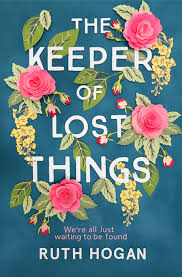
The Keeper of Lost things by Ruth Hogan (Two Roads)

keeperoflostthings“Charles Bramewell Brockley was travelling alone and without a ticket on the 14.42 from London Bridge to Brighton.”
There are different strands to this well received tale. It is a Richard and Judy book of the autumn and a Sunday Times bestseller and has sold, my edition tells me, half a million copies. The hero Anthony Peardew was a good writer. Little vignettes of his stories appear here to underline the point, fragments of life that he was inspired to write by finding odd things in the street and park that fit like punctuation in the novel, hence the title. He resists his publisher’s encouragement to write so much “literary lemonade”. His taste was more absinthe.

There is a sub plot involving Eunice and Bomber that I like a lot. The central character Laura though is a winge, a disappointment to her parents and to her husband but now befriended by the intriguing, disadvantaged young Sunshine. All three weave like different stylistic threads. Laura’s mission, her legacy, is to link up the strands of neatly marked lost items kept in the study. Her clues are in Anthony’s stories…

Little descriptions stand out. “A sharp, spiky unfolded paperclip of a woman”….”Maud invited misery as a permanent house guest”. Later on sausage roll links two disparate chapters.

Some of the women, especially Bomber’s appalling sister Portia, are scary which perhaps goes some way to explain Laura’s limpness.. The moods shift between pathos, hilarity, commentary, sometimes up to date, sometimes 30 years ago. And as we move on the paranormal and a sub text on publishing and writing in general.

The finale is heart warmingly rounded which is one reason for its deserved popularity.

Posted in 101greatreads, fiction | Tagged , , | 1 Comment

A short book about painting by Andrew Marr (Quadrille)

shorthistoryaboutpainting

“What is painting for?”

THE painter Patrick Heron said it takes 20 times longer to explain his paintings than a cursory glance can reveal. Words just don’t do it. At heart this is where Marr is taking us in this short, stimulating series of essays. He is a natural art critic. He goes head on for the subjective ideas like what is painting for? What is colour? Why is great art different to anyone else’s daubs?

Anthony Gormley suggested art is about the future, explaining to the next generation what the now felt like. Marr brings some texture of his own to these grand issues. Among other things he reminds us that not so long ago the painters’ vocation involved finding colours in clay, in the earth, in the grass and making the paints themselves before they could reach for a canvas, or at least searching out a merchant who might have shipped them in from afar. And many were hugely expensive. The chance to even see such colours was enough to merit a trip to the gallery.

In response to the digital era the artist has had to find alternatives to simple representation that anyone with a computer can do. They have to reinvent localism and uniqueness for which read the works of Damien Hirst or Sarah Lucas. There are useful asides in terms of discussions of painters some of who are well known, other less so and why he regards them as important.

He asserts that instinctively we think of yellow as warm from the sun and green as cold as in the fields. Not a point I agree with because my mind also says orange juice is cold and greens like cabbage are warm with butter for supper. But agreement is not the point. Marr opens up areas that obsess the true artist but the rest of us take for granted until they are hung in a museum or gallery. And as an enthusiastic amateur himself, he can criticize eloquently. We have come to use the word critic to mean to admonish and correct in a school masterly way but in the sense of looking at a visual art it has a much deeper implication of assessment and appreciation of the unliteral. The eyes have it.

Posted in 101greatreads, Non fiction | Tagged , , | Leave a comment

Life of Pi by Yann Martel (Canongate)

lifeofpi

“My suffering left me sad and gloomy”

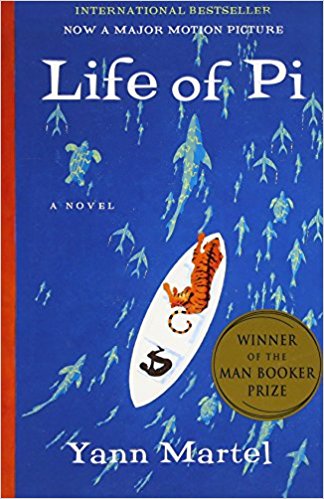
THE problem with coming to this book after the film event is that the image of the boy and the tiger marooned on a boat has already passed into popular culture, an indelible, all knowing fact. The punchline has been given away. If you had read the first part of this book you could not imagine what was going to happen in part two. It made me wish for schooldays where someone else (not Hollywood) chose my reading as part of a greater coursework. The cover, the publicity,  the chat all do this novel no service whatsoever. They may persuade you to read it but they do not in any way enhance your enjoyment. To set off on a totally different course, it reminded me of Robinson Crusoe or Gulliver’s travels, the era when a novel could put forward ideas. Also reading a book where I know the pay-off line just as surely as I know about Lilliput invites that comparison. I am jealous of anyone who read this without such prior knowledge. In fact it is a book about philosophy. It pipped Tim Winton’s Dirt Music to the Booker prize in 2002, more chamber music, word and note perfect, to Winton’s bluegrass, more intellectual, less emotional. In fact was there an emotion there?

We have the schoolyard bullying where Pi wants to be known obviously as the mathematical Pi not the playground Pee, we have growing up in a zoo where he can humanise the animals inner thoughts. Later he will use 27 lines to describe his tiger’s looks including:

“His head was large and round, displaying formidable sideburns, a stylish goatee and some of the finest whiskers of the cat world, thick, long, white.”

And another 24 on the noises tigers make. He knows his animals. And his religion. This boy is on the cusp of three religions no less. And Martel uses all this Dali-Magritte style cabaret fantasy to test his own thinkings. Pi is the inquisitor. And Pi shall be tested. And it is not just by tiger because there is a singularly brutal – if anything in a fantasy nightmare can be called brutal – scene of hyena and zebra.

I presumed Martel was Indian and this was semi autobiographical in that Martel like his hero had majored in religious studies and zoology but far from it Martell was born in Spain to French Canadian parents, and his degree was philosophy.

It is a very clever book, almost too clever, he is like his Pi, top of the class, A+ material, he barely crosses into the reality, so it is a mind game which he relates with a straight face: “My brief experience with the relations of unconfined wild animals in lifeboats had me expect…” Later…”My options were limited to perching above a tiger or hovering over sharks.” Very metaphysical. He captures the Indian vernacular very well.

Quite early on he is warning you where all this is going. “I wish I could convey the perfection of a seal slipping into the water…or a lion merely turning its head. But the language founders in such seas. Better to picture it in your head if you want to feel it”.It is down to you to supply the feelings, if you want. The faith.

What is really astonishing is the immense detail. He knows the difference between a blue shark and a mako and a whitetip. He reports on the best way to butcher a turtle and which are the best bits to eat. It is hard to believe that he has not actually been a castaway, that he has not actually encountered these fantastical events, the contrast between allegory and realism is arresting.

I am also struck how the original cover – from Knopf Canada, after it was turned down by a number of UK houses – does not give the game away…Life_of_Pi_cover


Posted in 101greatreads, fiction | Tagged , , , , , | Leave a comment

Dirt Music by Tim Winton (Penguin)

dirt music

“One night in November, another that had somehow become morning while she sat there, Georgie Jutland looked up to see her pale and furious face reflected in the window.”

THE best place to read this might be on the new BA direct flight to Perth from London. Seventeen hours sounds about right to cover the 469 pages that delve deep into the psyche of the Australian wilds. You need a bit of head space. This is a novel in the grand tradition. The poet of Perth, soothsayer of the surf and the shanty, outrider in the outback, Winton’s economy with words is deceptive. He moves his narrative along with great long strides. It can be a bit of head turner going back to your own everyday. Western Austalia’s rough hewn coast broods almost as much as the miscreants of White Point. And it gets fiercer as we travel north.

Winton is as rooted in the territory as some of the better known Irish writers are fond of their home towns in western Ireland. A clue:

“A moment of unscripted action in White Point. You had to go and see.”

The local fishermen are riding the crest of the rock lobster boom. The language is as craggy as you imagine them to be, as rough as guts, there was something shonky about it. The town was a personality junkyard. Descriptions are fast and vivid:

“Yogi Behr came out wrapped in a Simpsons towel. He was small and round and, so dressed, he was a potato burst from its jacket”.

Winton’s style is to have the effect first and the cause filled in later by way of conversation or flashback, like a painter working backwards. From the breaking waves of the town rises up a relationship of troubled partners, each with pasts. Each also trying to fit into this rough, untamed country which rises up from the pages as much a personality itself:

“These ranges look to him like some dormant creature whose stillness is only momentary, as though the sunblasted, dusty hide of the palce might shudder and shake itself off, rise to its bowed and saurian feet and stalk away at any moment”.

White Point town politics seethe, molten lava beneath the surface.

This book lost out to the easier cartoon conceit in the Life of Pi by Yann Martel in the 2002 Man Booker prize, but there are similarities in feel. The tiger in a boat is replaced by Georgie Jutland. Here also are journeys at sea.  Pi says: “My suffering left me sad and gloomy”, well here are other sufferings in the dirt and shoreline mud. This has the social grounding, retarded realism, edge, rather than Yann’s metaphysical madness.

At heart we have an emotional manhunt, shades even of Mad Max, a modern western but in the background lurk current (or what would have been prophetic) themes of Trumpism, of gentrification, of mindfulness, of people on the cusp, a road crash not far away.

This is Winton’s 27th published work. It shows. His men are tossed like their own boats on tempestuos circumstance, his women, those not subsumed by the toughness of the place, like Georgie have history, backgrounds, moods suddenly defined when she becomes an obsessive cook. Emotions transmute subtley into the descriptions of the very land itself. A masterpiece really.

Posted in 101greatreads, fiction | Tagged , , | Leave a comment