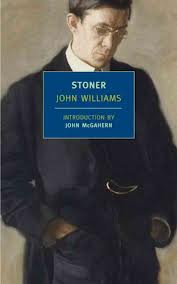
Stoner by John Williams (Vintage)

stonerSO, 49 years on the mid west university of pre world war 11 wins the Waterstone Book of the Year. Well crafted, of a period, but grey and dull and as fusty as a check academic jacket, as is all too predicted in its opening sentences…”Stoner’s colleagues,  who held him in no particular esteem when he was alive, speak of him rarely now…” As my old history master might have said (as he often did when he was politely pointing out you might be stating the obvious) ‘Aaaarrhh’.

Stoner is dysfunctional, in a horrendously  dysfunctional marriage, surrounded by dysfunctional, one might almost say lunatically clever colleagues. It is no surprise, he looks elsewhere and his brief moment of salvation creeps up on him  unaware.

The sticker on my copy says this is ‘the greatest novel I never read (Sunday Times)’. Tosh. It is hard work. The narrative technique is repetitive to the point you sort of know Williams taught literature and creative writing for 30 years. Here is lesson four. The story is feeble.

It has no place in this blog because it is last century anyway, but it is shame to throw away a prestigious prize on something so old hat. It insults people writing today.

If the genre appeals, then a fresher modern version might be found in Lowland by Jhumpa Lahiri,  a Booker short lister, sharper, – Lahiri is especially good when she writes about women where Williams seems almost more dysfunctional on the subject than his own hero if that were possible – and altogether more interesting in context. The diaspora is not just a few miles down the dirt track back to daddy’s farm, but transcontinental from Calcutta to Rhode Island, the descriptions of a family catharsis more delicately drawn, the causes more valiant even, the responses it demands of the reader more complex…

Posted in fiction, Outtakes | Tagged , , , | Leave a comment

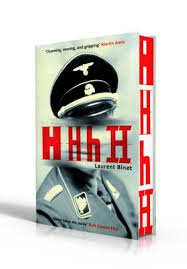
Hhhh by Laurent Binet (Harvill Secker)

hhh

“Gabcik – that’s his name – really did exist. Lying alone on a little iron bed, did he hear, from outside, beyond the shutters of a darkened apartment, the unmistakeable creaking of the Prague tramways. I want to believe so.”

IS this fiction or historical fact, a point not lost on the author who is equally vexed by the problems of relating an historical narrative. What is truth down the years?

This is Prague 1942, drawn so brilliantly it almost breathes, it is a resistance story and also without judgment a portrait of one of the great, systematic killers of the 20th century, a key hole glimpse into the higher echelons of the Nazi party in its brutal pomp.

A word too for sam Taylor’s skillful translation from the French which does not let the original down.


Posted in 101greatreads, fiction, Non fiction | Tagged , | 1 Comment

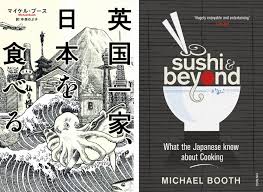
Sushi and beyond by Michael Booth (Vintage)

sushi

“Ha! You so fat you not so see your dankon for years! You pants too small. You are so fat, sun go down when you bend over!”

A true story, a travelogue where Michael Booth takes his wife and two young children Asger and Emil to Japan not so much for a holiday but a full blown gastronomic investigation of all things edible. Instructional, informative, written with an engaging light touch which the children help with especially with the visit to the Sumo school but also some of his insights into Japanese mores are revealing.

Miso soup should be eaten at the end of the meal.  Sushi should be eaten with the fingers not chopsticks. Wasabi should be already mixed with the dipping sauce not served to the side.

And he manages to slip in some useful cooking instructions – nigiri sauce (for dipping for sushi) = 40 ml dashi, 20 ml mirin, 20 ml sake, 200ml soy, “briefly heated”.

It is a skilful blending of food, travel and culture that avoids the usual this-is-what-i-had-for-my-dinner cliches. And he has some wonderful subject matter. Most of all perhaps there is a Disney-like literary quality or dramatic frisson on the lines of what happened when we took the kids to Japan the fun fair that parents will respond, if not all aspire, to…

In fact Disney should make a film out of it…

Posted in 101greatreads, Non fiction | Tagged , , | Leave a comment

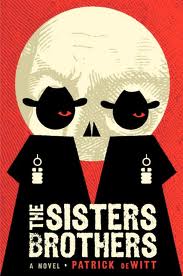
The Sisters Brothers by Patrick Dewitt (Granta)

sistersbrothers

“I was sitting outside the Commodore’s mansion, waiting for my brother Charlie to come out with news of the job.”

IT is hard for a western to get literary recognition, although if it works for west coast gumshoes then perhaps there is another undiscovered genre to inspire Hollywood. This is a second Booker nomination from a Canadian, plus another mention for Granta and another short lister that was overlooked but may stand the test of time better than its rivals.

It is a brutal, comic horse trail of a book, cocked like the pistols that feature through it, a well told yarn of brotherhood, gunslinging, hunt and pursuit that drives the narrative.

The writing has a period accent to it that rings true. As do the occasional stark acts of cruelty. A great ballad of a book that depicts a time and era on the borders. From the first sentence we know exactly where we are…as the brothers ride, their relationship balances on a Bowie knife-edge.

Posted in 101greatreads, fiction | Tagged | 1 Comment

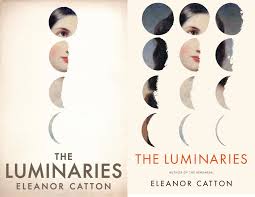
Luminaries by Eleanor Catton (Granta)

luminariesHAD Eleanor Catton’s precocious first novel The Rehearsal been shortlisted for the Booker Prize alongside her weightier winning tome the Luminaries, it might have been interesting to see how it fared. Academic as a question perhaps but relevant maybe.

In The Rehearsal Catton is on home territory writing about girls, about teenage angst, about coming of age, about the topical sexualisation in schools. Her dialogue is sharp, even spiky and she has a literary superhero in the brooding, manic presence of the Saxophone Teacher.

In the Luminaries she takes on subjects where she is less sure footed – a gold rush, opium dens, brothels, pioneering New Zealand and more obviously, men – only two of the presiding jury-esque cast are in fact female.

The Rehearsal is a fast read. The Luminaries is a very long train journey of 832 pages.

This is not a story about place, the gold rush village might be, as one of the characters admits “anywhere on earth”, even the gold itself in the jargon is called “pure”, so it might as easily be any other commodity – drugs or diamonds. It is a novel about gold digging which is not about gold digging.

A seasoned Hollywood script writer will pick this story up at its Titanic moment on page 625 and not lose too much.

With longer books there is a sense of space and here ratchet by ratchet we are lowered down the mine shaft of 1866 into myriad deceptions and half truths.

The skill of a long book, one might argue, is that there is pleasure in the minutae, the kind that in a film we pick up in a glance but here we rustle through paragraphs and paragraphs between bursts of dialogue. An entrance takes pages.

We have such details as in  “NH had just brewed and steeped his four clock pot of tea, and was sitting down to a plate of sugared biscuits…” Some writers are very good at descriptions of sugared biscuits but that is not Catton’s department either. She is of the doll’s house school of dressing her characters up and moving them around different rooms and conversations. In the Rehearsal this was a school which was ideal for her style.

We are as desperate as readers as the unsavoury crew of stranded characters. This is period drama without TVs helpful 60 minute segments and far too prim in a post Deadwood world.

In a sense it ought to be about the art of story telling but Catton does not spin a notable yarn in the Irish sense. It is short on bluster and blarney and in its place there is a mechanical clock ticking as plot and characters unfold in stylistically metronomic regularities,…or perverse irregularities because the story telling is in reverse. It is a bombastic trick, science fiction backwards.

The word engineering is derivative and inferior to John Fowles in the French Lieutenant’s Woman,  an overriding Victorian railway station of melodramatic narration in the buttoned up collar starchiness of olde worlde sentences…”Such was the perception of Mr Walter Moody”… “if this experience was an expedience, however, it could hardly be called a virtue”.

And we have the device to open each chapterette summary …chapter one, in which a stranger arrives in Hokitaka

and we have some strange charts to do with the book’s astrology about which even half way through the logic is unclear, the meaning arbitrary, gthe symbolism ridiculous…

The verbal starch does not extend to some of the characters. The two chinamen who barely speak english manage to converse with each other without dialect or intonation. Some of the dailogue pulls you up sharp between the “dear mes” and the “there it is, madame” or in the plain banality of someone asking if in a middle of a ship wreck anyone had noticed the label on a crate….“passion, she said, in a low voice is not to be feigned”. Alas we are not overloaded with passion either.

 Of the dozen or more characters assembled in the Crown Hotel like some Greek chorus to discuss the implications of events we have at least  two splendid characters in the scarred, salty dog sea captain who has been 10 years in prison and the former brothel keeper and beneficiary of the plot “a woman of ample beauty, a pleasure to behold”.

As the plot accelerates at last the writing is becoming more Edgar Rice Burroughs than Fowles as quick, quick, someone is at the door…

Book prizes are book prizes and often, perhaps always, say as much about the judges as the judged. The misdemeanours of this book are manifest. The story is of no import, the characters are paper thin, the place is non-existent (well in fact it is a real town these days), the dialogue is woozy, the story – is there one? Or two? Or is it just a slice of imagined, everyday cold bluff 1866?

Catton is a star but it is a painful exercise here of how she has written herself out of hole before she gets to the light.

Posted in fiction, Outtakes | Tagged , , , | 1 Comment

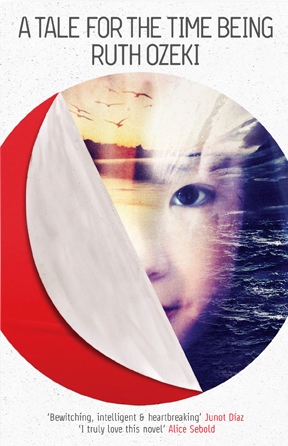
A Tale for the Time Being by Ruth Ozeki (Canongate)

ozeki hardback

“Hi!”

My name is Nao and i am a time being. Do you know what a time being is? Well, if you give me a moment, I will tell you.”

THIS is a great book. Quite why it did not win the Booker prize 2013 I do not know unless it be that many people do not want to read a book where the central character is a suicidal teenager. I heard one reviewer on TV criticise it because one of the narrator’s husband’s was boring which rather misses the point that he grounds the whole book, the whole fantasy, the whole spanning of the 20th century. He needs to be boring for the story telling to work and is brilliantly so, but his is a small bit part, solid as a concrete groyne.

For the rest it is a book of imagination, seriousness, a re-configuring of things we only half knew about written with elan and brevity and concision. Early hardback editions came out in book formats to echo the storyline which will surely become collector’s items. This is the more familiar version.

ozeki paperbackThere is a subtle distinction between review and preview, critique and discussion which I do not want to cross and spoil the fun. From the opening page the pattern is challenging, flirty. “Are you reading eagerly waiting for your beautiful lover?”. And as each layer is unpicked…”Ugh! That was dumb!

One part of the brilliance here is the shuffling of the narrative cards. Above all, as the title suggests, it is a tale very much of NOW, of post Fukushima, post tsunami 2011. It is topical in a surprising way. Obviously it has been written very quickly but it has also been published incredibly swiftly, not just the printing but into paperback with endorsements already from 20+ reviewers including one from the Times which the author may come to regret “unexpectedly moving”. Ahhh, hum, yes, you didn’t see that one coming, did you old boy.

The twee teenage edge – in a sense this is the manga version of Catcher in the Rye – is just one shelf in a whole bookcase of ideas that span the 20th century and its greatest themes, rather uncomfortably perhaps coming back now even, as if it was science fiction, with drones and computer games. Ozeki set herself a monumental task and does not waver in delivering on her promise.

PS: A friend told me she found parts upsetting, particularly the cruelty of the Japanese to themselves which I pass on without comment although anyone brought up on War Picture Library will not flinch 🙂

Posted in 101greatreads, fiction | Tagged , , , | Leave a comment

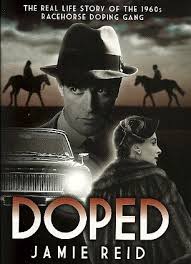
Doped by Jamie Read (Racing Post)

Doped“BY THE end of 1959 Jack Stiles, glad to be free from Captain Ryan Price’s iron rule, was back in Newmarket and living in a second-floor flat in the Carlton Hotel on the High Street.”

DOPED won the William Hill sports book of the year 2013, ahead perhaps surprisingly of the tenacious investigations of Lance Armstrong by Sunday Times reporter David Walsh and the egotistical biography I am Zlatan Ibrahimovic (which one reviewer likened to Portnoy’s Complaint).

Set in ’50s and ’60s seamy, post war London we have not just the minutae of each race and the betting but the addresses of the protagonists. “Bill bought her a smart new RCA Victor Record Player”… “her favourite record was Acker Bilk’s Stranger on the Shore”.

This is not just about the scam and the doping but the rise of betting as an industry and ironically (given the prize sponsor) details who the real William Hill was, and Victor Chandler and a cast of other rogues and stable lads and general underworld villains from the Kray brothers down to the policemen on their trails, or not as it turned out in the case of “portly” Bob Hill.

At the centre is Bill Roper, mastermind, gambler who discovers that doping favourites in horse races could be quite lucrative from a bookmakers point of view…especially when you are seeking to set your young Swiss mistress Micheline Lugeon up in her cosmetics business. She inadvertently becomes the frisson that brings him down.

Posted in 101greatreads, Non fiction | Tagged , , , , | 1 Comment