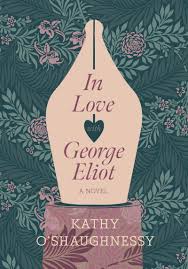
In Love with George Eliot by Kathy O’Shaughnessy (Scribe)

inlovewithgeorgeeliot

“The train had shuddered to a halt. Clatter of doors-opening and shutting, noise echoing in the huge vault of Euston station, a smell of oil-flavoured steam and soot. A last door opens…”

 THERE might be a warning on this: do not be tempted to Google George Eliot before you read this, let the story run. It is a good yarn and Kathy O’Shaughnessy’s prose moves, as in the opening quote above, quickly along….

Aptly titled, though the accent is very much on the word love as  it confronts a woman in the Victorian era. If you enjoyed any of Eliot’s writings from Middlemarch, often said to be the book of that century, back to Adam Bede this is a good companion, not so much biography as an explainer, a contexturaliser, elegantly written in homage style. If you have not ready any, you probably will want to after this. Take this coy euphemism:

“and for the first time in a long time, they made their way hand in hand up to the bedroom, intent only on each other.”

This is one of those books you might want to read in Highgate cemetery (where Eliot is buried) and dip in and out, slow or fast, so carefully is it composed that its themes take over the characters and consume them.

From the outset there are subliminal waves of pent up emotions. Eliot, aka Polly, aka Marian, aka Mary Ann Evans, aka Mrs Lewis aka the voice of her century, enjoys her admirers. Here is one:

”There is deep charm in that soft, rich voice. The sense too that one is approaching a hinterland behind that soft voice. A vast hinterland, rich with thought and experience, and the golden thread of erudition…”

It is her mind they covet. She needs such support to give her the determination to write and put down her demons. There is a quote from one of her letters at the start asking;

“What shall I be without my Father? It will seem as if part of my moral nature were gone.”

O’Shaughnessy teases the morals of the era into such thorny subjects such as motherhood and the Woman Question. It is 1857. The men seem to all have endless children, the main women none.

We have hardly begun and she is being propositioned with the gift of a grand piano. Scandalously she moves in with a married man and is ostracized, but we already know from the opening page:

“Yes, this is why we live, she thinks, with a sort of joyous sigh, an inner trembling and sensation of release.”

The prose bravely goes into her double even triple life as linguistic polymath, lover and author where she has tactically accepted the necessity of masquerading behind a male pseudonym. We are in her study.

“Enough. She turns to her other notebook. Her notes, in violet ink, on Lucretius. She lets her mind follow him. Drawing back and down into thought. And suddenly her mood changes. The sky outside moving pleasantly further away. At the edges, a moving object, almost in the visual field, yet just out of sight, configurations forming…”

This is all constructed by our narrator Kate who is organizing a George Eliot conference with her colleague Ann who is also writing a book on Eliot but not a fiction, rather a revisionary critique from a feminist perspective. This subplot is key to opening up some of the later emotional heft.

The letters and quotes we are told are from Eliot’s hand, but the portrayal is from Kate, an ardent, faithful, investigative chronicler. The construction is like a train journey through well to do Victorian society, so Mr James, is actually Henry, so, Burne-Jones is Edward, the painter, so the shirtmaker Simcox is Edith, the pioneering feminist, each presented like small tableaux. Eliot is a watcher:

“As if she could fillet them, know them so completely that she would no longer be jealous, she would be inhabiting them instead.”

But also an independent spirit.

“We women are always in danger of living too exclusively in the affections.”

Another bookish joy is how reading in that era was a shared event, ideas swapped and considered, an essential component of elite society conversation. Something to do through long dark unelectrified, oil lamp lit nights. In the morning to write and receive letters. And a jingoistic celebration that publishers always like, we all like, that an author can make a lot of money, as Eliot did. For them. But credit to Scribe, they have made a beautiful job of designing and printing this book, so it feels like literary treasure in the hands.




Posted in 101greatreads, Biography | Tagged , , , , | Leave a comment

Sokcho by Elisa Shua Dusapin (Daunt)

sokcho

“He arrived muffled up in a woollen coat.”

ELISA Shua Dusapin is Korean, Swiss and French all of which infuse this short would-be love story, told in staccato English, as if the grammar were Korean hieroglyphics. Out of season, the seaside resort of Sokcho is quiet except for the fish market where her mother works, respected as one of the few allowed to fillet and gut the poisonous blow/fugu fish. Enter the stranger, western style, a manga artist which is sort of fitting in the almost abstract style of the writing.

Here is one the better passages:

“I cast my mind back to Seoul. All the drinking, and partying, the blinding lights, the bone shattering noise, and girls, girls everywhere, and those plastic boys, the city strutting and staggering, rising higher and higher…

She is on a knife edge of repeating her mother’s life …This is all a bit Jean Luc Godard…the guest house where she cooks and cleans, she has issues of her own with food, good and bad, with her own looks reflected in one of the guests who has had plastic surgery, with her mother who wants to marry her off. Short. Concise. Hardly a word out of place. Subtle. Beautiful. A commentary rather than an exploitation of cultural differences.

One of the points of doing this blog in the first place is to report back that the ending is worth the beginning, that there is some payback for the time and effort. Tick, tick. And also to recognise other writers, knowing this is not quite the level playing field it might seem to most readers.

Waterstones sent me a mail purporting to be the best books of the century so far – which is the mission here anyway. However, where I am quite open to the idea that they read and ‘know’ more than I do, it is quite striking how few of the books in this blog have made that list. Last year it was 2/15, and both of those mainly because of the Booker limelight. I am very selective in my choices. In 2015 I read nine of the 15 on the W list and posted reviews on four. Again in 2016 I read and did not post five of them. Do I read all of the books on the W list? No, but I have probably considered them one way or another.

I am suspicious of the marketing departments of the chains, and of Daunt Books going into publishing itself (the above Sokcho is a Daunt book translation from the French original), and of the so called Sunday Times Bestseller List. That said, I always feel indebted to Richard and Judy. They first introduced me to Joseph O’Connor…

The days when a bookseller might actually have read the books he or she is selling are, I suspect, largely gone. The little hand written scripts on the bookshelves purporting to be staff picks are obituaries to a culture we have lost. In the Internet age, this blog has become, I realise, the bookshop. And, for the record, yes I buy my own books.

Posted in 101greatreads, fiction | Tagged , , , , , | Leave a comment

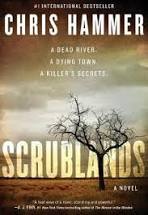
Scrublands by Chris Hammer (Allen & Unwin)

scrublands

“The day is still. The heat, having eased during the night, is building again; the sky is cloudless and unforgiving, the sun punishing.”


THE journalist as detective sleuth is obvious, if largely uncharted. Maybe there is a mental barrier between covering real life that stops newspaper people moving into fiction. Enter here: Chris Hammer and his hero Martin Scarsden, veteran of the middle east conflicts, gifted an assignment in the outback where, as in Liz Moore’s Long Bright River, there are layers of back story, not least commentary on small town life and notions of truth, reported or not. Secrets. Lies.

At 486 pages of admittedly airily spaced large type this crime mystery is on the long side, but if you just followed the dialogue and used the narrative as reminders to hang on to the plot you could probably speed read it on a short haul plane flight.

By page three we have five shootings. By a vicar. By page 10 we have met the blonde and a conspiracy theory. Each twist and turn uncovers new perspectives.

I was tempted to read to read Hammer’s acclaimed non fiction work the River which is set in the same place but it is priced in paperback on Amazon at £695.35 which usually means it is out of print and not many people want to let their copy go. In interview he said he never made any money writing non fiction, but when he moved to fiction he fulfilled that other journalist dream of quitting the day job with a fat advance. After 30 years as a reporter he knows the space, the professional rivalries, friction between desk editors and the man in the field and not least…well I won’t give that away. All this plays out as backdrop to a small town caught in a vortex of headlines and bylines reaching a pretty epic climax.

There is a follow up just released called Silver.


Posted in 101greatreads, fiction | Tagged , , | Leave a comment

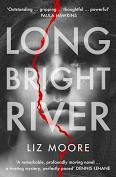
Long Bright River by Liz Moore (Penguin)

long bright river

“There is a body on the Gurney Street tracks.”

THE come-on cover copy and graphics suggest this is another crimo-detecto: Move over Michael Connelly. Step aside James Lee Burke. There is a new girl in town. A new town in Kensington, Philadelphia stricken with opiates. Enter officer Mickey Fitzpatrick. If Kensington has issues so does Mickey, with child care, with her sergeant, with her family, the O’Briens who are scattered across both sides of the tracks. And Liz Moore could certainly write this into a series.

But all that is slightly misleading because Moore is working on different levels at the same time. Before we get to what is a fastly accelerating, exciting crime drama in the later stages this is the story of the dysfunctional O’Briens who mirror the city itself who mirror Fitzpatrick’s struggle to better herself.

The obscure title is not explained until page 437. More fitting might have been, say, Good Sister, Bad Sister or just plain Kensington. The police procedural does not fit so well with the personal, which is, sort of, the point. Other elements take control: the sense of place, the institution of the police, the destitution of the inhabitants, the family disputes.

Narrative is chatty and first person:

“Some people have trouble with Kensington, but to me the neighbourhood itself has become like a relative…”

and

“Ahearn is a small slight man…At five-eight, I look down on him by at least two inches. The difference sometimes send him up on his toes, hovering there while he talks”.

Sentences are short, spare and crisp, picking up a certain cadence and rhythm:

“For a week I work solo. I’m relieved to be alone again. I am relieved to

be able to

stop when and where I chose to,

to select which calls I respond to…”

At heart it is a me and my sister, as in filial, as in their relationship, as in different paths we chose, as in their dark back story which is a little Toni Morrison and not so brighter present…

Moore took 10 years in the writing and volunteered in the city’s crisis departments in that time. That passion and conviction set this out as more than just a detective story. It is a novel full of pace, nuance, surprises, emotions, guilt and dependencies. And well drawn people with feelings among whom I especially liked the bit part for Mrs Mahon, an outrider who is not part of the O’Brien clan, a safe refuge when everyone else is not so stable.

Posted in 101greatreads, fiction | Tagged , , , , | Leave a comment

The Unauthorised Biography of Ezra Maas by Daniel James (dead ink)

ezra maas

“This book is dangerous”

Brash, original, smart… star reporter Daniel James chases down the elusive recluse that is Ezra Maas, cult artist, vanished megastar…this is the kind of book destined, I hope, to find a cult following of its own, shades of Le Carre, shades of Chandler set within a backdrop of cultural and artistic road maps from Samuel Becket to David Bowie to Banksy and creeping into the 21st century of redactive texts, threats, psycho thrills.

The nearest thing I can relate it to is the film Network starring Peter Finch and Faye Dunawaye. But there are also overlaps with the brilliant The Seventh Function of Language by Lauren Binet. The philosopher Roland Barthes brought to life amidst possibly a hoax?

This won the people’s vote in The Not The Booker Prize in the Guardian, only to be overruled by the judges who went for Supper Club by Lara Williams (which I have reviewed below for comparison, which there is not really).

Here we are swirling through an art and literary vortex.

– I just want the truth.

-There is no truth, only art.

Nothing is what it seems, even James himself is only a part the author, his work picked up by an anonymous curator who adds footnotes, enticements to other references. Followers of Thomas  Pynchon are especially well rewarded.

Towards the end this curator gives us a slant of his own:

– The story took place before the phrases post truth and fake news were coined, before a new wave of narcissistic, capitalist tyrants rose to power in supposedly democratic countries on a wave of racism and greed…

Spookily that is the territory.

We are tapping in on the up to date, Mr Lyan really does have a bar under Sea Container’s house on the Thames. A passage includes the signing of the book deal with this same Liverpudlian publisher Dead Ink, and yes one Nathan Connolly is a director.

Some of the quotes and asides seem to be from real people. Brian Ward, professor of American studies, is quoted and features in the list of people who supported the book, others like Sara Cain are perhaps a veiled reference to the movie Saving Sarah Cain. A footnote links a Newcastle drinking den to Joe Summerfield who indeed was at the Poisoned Cabinet in that city. As with the Maas mystery James is interlacing fact and fiction, the supportable with the unsupportable. Jakob Tischbein was a painter in Lubeck who allegedly was one of Mass’s teachers in 1968. He is quoted as saying: 

– My first Ezra Mass artwork was like finding a new letter in the alphabet, or discovering a new colour

Great, only the real Tischbbein died in 1791…

Through all this biographer and artist drift, and joust, the one perhaps dead, perhaps who has left a trail. All smoke and mirrors. There is some clever brainy stuff in here. There won’t be many people opting to choose it as a special subject on Mastermind.

It is a very exciting read, unexpected because the context is so unexpected, the ideas so intriguing. And the writing is astute, rich with its own inferences. It is a bit mad but a bit genius too.


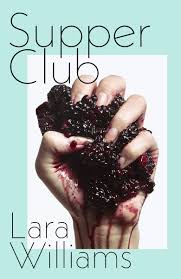
Supper Club by Lara Williams (Hamish)

supper club

Lena was the first.


CONSIDER this as a recipe book to which the author’s social worker has attached notes about her sexual history.

The Club is an all female secret meet-up to misbehave, throw away inhibitions, emancipate, eat, drink, take drugs, and inevitably, eventually vomit. Cooking is Roberta’s salvation or means of empowerment.

Sadly the meals at the club itself are mainly foraged from supermarket dumpsters and don’t have the elegance of Roberta’s experiences with soufflés, Thai red curries or spatchcocking a chicken. Her instructions for making kimchee are superlative.

The irony of this book winning the Not The Booker prize is it might not be out of place if it masqueraded as an extra chapter in the co-Booker winner Girl, Woman, Other by Bernadine Evaristo. Similar casts. Similar problems. Similar twenty-something. Similar sexual mores. Similar sistas. Only Roberta likes to end most sections with a good cry. When in doubt: blub.

Sex is visited on Roberta and her friends like flying saucers dropping out of the sky. The boys do not get much description except in so far as they are judgmentally appraised without sentiment, emotion, or empathy for their performance, or lack of it. This kind of sex is all meat and potatoes. There is talk of love but not much is on show. These girls are essentially, primarily, stoically about themselves. Roberta is also very needy with her desire to be wanted becoming almost maniacal. She assembles her various neuroses like ingredients for a recipe which she then bakes into a usually unsuccessful relationship.

There is perhaps a market for this self-flagellatory semi autobiographical shy girls growing up and confronting taboos like masturbating and self harm, but it is not literature. It is a fanzine.

To see how it can be done give Sophie White a try.

Posted in 101greatreads, Biography, fiction | Tagged , , , , , | Leave a comment

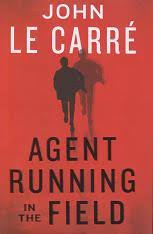
Agent Running in the Field by John Le Carre (Viking)

agentrunning

“Our meeting was not contrived.”

I AM on page 278 of 281 and I am still no wiser as to where this whodunwhat of a plot is going. There have been twists and turns and upshots and cross checks so you might feel like the ventriloquist’s dummy on John Le Carre’s lap. You have been Lecarried. Again.

We are back in the rolled up newspapers under the arm, meetings on street corners, checking the rear view mirrors, but there is a more passionate, even personal undertone here, more than is the norm for Le Carre’s careful dissections of political underworlds. In essence this is a Brexit novel. Topical.

In short:

“Orson was about to use his Park Lane duplex to impress a duo of Cyprus-based Moscow friendly money launderers of Slovakian descent with a private bank in Nicosia and an affiliate in the City of London.”

 From there it all unravels pretty quickly as the retiring agent Nat’s small world implodes with intrigues.

He has returned to London after years posted abroad on twilight missions, his loyalty being tested on all sides. Who is he?

  • “You a London man then, Nat? Ed asks as we settle to our pints
  • I acknowledge that I am indeed such a man”

The Circus has been replaced by anonymous sounding bureaucracies of Operations Directorate, London General, The Haven. He has to rebuild his relationship with his formidable lawyer wife Prue and daughter Steff whom he courts again on the T-bar of a ski lift. It is all very real, believable and set against the backdrop of intelligence dealing with Trump, Putin, Europe. The cold war seems much simpler. These conspiracies are more cutting in that they are up to date.

It unfolds at a pace but between passages there is room just to include today’s concerns and as you might expect from a master of intelligence not things that are being discussed elsewhere (or not in public).

Nat’s private passion is badminton, something he defends valiantly.

“For unbelievers, badminton is a namby-pamby version of squash for overweight men afraid of heart attacks, For true believers there is no other sport. Squash is slash and burn. Badminton is stealth, patience, speed and improbably recovery.”

A spy with a hobby. And a family. Baggage to deal with…and that ending when it comes sure enough has another twist and leaves the door just enough ajar to suggest a sequel, another day in the sun, even if Sir John has just turned an impressive 88.

Most of all it is about identity and allegiance in a destablised world.

A news in brief paragraph in the Metro the other night reported how two Russian diplomats had been sent back to Moscow after the assassination of a former Chechen leader in Berlin. So maybe not so much fiction, after all..


Posted in 101greatreads, fiction | Tagged , , , | Leave a comment

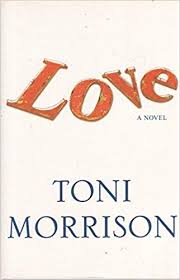
Love by Toni Morrison (Vintage)

love by toni

“The women’s legs are spread wide open, so I hum.”

I Am surprised no one has tried to film of this excellent book such is the lure of the dancing and parties at the hotel, the scenic beach side setting both in its heyday and later collapse and in the crackling dialogue. Hitchcock might have done Morrison proud.

Neither of its more taboo elements like a child bride and a gang rape are quite so central to the plot that they could not be airbrushed out to leave a moody ghostly story of the Up Beach hotel, the changing mores from the 1940s to the 1970s, portraits still draped in song, sexualisation, secrets and cold beer.

It reminds me strongly of Grace Metallious’s underrated classic Peyton Place, although a film and TV series did not do that epic original novel any favours. Here we are on the other side of the tracks again, only this time it is trailer trash amplified by the colour of one’s skin. It is the same gossip, the same small town confederacy, the same family confessional. I could almost hear in the narration a female version of Morgan Freeman whispering how it was, back then.

The story telling is fairy tale in its construction, a chocolate box in which each character gets a wash – here the caramel cream, here the walnut whip. They duck and dive between recollections and the present, from spoken words to inner thoughts, from the now to the then, often with no warning except a paragraph break. Sometimes it is quite brusque and stark as in this from the overture, it is:

“a story of how brazen women can take a good man down”.

And there is a brooding menace as to whether the older generation can or will take the next down with it.

“The problem for those left alive is what to do about revenge – how to escape the sweetness of its rot”

The plot is not so complex, but Morrison gives you one fragment at a time, so the drawing is never quite a full picture as she roams down the family tree and pokes into the darker recesses of why a homeless girl should turn up looking for a job, what drove May mad, why would Christine and Heed hate each other anyway, who is the mercurial L, the narrator in her kitchen, let alone the scarred and eccentric Celeste?

The male characters get a little more affection. All the sins of the granddaddy Cosey are forgiven by almost everybody while his female counterparts like the central squabbling siblings, the ghouls of Monarch Street are embalmed bitterness and their thoughts forensically revealed, the unpicking of a quilt. But even when the characters hate each other, we are lulled into their universe, seduced perhaps into pulling up a rocking chair in the old house such is the generosity in here, the lack of judgment, the sense of real people, an old lady worrying about the bath, her sister about her rings, a girl about a boy. Is there by any chance cornbread in the kitchen? Or anything left of that lamb that burnt in the oven?

This was Morrison’s eight novel published in 2003 so slips in as qualifying as 21st century although her canon has been eulogized elsewhere as a doyenne of 20th century, a Nobel prize winner in 1993, the Aretha Franklin of American literature perhaps, with a touch of James Baldwin. She is not outside looking in, but right under the duvet with her people.

“Most of my race has forgotten the beauty of meaning much by saying little.”

Her gimlet eye conjures and plays with her setting, the seaside town fallen on harder times, her prejudices, or those of her cast. in ways that draw you into their psychodramas. For choice, I would want to read this on Up Beach itself or another seaside town on the USA east coast, not too far south though.

I can only find one reference to a Morrison film adaptation that being Beloved but there was a stage adaptation of her first book Blue Eyes. I do like her real name which was Chloe Ardelia Wooford, she only became Toni after converting to Catholicism, aged 12 , when she chose the baptismal (Christian) name Anthony after the saint of Padua, the patron of lost things.


Posted in 101greatreads, fiction | Tagged , , , | Leave a comment

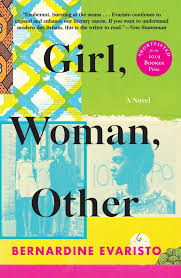
Girl, Woman, Other by Bernadine Evaristo (Hamish Hamilton)

girlwomanother4

“Amma

is walking along the promenade of the waterway that bisects her city, a few early morning barges cruises slowly by…”

PLOT? What plot? Themes, yes we have them agogo – mixed race, London, gender, motherhood etc – but no, no plot. No story. Instead it is an amiable chronicle through its huge cast of assorted, eccentric, rather loveable women of different colours and generations.

The opening pages are a bit like reading the programme notes for Amma’s upcoming play (about fierce female Amazon warriors). There is a cast list of the lesbian underworld, which is quite long as Amma is enthusiastic about spreading her sexual favours as widely as possible, although this is not what you might even loosely term an erotic or sensual work. Beyond this glimpse into a secret cabale, there is not much happening, except we get to deduce that everyone is vaguely linked from school and probably heading to the same event.

I would not have voted for it to win the Booker prize (jointly with Margaret Attwood’s Testaments). Where it is a likeable university project, as a novel it is technically flawed. I mean it is not a good model to hold up for other writers to explore or study or follow. And once again (unlike last year’s brilliant Milkman by Anna Burns) it will probably put more people off reading altogether.

Firstly it is not a novel, it is three separate embryonic novels all of which are left unfinished. The first one she probably wrote a long time ago, the middle one is ripe with promise and potential but unconsummated, the third one is highly topical and omg if the ending is not another story altogether.

Secondly the style of writing, essentially a letter to the sisters or you the reader, prevents any of the characters fulfilling themselves. It is all third party. She did this. He did that. You do not get under their skin, let alone their duvet. We are outsiders in the way all these mixed race immigrants are outsiders on arrival in England. It is also repetitive because this huge cast have similar problems and experiences.

Thirdly the span of the story covers most of the 20th and what we have of the 21st century and lures Evaristo out of her comfort zone. I am a contemporary of one of her main characters Amma and every so often I would question the veracity of the descriptions. Suddenly I am treading on factual quicksand. Ada plays Dusty Springfield, Sonny plays the Rolling Stones, but these details don’t really tally with their ages.

Where Evaristo’s own generational experience shines through is in the middle story of Carole and Bummi. As with her own heritage Bummi’s roots are in Nigeria. There is a very poignant moment here where Bummi believes she has found salvation with a family at last but then her new husband tells her they are going to England to seek their fortune. This story, starting in the Niger Delta, has all the bones of a great novel. But it is only a sketch. It is a pen and ink on paper. It needs some oil paint and canvas.

This is also where the style lets the book down, the writing voice is more gossip than prose, the women barely get a chance to tell their own story, because there are so many of them and because, forgive me, the author keeps interrupting them. It is a landscape of living as mixed race in a white world. It is all narration and without drama, so:

“When she tried to storm out of the house to get away during rows, Nzinga blocked the door with her imposing size, legs astride…”

There is no row, no dialogue, no room, no emotion, no tears, no explanation, no imposing, no opening of the legs…we are just being told about something dispassionately as you might sitting safely around a campfire miles away telling your friends what you had heard.

Later we have:

“Ada Mae married Tommy, the first man who asked, grateful anyone would.”

Wow, that is quite a bald statement, unadorned, little cause, big effect. Ada does not get to share with us, the reader, her own reasons or reactions or responses. This is the same Ada who was listening to Dusty Springfield but she has no silver threads or golden needles to thread her story.

Fifthly, there is a sub theme of self definition which builds cleverly through the different ages and stories but as this evolves it unmasks the hypocrisy of our friend the narrator/author/letter writer/Evaristo herself who is busy self defining everybody around often in quite intimate detail, certainly as far as their sexual choices are concerned.

Evaristo had three, possibly four, singular totemic novels here, rather than the one which is now a hostage to itself. Perhaps the award will give her the chance and confidence to write one of those now that she has been introduced to the big stage.

Most people, most readers, take it for granted that the Booker prize is awarded to the best work of fiction each year, which sort of implies a novel (with a story). There does however seem to be a reactionary rearguard among the judges who vote instead for the clever-clever conceit over and above what I might judge to be more important elements. Stack this one on the same bookshelf as the Luminaries, as Lincoln at the Bardo, as Seven Killings etc. And if you want a decent read, no two great reads, for Christmas, try this one or this one , both of which were on the long list.

Posted in fiction | Tagged , , | 1 Comment

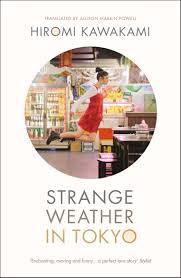
Strange weather in Tokyo by Hiromi Kawakami (Portobello)

strangeweather

“His full name was Mr Harutsuna Matsumoto, but I called him Sensei. Not Mr or Sir, but Sensei”

THE original title of this off-beat romance was The Briefcase which as I read it is titillating bait. Which way does this story go? What has the weather got to do with anything? It might also have been called Drinking Sake at Bar Saturo. Or Sensei. I am loath to let slip too much plot here, so carefully is it woven. It charms in the way it builds.

Tsukiko, a thirty something office worker – no details of that side of her life are given at all, she paints herself as just a manga girl in a bar – bumps into her former schoolmaster over tuna with fermented soybeans, fried lotus root and salted shallots. They drink (a lot) and eat which lends their conversations a certain intimacy. They pay their own bills. Sensei reveals the first of many idiosyncrasies, he collects railway teapots.

Great fiction is often buoyed by a writer’s enthusiasms – think of Hemingway with the sea, the bullfights, the eating and drinking etc. Japan has its own mysteries to explain which might have sustained us here but Kawakami goes a little deeper, a coming together of old and new, pupil facing teacher, mushroom hunting instead of going to the shops. And also the food and drink, little tidbits to go with the sake.

“He delicately poured vinegared miso over the last morsel of dried whale…”

And in Japanese style there is a leaning towards a haiku, very simple little poems as paragraphs, very literal, but very swift passages of descriptions that keep the story moving and always set in time and place.

“The late afternoon sun shone on Sensei’s upper body. A child was scattering popcorn on the path…dozens of pigeons would flock over….”

Plus Kawakami is clever in the way she diverges every now and then, to follow a thread and leave the plot to one side for a moment to pick out a detail, a thought, a vignette.

He is inscrutable, serene, notionally the wisdom. She is a hard drinking loner whose language could belong to a crimo where his is, obviously, poetry.

There are some explosive, singular surprise episodes that populate the whole book and deliver something rather lovely and unusual.

Posted in 101greatreads, fiction | Tagged , , , , , , | Leave a comment

The Testament by Margaret Atwood (Chatto & Windus)

testament

“Only dead people are allowed to have statues, but I have been given one while still alive. Already I am petrified.”

THAT is, perhaps, one of the finest opening lines to a novel I have read, defining, coy, a come on, a play on words, a whole mystery set up, a whole biography to come…

The scary thing about Margaret Atwood’s Handmaid’s Tale first published in 1985 was how well it foretold things to come. Like Isis brides, like a right wing elite taking over, like an environmental catastrophe:

“The sea fisheries were defunct several years ago, the few fish they have now are from fish farms and taste muddy”.

The Handmaid, of course, is about men taking over, about both sexes becoming infertile. About religion invoked as a power. The last we have seen – in the book version rather than the TV spin off – is Offred being loaded into the Van. To be set free or to be enrolled in further outrages…hedge your bets.

Now the prolific Atwood returns to the scene of one of her greatest fictions. She shares a style with that other great late 20th century titan Toni Morrison. They create a sense that they are there, they are in the now, their characters (or more personally I might say people) are living. Occasionally Offred would slip into story telling mode but only when she could hardly bear to talk of it herself, when her own story is too harsh to bear…but she commands her narrative, towers over it even if she is victim, down trodden, slave, baby machine. Her spirit lives. The Commander cannot command her even where he thinks he can do anything with her or anyone else around for that matter.

For the sequel we skip a generation. We have no idea of what happened after Offred got in the van. It is almost a YA narrative, after all the girls are still teenage and even the Aunts are not that old. Atwood has also been reading a few airport crimos. The story jogs along at a pace. It is staccato:

“…the remote was at the end of the table. I turned off the sound”

There is a level of texture in the writing that was in the first book which has not survived here, it is, as the title says Testaments, the kind of dry thing you might find in a file cabinet, curiously awful.

Here is a line from Handmaid’s tale:

“I’ve heard that rumour, passed on to me in soundless words, the lips hardly moving, as we stood in line outside, waiting for the store to open.”

Among the things lost in Gilead is some engaging prose.

In its place we get a girly bitchiness, a comic Bunty story about a bad day at the school.

“Becka said she wished she was ill, severely ill with something not only prolonged but catching…”

Bunty of course would be banned. Girls are not allowed to read. Not even the Bunty. It might upset sensibilities..

Try this for a bit of Girl’s Own dialogue:

“What can we do? I asked. “It sounds like there is nothing.”

“I am coming to that”, said Elijah. “As it turns out, there may be a chance. A faint hope, you could say.”

“Faint hopes are better than none,” said Ada.

Gilead is so regimented, the characters become self induced automatons, their main source of expression is being able to say how awful things happen. I am wishing we are back in the van with Offred and finding out what happened to her. She was just emerging from her cocoon like shell, from her iconic cassock.

It is pretty relentlessly bad. I don’t mean a bad book, rather an invitation back to childhood to a schoolgirls’ fantasy. All girls in a secret society within a secret society within a secret society as the trilogy of stories slowly start to wind around each other…

There is very little to grasp on to in terms of our sympathies. These child/women have no relationships, no real desires, no choices, just survival. There is none of the drama of the birth, none of the sense of sexual powers. It is an upstairs downstairs universe, the privileged, bratty, selfish or at least self centred, handmaids while downstairs are the minders and cooks the Marthas who seem to be the source of all rumours and knowledge. The Cammanders, the Wives, the Aunts sail through the story symobolically potent but detached. I might have liked a bit more Martha and little less handmaid but who these Marthas sleep with at night or why or where is not revealed. The deeply ingrained spite of the women to each other is almost repetitive. The men are almost non-existent except in their vague brutality when they turn up as a guard to yank the women off somewhere. Their most expressive gesture is an (imagined) lustful glance.

Of course there is an underlining, if trite, theme that writing itself will be the girls’ salvation but otherwise the intellectual structures of Gilhead are as much a mystery to its enslaved citizens as to the reader.

A word about the excellent production values and the brilliant illustrations from Noma Bar which aggrandize this first edition. The question is: did the Handmaid’s deserve a sequel? Atwood says her readers were asking for one. So is it a match for the first book? Not really. Do you want to read it? Probably. Should it win the Booker Prize, well not compared to Joseph O’Connor’s Shadowplay but he did not make the short list. Really? How come?

Posted in fiction | Tagged , , , , | Leave a comment